
Aerospace
RTX Corporation (RTX): The Aerospace Giant Powering Global Aviation and Defense

 Add Securities.io to your preferred sources on Google

Soon after the invention of the airplane, its military applications became obvious. From reconnaissance and primitive bombing in WWI, air power became an essential component of warfare by WW2, to only become even more important with guided missiles, nuclear weapons, and large aircraft carriers during the Cold War.
This is why both air defense and offensive capabilities are central to the militaries of all major powers. The USA is a special case, as its military doctrine has always been even more reliant on air power than other nations like Russia or China, making its aerospace industries both highly profitable and a vital strategic component of the country’s defense.
In the last decades, the US military industrial complex has been consolidated into a handful of large corporations like Lockheed Martin (LMT ), General Dynamics (GD ), L3 Harris (LHX ), and Northrop Grumman (NOC ) (follow the links for the investment reports about these companies).
Many of these companies produce full weapon systems, although collaboration for the making of the individual components is common. Another major defense corporation is more focused on the deep expertise required for anything aeronautic-related, from jet engines to avionics, software, and sensors: RTX Corporation (RTX ), often called Raytheon, albeit this is just one part of the corporate group.
RTX Price Chart
RTX Corporation Overview
RTX Corporation History
The modern RTX is the result of the merger between United Technologies Corporation (UTC) and the Raytheon Company in 2020. The merger was initially called Raytheon Technologies Corporation until it rebranded into RTX Corporation in 2023.

While Raytheon was a much more defense-focused business for a long time, UTC was a more diverse industrial conglomerate that spun off its fire and security (Chubb Security), elevator (Otis Elevator Company), and HVAC (Carrier Corporation) businesses ahead of the merger.
Raytheon
Raytheon was founded in 1922, moving quickly into production of early electronics, notably electron tubes, with the name Raytheon (“light of/from the gods”).
In the 1930s, Raytheon became one of the world’s largest vacuum tube manufacturing companies and also produced power electronics. This expertise was essential in the mass production of microwave radars during WW2, as well as the invention of the microwave oven in 1945.
This marked the turn of Raytheon into a defense company. In the following years, it developed the first guidance system for a missile that could intercept a flying target.
In 1959, Raytheon acquired the marine electronics and radio gear company Apelco Applied Electronics, the beginning of a long list of acquisitions to grow the business and acquire key technologies.
This was especially true in the 1990s onward, when the defense industry consolidated:
- In 1995, the intelligence and cybersecurity company E-Systems.
- In 1997, the defense unit of Texas Instruments, Chrysler, Delco Electronics, and Magnavox Electronic Systems, plus the aerospace business of General Motors (Hughes Aircraft Company).
- Intelligence, surveillance, and cybersecurity companies: BBN (2009), Applied Signal Technology (2010), Websense (2015), Foreground Security (2015), Stonesoft (2016)
UTC
Founded in 1929 as the United Aircraft and Transport Corporation, an integrated aviation firm: aircraft engine and airframe manufacturing, and airline business.
During World War II, United Aircraft ranked #6 among US corporations in the value of wartime production contracts. It entered the jet engines (Pratt & Whitney) and helicopters (Sikorsky) markets at the end of the war and started production of jet engines in the 1950s.
UTC also grew through a series of acquisitions over the years, notably:
- In 2004, the Schweizer Aircraft Corporation was made part of Sikorsky, which would later be sold to Lockheed Martin in 2015.
- In 2011, aircraft component manufacturer Goodrich Corporation.
- In 2018, avionics company Rockwell Collins, later forming RTX’s Collins Aerospace.
RTX Corporation By The Numbers
Today, RTX is an essential part of the US aerospace industry, with as much as:
- 11 million air travel passengers every day are supported by the company’s systems.
- A Pratt & Whitney-powered aircraft is taking off every second.
- 70% of the airborne communications for the U.S. and allied nations are supported by RTX’s technology
- 90% of all Department of War and commercial space launches are supported by our products.
- A total of 1 billion gallons of fuel has been saved by RTX’s more efficient aircraft engines.
RTX employs a massive workforce of 180,000 people, of which 60,000 are engineers and scientists.
This knowledge economy focus is also reflected in the 60,000+ patents held by the company and $7-7.7B in R&D spending annually.
Half of the company’s factories are digitally connected factories located in Massachusetts, Arizona, and Connecticut, and are linked to international infrastructure hubs, including civilian aircraft maintenance, repair, and overhaul (MRO) hubs. In total, it has a presence in 67 countries, but is mostly focused on the USA, Canada, and Europe.
In 2025, RTX made $88.6B in sales and $10.6B in cash flow from operations. Around half of sales came from the USA, and they were equally split between defense and commercial contracts.

Source: RTX Corporation
In total, the company has $268B in backlog orders for ammunition, aircraft engines, aircraft components, and other products.
RTX Businesses
Raytheon
Raytheon is the purely defense-focused segment of the company. While primarily centered around missiles and software/cyberdefense, the company is present in one form or another in almost all military domains.

Source: RTX Corporation
In the air, this includes air-to-air missiles (AIM-9X SIDEWINDER and AMRAAM Missile), air-to-surface bombs, as well as many radars, missile detection, targeting systems, electronic warfare/jamming, and the Global Hawk surveillance drone.
The other major segment of Raytheon is its integrated air & missile defense solutions.
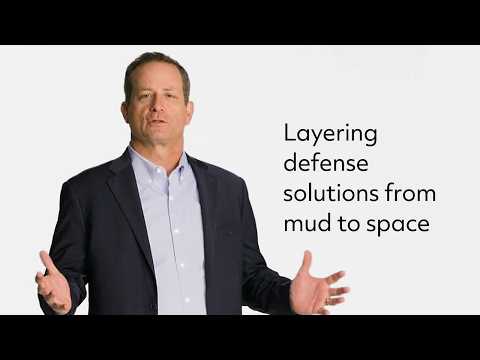
This includes some of the most important missile defense systems of the USA and Israel, including Patriot air defense, the Iron Dome, David’s Sling, Stingers, and LTAMDS (Lower Tier Air and Missile Defense Sensor).
It also covers anti-ballistic missiles able to target ICBMs and anti-ship missiles like the SM-6 and SM-3 interceptors.
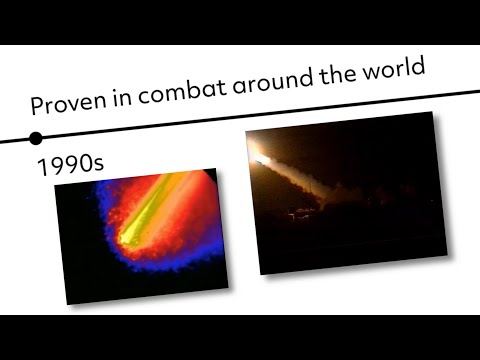
The land military equipment is mostly missiles as well, including the now well-known due to the Ukraine war Javelin, missiles for tanks and armored vehicles, as well as ground-based mobile radars.
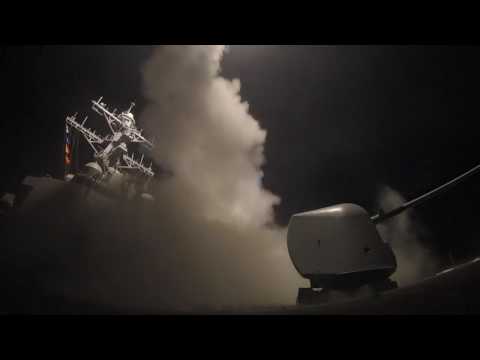
Besides anti-missile interceptors, Raytheon provides at sea mine hunting and neutralization systems, the anti-drone and projectile Phalanx quick-fire gun (75 rounds per second), Tomahawk cruise missile, the Naval Strike Missile, and torpedoes.
Lastly, RTX also provides space-based services with the Joint Polar Satellite System Common Ground System, a weather forecasting data and display toolkit (AWIPS – Advanced Weather Interactive Processing System), and NASA Goddard’s Earth Observing System Data and Information System (EOSDIS)
This focus on ammunition and defense against missiles and drones is the largest growth opportunity for RTX in the coming years, as the US military is discovering that adversaries like Iran have developed a strategy of resilience to missile strikes and a strongly enhanced capacity to strike targets previously thought untouchable, like US military bases in the Persian Gulf (more on that topic below).
In 2025, Raytheon saw its sales grow by 10% year-to-year, reaching $8.1B, and its operating profit jump 25%, with more than $74B in backlog orders to replenish the Pentagon inventories.
Collins Aerospace
Collins Aerospace is the company producing the electronics, equipment, landing gears, flight controls, cockpits, etc., present in most airplanes, even if the actual design and assembly of the final planes are done by corporations like Boeing (BA ) or Airbus.
The same equipment is also used in many military aircraft, including helicopters, such as the Common Avionics Architecture System (CAAS) and Flight2 integrated avionics system.

Source: Collins Aerospace
The sales of aircraft components are just the beginning of Collins’ business, as it also maintains, services, and replaces them 24/7 in 75 MRO facilities across the world, serviced by 36 distribution centers.
This segment of the company employs 20,000+ engineers, 10,000 customer service personnel, and 325 field service engineers.
Besides these parts and their maintenance, Collins also provides airports with software for Air Traffic Management (ATM) software, airport database & resource management, check-in services, airport cybersecurity, and flight information display.
“As global air traffic is set to double in the next 15 years, and with new entrants like drones, advanced air mobility vehicles and commercial space launches, innovative solutions are crucial for managing increasingly complex airspace.”
Lastly, Collins is also producing custom electronics and mechanical components for space probes, space station modules, and telescopes.

Source: Collins Aerospace
In 2025, Collins saw its sales grow by 10% year-to-year, reaching $7.6B, and operating profit by 6%.
Pratt & Whitney
This segment of the company produces the aircraft engines that propel the aircraft controlled with Collins’ electronics. This puts it in a very limited club of companies able to produce such engines as GE Aerospace (GE ) and Rolls-Royce.
This includes engines like the F-135 powering all variants of the F-35, the core of US air power, with more than 40,000 lbs. of thrust.

A unique competitive advantage for the company is its Geared Turbofan architecture, a unique gearbox that allows the fan to slow down while the turbine spins rapidly. This design has cost up to $10B in R&D to be created, and delivers up to a 16% to 20% reduction in fuel consumption and a 75% reduction in noise footprint.
“Without a geared configuration, Pratt’s rivals cannot hope to match that kind of performance. Of course, they can introduce new materials and other refinements into their designs, but Pratt can do the same.
This innovation is especially advantageous to RTX / Pratt & Whitney, as it is now protected by patents, making it very hard for competitors to replicate.
“What the other companies can’t do is introduce gears; that will require all new engines that don’t violate Pratt patents—breakthroughs that took the company 20 years and $10 billion to perfect.”
In total, 85,000 Pratt & Whitney engines are in service all over the world, used by around 17,000 customers.
In 2025, Pratt & Whitney saw its sales grow by 10% year-to-year, reaching $8.1B, and its operating profit jump 21%, with more than $74B in backlog orders to replenish the Pentagon inventories.
RTX’s Future
Competitive Positions in Aircraft Components
As mentioned, the gear turbofan technology is a serious advantage for RTX, and led it to win the contract to equip Airbus latest generation of aircraft. In the future, many new models of civilian aircraft might be equipped with this system as well.
This creates a business flywheel where more engines are sold, creating economies of scale and decades of contracts for inspection, servicing, maintenance, and repairs. In total, the company received 1,500 GTF engine orders in 2025, and already more than 2,500 aircraft across more than 90 operators were powered by GTF engines.
This can also help open more doors to Collins avionics systems, where access to Pratt & Whitney’s engine can be leveraged to sell other components to companies like Airbus or Boeing.
Similarly, being the sole supplier for engines to the F-22 and F-35 is a strong position that will yield decades of sales and even longer servicing contracts for military aircraft. Ideally, the company could also win the contract to power the future Next Generation Air Dominance (NGAD) fighter with its XA103 adaptive engine.
“Pratt & Whitney’s NGAP engine features an adaptive architecture, allowing its components to actively adjust for optimised fuel efficiency, survivability, and power and thermal management – capabilities that surpass those of fourth and fifth-generation engines. This innovation is expected to play a critical role in ensuring the US Air Force maintains air superiority amid evolving global security challenges.”
Overall, past investments in R&D have borne fruit in the form of advanced designs looked after by the company’s customers, and the competitive position of the company seems well established for several decades to come.
Changing Battlefield
On the military side, the recent war in Ukraine and with Iran have illustrated that modern wars are consuming an absolutely massive volume of ammunition.
For example, there are concerns that the USA or Israel could ultimately run out of interceptors and anti-missile defense systems against Iran, in part due to previous strong consumption by the Ukrainian military in years prior.
From the perspective of a conflict with a country like China with vastly superior capabilities, these issues would be even more pressing.
“We’re running out of certain types of weapons for the type of war we like to fight. We’re running out of the expensive, exquisite ones; it is a “strategic red flag.”
To answer this pressing need, Raytheon has ramped total munitions output over 40% year-over-year. And overall, the Department of War is looking to triple the ammunition production pace.
In particular, the stockpiles of Patriot missiles, Stinger, and Javelin are getting critically low, with SM-3 and SM-6 also depleting from fending off anti-ship drones and missiles in the Red Sea and the Iranian coastline.
Innovations
As a company built on delivering the best technical capabilities to both the civilian and military markets, RTX is already preparing for the next generation of aerospace technology at its RTX Technology Research Center with 330+ employees, almost all of whom hold advanced degrees and have secured more than 200+ patents per year.
RTX Ventures is also investing in promising start-ups and new technology within the company to complement the internal development.
One technology field is in next-generation propulsion, like air-breathing scramjet systems for hypersonics and rotating detonation engine concepts.
Hybrid-electric flight is being investigated, with demonstrators for the European Union’s Clean Aviation SWITCH project showing it could reduce fuel emissions by up to 30%, mostly targeting regional aircraft. RTX is also exploring hydrogen-powered flight and synthetic aviation fuels.
Another field is advanced materials and manufacturing, with materials such as gallium nitride for radars, silicon carbide that will allow engines to run hotter, carbon-carbon composites for hypersonic flight vehicles, and the use of additive manufacturing for producing intricate, complex components.

Lastly, the use and countering of drones is becoming the all-important priority for militaries around the world, as they are progressively replacing more complex and more expensive missiles and other ammunition.
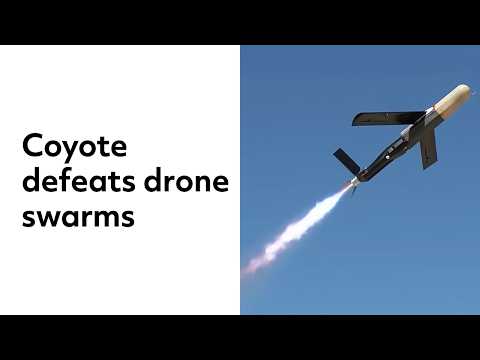
The company is betting big on Coyote, a low-cost, rail-launched counter-unmanned aircraft system (C-UAS). Other technologies being tested include the Phaser High-Power Microwave System to fry drone swarms’ electronics internals, the Ku-band Radio Frequency Sensor (KuRFS) to better detect drones hard to see on normal radars, and high-energy lasers.
Conclusion
Thanks to a razor-sharp focus on innovation, RTX is now well positioned to become the global leader in aircraft engines and reinforce its presence in avionics.
It is also the main manufacturer of many of the US and its allies’ most important ammunition, especially in a context of geopolitical conflicts exploding and weapon inventory depleting quicker than production can keep up with, irrespective of military budgets.
This puts the company in a very safe position, with sales likely to grow for the year to come, more constrained by its manufacturing capacity than demand.
Latest RTX Corporation (RTX) Stock News and Developments



