

Aerospace
Red Cat (RCAT): Building Western-Sourced Drones

Securities.io maintains rigorous editorial standards and may receive compensation from reviewed links. We are not a registered investment adviser and this is not investment advice. Please view our affiliate disclosure.

Summary:
Military drones are rapidly replacing traditional battlefield systems, creating urgent demand for U.S.-made, Blue UAS-certified platforms. Red Cat (RCAT) is emerging as a near pure-play domestic supplier positioned to benefit from NATO rearmament and defense modernization.
Military drones are rapidly replacing traditional battlefield systems, creating urgent demand for U.S.-made, Blue UAS-certified platforms. Red Cat (RCAT) is emerging as a near pure-play domestic supplier positioned to benefit from NATO rearmament and defense modernization.
How Military Drones Are Replacing Tanks and Artillery
Drone technology has quickly evolved from a niche market catering to photographers, extreme sports, and hobbyists to a key technology of the 21st century. This is because they have ridden the trend of electrification and declining costs of small electronics, from electric motors to gyroscopes and batteries.
This has not only made drones a lot cheaper for equivalent capacity, but also opened the possibility of much more capable drones. Today, drones are used in civilian industries like agriculture, mapping & surveying, infrastructure maintenance & inspection, search & rescue, law enforcement, etc. And might soon be used in deliveries, heavy transport, and even maybe finally materialize the dream of flying “cars”.
(For more information, you can read our article “Top 5 Ways Drones Are Disrupting the Global Workforce”).
Still, in a few decades, the largest impact drones will have might be for their military applications. While early usage of drones for reconnaissance and as flying suicide bombers already occurred in the Syrian civil war and the Azerbaijan-Armenian conflicts, it is the war in Ukraine that has demonstrated the full potential of drone warfare.
The impact is so enormous that many mainstay military systems of modern armies, from tanks to artillery, warplanes, and cruise missiles, are now either being replaced by or are highly vulnerable to drone attacks.
For Western military, this, however, poses a major issue. The manufacturing of drones is almost completely dominated by Chinese suppliers, as the #1 drone brand, the privately-listed company DJI, controls 76% of the market. China’s control over drone technology is even stronger than this number implies, as most other top drone brands are Chinese as well, and most Western drone manufacturers are mostly assemblers of China-made parts.
This can be an issue for civilian markets, but not a critical one. However, for potential military applications, this level of dependency on China, at a time of elevated geopolitical tensions, could turn out to be catastrophic for the US and other Western militaries.
This is why companies able to deliver drones usable by the military and with a more secure supply chain are now a hot topic both for the industry and for investors. Especially more nimble startups that can iterate more quickly than larger defense giants. Among others, one company is making inroads: Red Cat.
Red Cat Holdings, Inc. (RCAT -9.43%)
Global Drone Market Growth & Defense Adoption
Drone Market & Technology
The global drone market is $73B, and expected to grow 14.3% CAGR to $163B by 2030.
The largest end-user markets for drones are North America and the Asia-Pacific region, followed by Europe.

Source: GrandView Research
As new markets open with new capabilities, the drone industry is evolving quickly.
The integration of 5G, IoT, AI, and other control technology also favours the decentralized control of drone fleets, as well as increasingly autonomous operations, where the human “pilot” is mostly giving a general instruction, and the drone pilot itself to achieve it.

Source: GrandView Research
Another structural technology is batteries, as more dense and cheaper batteries are allowing ever more powerful motors and higher autonomy, and/or steadily reducing costs per drone.
Hydrogen fuel cells are also a trend for longer-duration missions and larger drones requiring more power.
Fossil fuel-powered drones are rather rare and are more commonly used for military applications and ultra-long-range missions, at the limit between drones and missiles.
Military Drones
At the beginning of the Ukraine war, most drones used for military purposes were civilian, quadcopter-type drones. Initially mostly used for reconnaissance, they have progressively grown in size and loaded increasingly heavy explosive payloads.
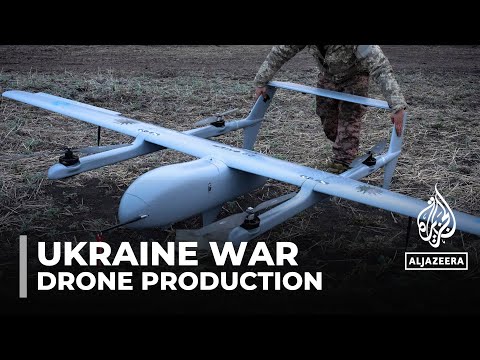
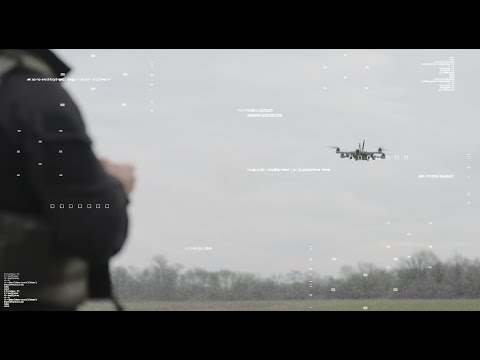
So-called FPV (First-Person View) drones have become one of the most recognizable weapons in this war, and are credited for most of the military casualties, up to 3 out of 4 deaths, according to some sources.
As the conflict drags on, both sides have used increasingly customized designs, with a few notable evolutions:
- Heavier payload and massive increase in drone numbers.
- Use of AI for the final lock on targets.
- Mass use of electronic warfare (EW).
- Generalization of optical fiber drones, using a 5-40km long cable to avoid EW interferences.
In addition, the line between drones and missiles started to blur more and more with the creation of the “loitering munition” category, with, for example, the mass-manufactured “Geran” drone occupying a middle range between the two.

Source: TurDef
So far, the drone supply on both sides has been mostly provided by Chinese companies. But this represents an obvious vulnerability for Western armies, as China is closer to Russia and a potential adversary to US interests in the Pacific region. If China took the decision to cut supply, this could provide a decisive advantage to the side still supplied in any military conflict.
Red Cat Overview
Red Cat History
Red Cat is a US drone company founded in 1984, but recently rebranded and refocused in 2016 on drone technology, went public in 2019 (with a secondary NASDAQ listing in 2021), with a focus on fully US-source parts and domestic manufacturing.
This shift was notably done with the acquisition in 2021 of Teal Drones, Flightwave in 2024, and Blue Ops in 2025. So Red Cat is somewhat of an aggregator and vertical integrator of drone tech, looking to give it the scale required to fulfill the Pentagon’s procurement requirements and improve the efficiency of its subsidiaries through synergies.
The company opened its 13,000+ square foot manufacturing facility in Salt Lake City, Utah, in 2021. It targeted an initial production of 75 drones a month, with plans to scale to 200 drones a month, mostly for military applications.
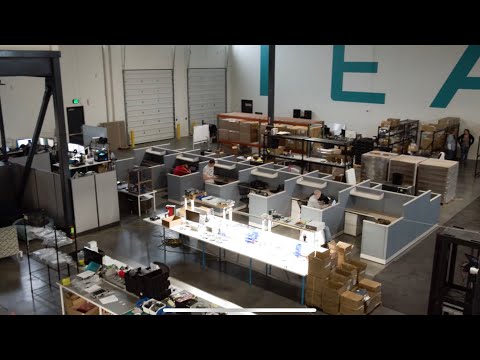
This facility was doubled in size in 2025, to which was added the Flightwave facility in Los Angeles, which was also doubled in size. It also recently expanded its capacity much further with a 155,000 square foot facility in Georgia with manufacturing capacity of more than 500 maritime drones per year.
“The recent launch of our USV division, Blue Ops, and the lease of our 155,000 sq foot vessel building facility positions us to be the leader of delivering critical unmanned systems for use over land and sea.”
Accelerating Growth
The company has been growing its revenues very quickly, with a growth in Q3 2025 of 646% year-to-year, and +200% since the previous quarter.
Q4 2025’s revenue is forecasted to reach a 1455% year-to-year growth rate, bringing the 2025 annual revenue guidance to between $34.5M to $37.5M. The major driver of revenue growth was military contracts.
“Our record-breaking third quarter revenue and the expansion of our contract with the U.S. Army clearly demonstrates the accelerating adoption of our specialized solutions within the defense and national security sectors.”
This type of orders are expected to keep growing, as the US, but also other NATO military forces, are realizing how much they have been lagging behind in drone technology.
“We are seeing significant returns on our focused strategy, with our products being validated by major government agencies and NATO allies and necessitating the recent 2x expansion of our drone manufacturing facilities.
And as a recent article in the Wall Street Journal declares, “NATO Has Seen the Future and Is Unprepared”. In a recent training against drone-proficient Ukrainian trainers, NATO troops performed very poorly, indicating how mass adoption of drone warfare is still only nascent in NATO armies, especially compared to Ukrainian and Russian forces.
“A single Ukrainian team of about 10 people acting as the simulated enemy managed in half a day to imitate the destruction of 17 armored vehicles and conduct 30 additional strikes on other targets.
More than 30 drones operated in an area of less than 10 square kilometers. That is only half the drone density currently seen on Ukraine’s front line.”
Red Cat Products
So far, Red Cat products are still organized according to the different companies it acquired, with Teal Drones being the most integrated product, as the acquisition is by far the oldest.

Source: Red Cat
Teal Drones
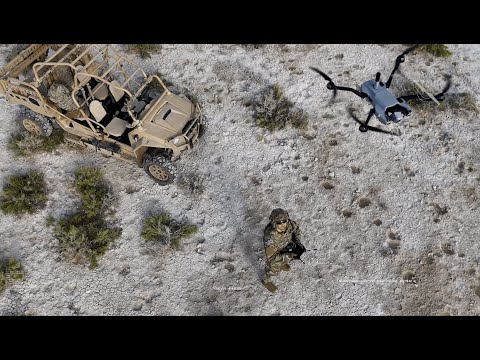
The flagship product of the company is the Black Widow Short-Range Reconnaissance drone. It is designed to be field-repaired, with a 5 miles (8km) range, 13 m/s (29 mph) speed, a 45+ minute flight time, and 4K video recording.
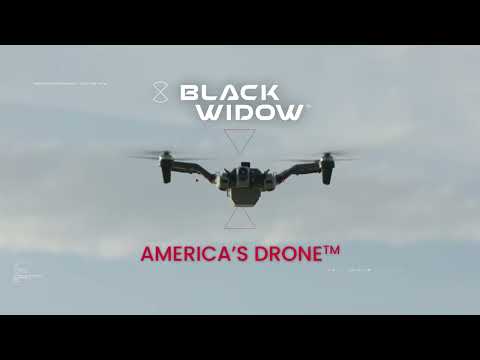
Black Widow drones are also designed to be low-cost, resilient to electronic warfare, rucksack-portable, and optionally use recognition software (AI, see below about Athena AI).
Black Widows will also be reinforced by other similar drones with different specialties like Fang (FPV drone), Trichon (long range reconnaissance), and the control system Warfighter Electronic Bridge (WEB).
The point of this drone class is not so much to be used as a weapon, but to identify targets and threats. Of course, they likely could be repurposed for this role if needed, the way civilian drones did in the Ukraine war.

Source: Red Cat
Black Widows also successfully tested Palantir’s VNav Software at the end of 2025.
“This is a breakthrough moment not just for Red Cat, but for the tactical needs of the Department of War. Every battlefield is a GPS-denied environment, and this successful test shows that Red Cat and Palantir are delivering a software-driven solution the Army can rely on.”
Flightwave
This department of Red Cat’s flagship product is the Edge 130, a hybrid fixed-wing VTOL tricopter, mixing helicopter-like small drone rotors with a fixed-wing design. This hybrid design allows it to start vertically and hover, but gives it an extended flight life (60+ minutes) and a lightweight 1.2kg.

January 2025 saw a new order for Edge 130, with 12 new drones for the Army National Guard and another U.S. Government Agency (OGA), totaling $518,000.
Blue Ops
While the word “drone” is often synonymous with flying drones, a growing category, especially for military applications, is to expand it to land and sea as well.
Blue Ops is focused on Variant 7, a 7.2-meter Unmanned Surface Vessel (USV) with 60+ hour endurance, maximum speed exceeding 39 knots, and a payload capacity of 650 kg, made of advanced composite materials.
It is designed to provide high-speed, low-profile strike capabilities, similar to those that have damaged Russian ships in the Black Sea in recent years.
Why Secure U.S. Drone Supply Chains Matter
A unique selling point of Red Cat’s family of drones is the safety of its supply chain. It either produces directly or sources from American suppliers its drone components and software solutions, for example, getting its drone motors from the other US firm Unusual Machines (UMAC -12.35%).
It also collaborates with many other US parts, drone, or defense firms to push the capacity of its own drones.

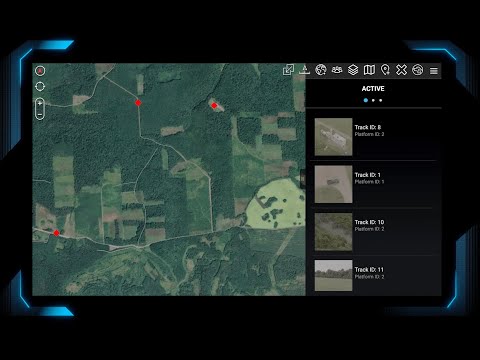
One of these is the Tomahawk Ecosystem, an AI-enhanced common control usable for all drones thanks to a fully open architecture. This way, as the military keeps adding flying, rolling, and walking drones to its arsenal, the same interface can be used.

Source: Tomahawk Robotics
Another is Reveal Tech, creating a 3D/2D real-time generation of the landscape from reconnaissance drones.

Source: Reveal Tech AI
Meanwhile, the Australian AI company Athena AI can be used for edge computing (done on-site, not remotely in the cloud) to identify, for example, armored vehicles or people holding weapons.

Source: Create Digital
Cameras and other sensors are provided by Flir, a Teledyne company (TDY -2.91%), and Immervision provides low-light sensors.
Blue Drones
This localized supply chain, independent from potential adversaries, has been essential in securing the Blue UAS (Unmanned Aerial Systems) certification.
It proves compliance with the National Defense Authorization Act (NDAA) and that the drones meet the most rigorous standards for data security and supply chain integrity.
While not technically required, being put on this list is a very important requirement for any drone company willing to sell to NATO military organizations. It also forms a solid business moat against potentially cheaper, but less trusted foreign suppliers from lower-cost countries like China.
| Company | Primary Market | Blue UAS Certified | Supply Chain Origin | Military Focus |
|---|---|---|---|---|
| Red Cat (RCAT) | Defense & Tactical | Yes | Primarily U.S.-sourced | High |
| DJI | Consumer & Commercial | No | China-based | Limited |
| Anduril | Defense Systems | Yes | U.S.-based | Very High |
Future Drone Technologies
As drone tech and drone warfare are evolving quickly, companies like Red Cat are also looking at the next step.
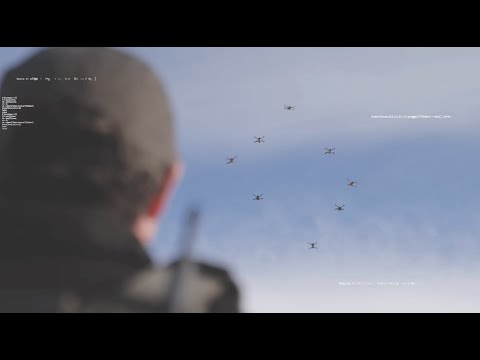
One especially important in the future will be drone swarms, replacing current 1-3 drone attacks with tens or hundreds of drones at once. These systems will see the drones communicate primarily with each other, coordinating independently.
The same will also be true for other missions like reconnaissance, with a swarm of drones able to scan a large area all at once, with limited to no human intervention for their flight.
For this topic, Red Cat is partnering with Sentient Robotics and Apium Robotics, as well as Palladyne AI.
Tethered UAS, connected with a cable instead of a wireless network, which are now so important in Ukraine, are also being investigated in partnership with Hoverfly Technology and its drone capable of 200 feet tethered flight.
Conclusion
Drone technology is going to be one of the determining images of military technology in the coming decades, the way tanks or fighter jets were in previous eras. This is due not so much to the difficulty of countering drones, which will likely decrease as military forces adapt, as to their extraordinarily low cost and flexibility compared to other platforms with equivalent capabilities.
As a result, securing and scaling up as fast as possible a domestic supply chain has become the top priority of military planners and industrial decision makers.
So far, the key suppliers seem to fit into two categories: traditional defense contractors, with experience and technical expertise but high costs and inflexible organizations, and startups like Anduril and Red Cat, capable of iterating more quickly and delivering drones at a much faster pace.
Considering the yearly US military budget is scheduled to rise by no less than $500B in the coming years to reach $1.5T, it is likely that the answer of “Which drones should we buy?” will be “Yes!” to all companies able to deliver, in both a bid to build up the NATO arsenal and to prompt a more resilient domestic supply chain able to at least partially keep up with China’s and its allies.
(You can also read more about other companies in this field in our article “Top 10 Drones And Drone Warfare Stocks”)
Investor Takeaway:
Red Cat represents a high-growth, defense-focused drone manufacturer with Blue UAS certification and a U.S.-secured supply chain. While revenues are still small relative to legacy defense contractors, accelerating military procurement and geopolitical tensions could provide significant tailwinds.
Red Cat represents a high-growth, defense-focused drone manufacturer with Blue UAS certification and a U.S.-secured supply chain. While revenues are still small relative to legacy defense contractors, accelerating military procurement and geopolitical tensions could provide significant tailwinds.
Latest Red Cat (RCAT) Stock News and Developments
Record $26.2M Quarter, Near Zero Gross Margin: The Red Cat Paradox
247wallst.com
•
March 27, 2026
Red Cat Stock Recovers — Strong Revenue Meets Rising Short Interest
benzinga.com
•
March 24, 2026
Why Kratos Defense Stock Dropped Today
fool.com
•
March 19, 2026
Red Cat Holdings: No Formal Guidance, Big Selloff - I Loaded The Truck
seekingalpha.com
•
March 19, 2026
Red Cat Emerges In A High-Growth Market, Time To Ramp Up Production
seekingalpha.com
•
March 19, 2026
Why Red Cat Stock Got Declawed Today
fool.com
•
March 19, 2026



