
Computing & Semiconductors
Quantum Computing Moves Closer to Portfolio Optimization

 Add Securities.io to your preferred sources on Google

Quantum computing is often described as an entirely new form of computing that could solve problems otherwise intractable with traditional binary, silicon-based computing.
So far, quantum computing has been a promising technology, but it continues to face a fundamental engineering challenge. The extremely fragile state of matter that needs to be maintained for quantum computing to work means it is both expensive and not very scalable.
It also means that the results obtained are “noisy”, with regular errors, delays, and unreliable results.
Several innovations could mean that either a network of smaller quantum computers or a new hardware design architecture, using a new state of matter called topoconductors, allowing for scalability, could solve the problem.
But this might also be a conceptual issue. Most quantum computing projects are looking to entirely replace traditional computing solutions with quantum-based ones. But in practice, narrower problem-solving could potentially yield functional use cases for quantum computing sooner.
A recent study by researchers at Chungbuk National University (South Korea)and Duy Tan University (Vietnam) has compared three different methods of leveraging quantum computing. It found that one, quantum annealing, “demonstrates significant near-term operational readiness” for optimization of financial portfolios.
This could indicate that the iterative gate-based methods favored by most quantum computing research, and which require a massive number of qubits, might be the wrong direction to take for the industry, at least in the short term.
They published their findings in ICT Express1, under the title “A comprehensive survey of quantum computing approaches for portfolio optimization in FinTech”.
Quantum Computing For Portfolio Optimization
Problems Too Complex To Solve
Portfolio optimization is a central and computationally intensive problem in modern finance and a cornerstone of the FinTech industry. When realistic constraints are introduced
(selecting a fixed number of assets, transaction costs, or the inclusion of non-financial metrics like ESG scores) it quickly becomes an increasingly difficult combinatorial problem that can make exact optimization impractical as the number of assets and constraints grows.
This is especially true when the number of available assets grows; the solution space expands exponentially.
So in practice, this is not something that can be computed directly for large-scale portfolios managed by institutional funds, hedge funds, and automated robo-advisors, with many empirical rules and manual decisions used instead of mathematical models.
The Many Ways To Perform Quantum Computing
The core of quantum computing is the qubit, which can exist in a superposition of states. Quantum algorithms manipulate superpositions of states so that interference increases the probability of measuring useful solutions. This does not mean every possible answer can simply be calculated and retrieved simultaneously.
Three main methods have emerged to use this quantum property to perform calculations useful in the real world, especially for portfolio optimization:
The first is Quantum Annealing (QA), a specialized quantum computing paradigm designed specifically to tackle complex optimization problems. Its core function is to find the minimum energy configuration, or ground state, of a physical system.
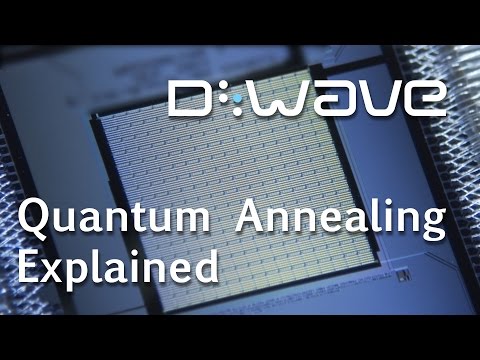
This specificity makes QA more efficient and creates a shortcut to lower-energy configurations. To practically apply QA, a financial problem must be mapped to a compatible mathematical structure, most commonly the QUBO model.
“Unlike gate-based models that may require fine-grained pulse control, QA allows for a submit-and-retrieve workflow where the entire problem definition (matrix ) is uploaded once. ”
Variational Quantum Algorithms (VQAs) are hybrid quantum–classical optimization loop that iterates between a quantum processor and a classical optimizer.
As such, the total execution time is not solely determined by qubit coherence times but also by the network latency accumulated over thousands of iterations. This latency penalty represents a significant architectural bottleneck for high-frequency trading applications.
It should also be noted that an emerging approach is the synergistic combination of gate-based VQAs and quantum annealing.
“In such a framework, a quantum annealer might be used to find a high-quality initial state or to pre-process a difficult optimization landscape, providing a strong starting point for a subsequent VQA optimization loop on a gate-based machine.”
Quantum Machine Learning (QML) is a method with a distinct architectural paradigm centered on data representation. This shifts the computational bottleneck from finding a ground state to the training phase, where high-dimensional financial data must be encoded into quantum states via feature maps.
It can be used for situations where uncovering complex, non-linear relationships in financial data is a significant advantage. It makes it a powerful tool for risk analysis and scenario generation (with a sub-method called Quantum Circuit Born Machine – QCBM), as well as predicting market movements or classifying assets based on risk profiles (with a sub-method called Quantum Support Vector Machine (QSVM).

Source: ICT Express
Finding The Best Quantum Tool
Optimizing Quantum Computing
Out of a total of 423, the researcher selected 30 different studies to analyze and help them compare different quantum computation methods.
The first finding was that, as one key constraint is efficiently mapping financial rules to quantum hardware, the research is moving from inefficient penalty-based models to architectural enforcement, which maximizes the effective use of limited qubits. It is generally done by embedding operational boundaries directly into the hardware-software stack or circuit ansatz.
To address the scalability limits of NISQ devices, recent research proposes heterogeneous distributed architectures that utilize different types of quantum processors for different stages of the optimization pipeline.
This can take many forms, for example, an annealer-gate hybrid model or the orchestration and synchronization protocols to manage the workload between an annealer and a gate-based QPU.
Measuring Performance
To rank the different quantum computing solutions for portfolio optimization, the researchers used both the benchmarking cited in the literature and the absolute state-of-the-art classical solvers.
They found that overall, the first commercially useful financial applications may emerge from quantum annealing.
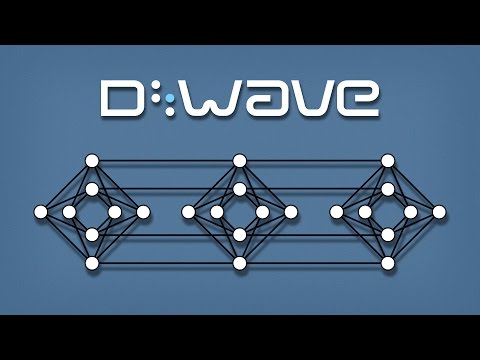
This is because quantum annealing supports native inequality constraints and one-shot cloud submission models that minimize communication latency.
In contrast, other methods see network overhead often outweigh quantum execution time or are constrained by the high latency of state preparation.
Quantum-Classical Hybrid Calculations
What also emerges is that hybrid approaches mixing quantum computing with classical computing work best for a variety of reasons:
- Mitigation of network latency, with the researchers proposing QPU-colocated classical optimizers or one-shot submission models.
- Resource-efficient constraint handling: instead of meticulously tuning penalty weights, which can hide the most optimal solutions, native constraint handlingallows for the optimization of institutional-scale portfolios with higher solution fidelity.
- Task-hardware mapping: instead of trying to solve everything with one hardware type, the annealer performs computationally intensive global decomposition and the gate-based processor handles fine-grained local aggregation.
So the ideal process to develop quantum computing solutions might be to first identify the ideal method for a given problem, and then develop a model merging these quantum computing tools with classical computing tools into a hybrid solution.
So architecture, latency, and constraint handling might matter as much, if not more, than the performance of the quantum hardware used.

Source: ICT Express
This is likely to stay true as long as the primary obstacle in quantum computing is hardware limitations and noise: limited qubit counts, which limit problem size, while noise degrades solution quality.
It also matches practical experience, where virtually all contemporary, large-scale applications of either QUBO or CQM are executed on hybrid quantum–classical systems.
So the researcher concludes that this synergistic approach is essential for tackling industry-relevant problems with current quantum computing hardware.
Is Quantum Even Needed?
A last interesting data point in this study is the comparison of quantum computing with other innovative computing methods.
For example, it looks at massively parallelized GPU-accelerated architectures that can radically outperform normal calculation tools. This method can also bypass the network latency bottleneck of cloud-based quantum systems.
“GPU-based first-order solvers can achieve runtime speedups of up to 12.9x in single-period and 48x in multi-period settings over high-performance classical exact solvers like MOSEK 11.0”
GPUs can even be used to simulate results normally obtained with quantum computers. In particular, GPU-accelerated Parallel Simulated Annealing (PSA) and Particle Swarm Optimization (PSO) can leverage thousands of cores to achieve near-real-time convergence. For example, optimized GPU-PSO kernels achieved a 150x speed-up compared to a CPU baseline.
As GPUs and similar hardware capable of making massive amounts of parallel calculations are developed for AI calculations, this could form a serious competition for the nascent quantum computing industry.
“Consequently, the quantum advantage must be measured against these sub-second, hardware-optimized classical pipelines that define the current threshold for production readiness in high-frequency FinTech.”
Still, GPUs are a more mature technology than QPUs, so in the very long run, the hardest-to-solve problem will likely benefit from quantum computing, especially as other constraints like energy consumption might at times delay the deployment of large GPU clusters.
For investors, this comparison narrows the field considerably. The study does not suggest that every quantum architecture is equally close to generating commercial value in finance. Instead, it identifies quantum annealing as particularly well suited to constrained optimization, while emphasizing that any viable system must still compete with increasingly powerful GPU-based alternatives. That makes D-Wave especially relevant: it offers publicly traded exposure to the architecture the researchers consider among the most operationally ready, while already pursuing commercial applications in finance and other optimization-intensive industries.
Investing In Quantum Annealing
D-Wave Quantum Inc.
QBTS Price Chart
D-Wave is a quantum computing company that has focused not on building the largest number of superconducting qubits in the future, but on the most usable ones for real use cases today.
Already, half of D-Wave’s customers are commercial enterprises, with 65% of revenue derived from commercial customers, of which 45% of revenue is derived from Forbes Global 2000 customers.

Source: D-Wave
For example, D-Wave tools are already used by AT&T (T ) to reduce the processing time for a network optimization workload from approximately one hour to less than 15 seconds.
“Planned future work will explore a broader set of applications, such as outage detection and response, technician routing, network build planning and traffic management”
D-Wave has also demonstrated direct financial applications of quantum annealing, including portfolio optimization involving S&P 100 and S&P 500 assets. For example, a collaboration with CaixaBank (48CA.DE ), a leading bank in Spain, used D-Wave for exactly the type of financial application discussed in this study. What normally took the bank several hours of compute time was reduced to just minutes via quantum computing technology.
“The quantum hybrid applications have significantly decreased compute time to solve complex financial problems, improving investment portfolio optimization, increasing a bond portfolio internal rate of return (IRR), and minimizing the capital needed for hedging operations, as a result of their collaboration.”
By focusing on quantum annealing, the company sees itself as taking the middle path between trapped-ion technology (“efficient, but slow”) and superconducting qubits (“fast, but complicated and less reliable”). The company is rapidly scaling its hardware, hoping to multiply 4x the number of qubits in its system by 2029 and 20x by 2031.

Source: D-Wave
In addition to annealing, which it started to develop in 2011, D-Wave has also been expanding into gate-model quantum computing since 2020. Overall, the two technologies should complement each other, with each specializing in specific applications.

Source: D-Wave
“While annealing quantum computing excels at optimization, materials simulation, and certain AI workloads, gate-model quantum computing is expected to advance applications such as quantum chemistry, molecular design, and next-generation energy storage.”
Investors in D-Wave should, however, be aware that quantum computing is an emergent and very competitive field. Virtually every quantum company will see itself as having picked the right technological path, either because it is more resilient (ion-trapped), more market-ready (annealing), or has greater potential for scalability (superconducting).
Still, having its quantum computing being deployed at increasing scale to already solve real-life problems in biotech, telecom, or banking is an impressive feat, and D-Wave might be a surprise winner in the field, while discussions are often focused on other companies using different quantum computing technologies.
Latest D-Wave Quantum Inc (QBTS) Stock News and Developments
Study Referenced
1. Kimchhor Chiv, Anand Nayyar, and Tae-Kyung Kim. A comprehensive survey of quantum computing approaches for portfolio optimization in FinTech. ICT Express. 5 August 2026.



