

Aerospace
Northrop Grumman (NOC): Defense and Aerospace Giant For American Strategic Resurgence

Securities.io maintains rigorous editorial standards and may receive compensation from reviewed links. We are not a registered investment adviser and this is not investment advice. Please view our affiliate disclosure.

Summary:
Northrop Grumman is a pure-play U.S. defense and space prime whose dominance in stealth bombers, missile defense, autonomous systems, and orbital infrastructure positions it at the center of America’s long-term strategic posture.
From Military Aircraft to Space Dominance
The most advanced technological developments have always been tightly linked to military technology, as the government is more likely to write a blank check to develop new, unmatched capacity when it comes to military power.
The production of weapons in the industrial era can also kickstart the supply chain and assembly line of components that can later be reused for more peaceful applications.
As a result, it is common for top aerospace defense contractors to also be leaders in scientific instruments, satellite manufacturing, advanced electronic manufacturing, etc.
This is definitely the case for Northrop Grumman, a defense aerospace company most famous for the creation of the iconic B-2 stealth strategic bomber, each one costing almost a billion dollars.
The company is also a leader in technologies like rocket propulsion, space equipment, specialized electronics, and advanced sensors.
So, besides the obvious investment case of a leading defense company in an era of geopolitical turmoil, the technology portfolio and civilian applications are highly valuable as well.
Northrop Grumman Corporation (NOC +0.11%)
Northrop Grumman Overview
Northrop Grumman is the result of the acquisition of Grumman Aerospace by Northrop Aircraft in 1994.
Grumman was started in 1929 as an aluminum company (welding aluminum tubing for truck frames), and extended into building aircraft landing gear, and then full aircraft for the US Navy. It would become one of the main suppliers of aircraft during WWII and later on during the Cold War.
Grumman was also the chief contractor on the Apollo Lunar Module, building the foundation of today’s space segment of Northrop Grumman.
In parallel, Northrop also produced aircraft in WWII and the Cold War, and developed the B-2 Spirit stealth bomber of the 1990s.

Source: Tech Vision
Following the merger of Grumman and Northrop, the company completed a series of acquisitions in electronics, with a focus on components used in space and defense applications.

Source: Northrop Grumman
Northrop Grumman served as the primary contractor for the state-of-the-art James Webb Space Telescope, an $11B extremely advanced space telescope that took almost two decades to be designed and built.
Northrop Grumman is also contracted by NASA for the building of the Lunar Gateway Habitation and Logistics Outpost (HALO) module and to develop the Mars Ascent Propulsion System for a Mars sample-return mission.
This overall gives Northrop Grumman a solid technological base in aircraft, rockets, missiles, and space systems.

Source: Northrop
Business Overview
Northrop Grumman’s sales are grouped in 4 different segments:
- Aeronautics Systems: this is the aircraft division, with the B-2 as the center of the company arsenal, but including also drones like the Global Hawks, radar planes E-2D Hawkeye, and parts of the F-35.
- Defense Systems: this is the segment producing missiles and other weapon systems, as well as anti-missile defense/shield.
- Mission Systems: this segment includes radars, navigation, electronic warfare, data processing, and microelectronics, as well as C4ISR (Command, Control, Communications, Computers, Intelligence, Surveillance and Reconnaissance).
- Space Systems: This segment covers projects for NASA like James Webb, as well as missile detection satellites (against ICBM) and satellite communications.
Each of these segments represents a big part of the overall business, with only defense systems slightly smaller than the others.

Source: Northrop
Northrop Grumman Financials
In terms of customers, the US military (Navy + Air Force + Army + Space Force + “Restricted”) is more than 3/4th of the company’s total revenues, with domestic orders making almost 9/10th of the total.

Source: Northrop
So it is fair to describe Northrop Grumman as a company tightly linked to the USA military apparatus, and highly dependent on defense and science budgets.
This is good news for the company, as the Department of Defense prioritizes modernization for great-power competition, and US military spending is larger than the rest of the world’s budgets combined, with expectations of spending staying durably above the $1T mark.

Source: Congressional Budget Office
In the past decade, this growing military budget has been highly profitable for Northrop Grumman shareholders, who have seen money returned in both the form of share repurchases and steadily growing dividends (11% CAGR).

Source: Northrop
This is not to say that Northrop is giving up on innovation and improving its production capacity, as it has spent as much as $2.8B in R&D and capital expenditures in 2024, or nearly 7% of the company’s sales.
Future Northrop Products
With more than 2 years’ worth of backlog orders, Northrop’s immediate revenues are highly predictable, tied to already signed contracts and backed-up manufacturing capacities.
Still, while the current roster of aircraft, military, and space systems is sustaining the company, its future is going to depend on the products in development and to be delivered in the upcoming decade. So a good understanding of these is vital for potential investors to correctly estimate the company’s trajectory.
B-21 Raider
As the B-2 stealth bomber was developed in the 1990s, a new generation of the US’ most important air military asset is direly needed to adapt to evolving radar and detection technologies.
And as the B-2 brings almost $1B per plane to Northrop, this is definitely the “flagship” program of the company, bringing it both revenue and massive political/military importance.
The plane entered test flights in 2023 and should be delivered to the US military by the end of the 2020s.
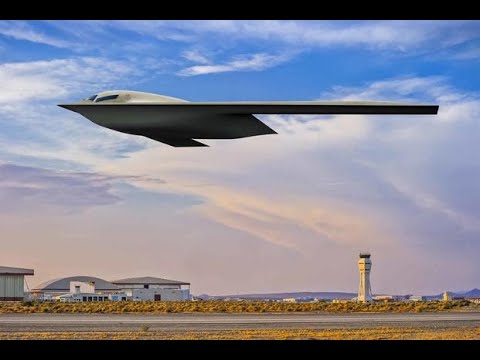
The V-wing design is reminiscent of the B-2’s, but with very different internals. Source: Defense News
Contrary to the B-2, the B-21 is designed to be modular and use open systems, making it easier to upgrade in the future, including with AI systems. Ideally, this could help turn it into an unmanned bomber at some point in the future.
“As a result of Northrop Grumman’s innovative technologies and diligent execution, we only had to make one software change through the first year of flight test – a testament to the early risk reduction work performed by our teams through the labs and flying test bed.
It will also feature multi-spectrum stealth, designed to not only make it invisible to radar, but also other signals like infrared and noise, and be able to jam enemy sensors (electronic warfare).
The B-21 will overall be a bit smaller, with a lower weapon payload (20,000 lbs vs 40,000 lbs), although the weapons used are going to be more precise.
More importantly, the B-21 is expected to be cheaper ($700M-$750M / unit) and a lot easier and cheaper to maintain, drawing from the experience of the B-2, which was a highly experimental design and a first of its kind, prone to expensive failure and requiring extensive maintenance for every flight hour. So it could turn out to be as much as half as cheap as the B-2 when taking all costs into account.
The B-21 was designed from inception to be a daily flyer, with minimal maintenance required between missions.
Innovative digital technologies and advanced manufacturing processes have resulted in the B-21 coming in below the government’s affordability targets, all while successfully scaling into production and achieving technical and performance requirements.
| Aircraft | Unit Cost | Payload | Maintenance Profile | Upgrade Flexibility |
|---|---|---|---|---|
| B-2 Spirit | ~$1B | ~40,000 lbs | High, mission-intensive | Limited |
| B-21 Raider | $700–750M | ~20,000 lbs | Designed for daily flight | High (open systems) |
X-47B UCAS – Unmanned Aircraft
The X-47B was a tailless, strike-fighter-sized unmanned aircraft, making it a little like a mini version of the B-2.
This is a long-standing program, with the 2013’s first-ever carrier-based launches and recoveries made by a low-observable, unmanned autonomous aircraft. It also achieved, in 2015, the first-ever Autonomous Aerial Refueling (AAR) of an unmanned aircraft.
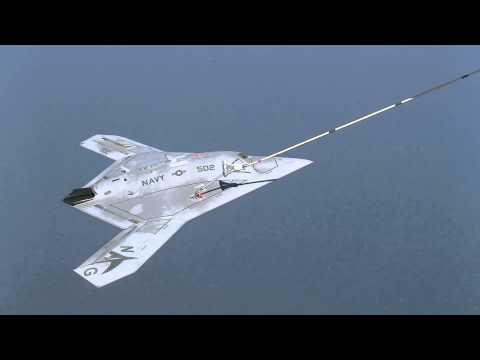
This was mostly a flight demonstrator of, at the time, ground-breaking autonomous flying technologies.
This experience, combined with older drone platforms like the Global Hawk, notably led Northrop Grumman to be selected for many unmanned military programs:
- In 2023, for the Future Tactical Unmanned Aircraft System Prototype (FTUAS).
- The Autonomous Vertical Takeoff and Landing Aircraft for DARPA’s AdvaNced airCraft Infrastructure-Less Launch And RecoverY (ANCILLARY) the same year.
- NATO Alliance Ground Surveillance (AGS) and the Triton maritime surveillance aircraft.
- The Fire Scout unmanned helicopter (sea and land-based).
- Lumberjack strike drone.
More importantly, the X-47 could become the precursor to “Project Talon“, an autonomous wingman designed to assist and protect manned aircraft.
In the long run, this sort of aircraft could form the bulk of the US air force, with manned aircraft mostly dedicated to controlling and coordinating the action of the unmanned ones.
Manta Ray
Used to making headlines in the air, Northrop might be expanding its contacts with the Navy with maritime drones as well. This is the goal of the Manta Ray program, a uncrewed underwater vehicle (UUV) program that completed underwater testing in 2024.
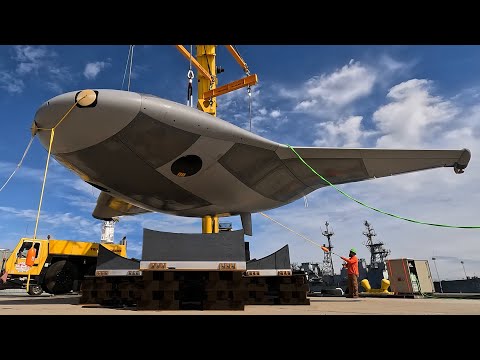
Its modular design allows it to be transported by plane or truck, and the design helps make it very energy-efficient in its movements.
“Once deployed, the vehicle uses efficient, buoyancy-driven gliding to move through the water. The craft is designed with several payload bays of multiple sizes and types to enable a wide variety of naval mission sets.”
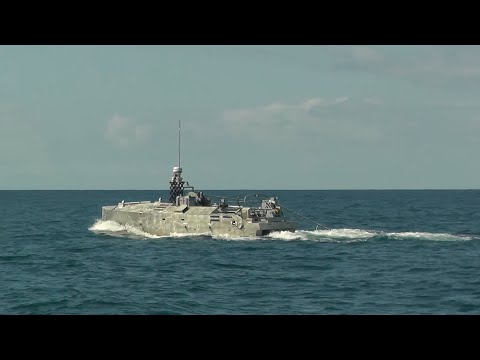
Another smaller UUV, the mine hunting unmanned surface vessel AQS-24B/C, combined with air-borne mine hunting drones, will also be of high importance to the US Navy.
Missile Defense
Northrop is already involved in missile defense through building the network of satellites that are used to detect any nuclear-capable missile launch, as well as the already existing Ground-Based Midcourse Defense (GMD).
It is now working on the Glide Phase Interceptor (GPI), which could engage hypersonic threats in the glide phase of the missile’s flight.
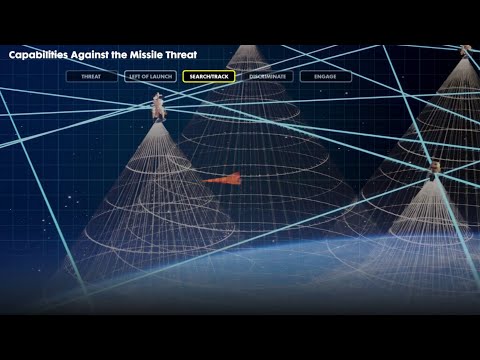
As hypersonic weaponry is a field where countries like Russia and China have an advantage over the USA, this program will likely be quickly approved and deployed by the US military.

Source: Northrop Grumman
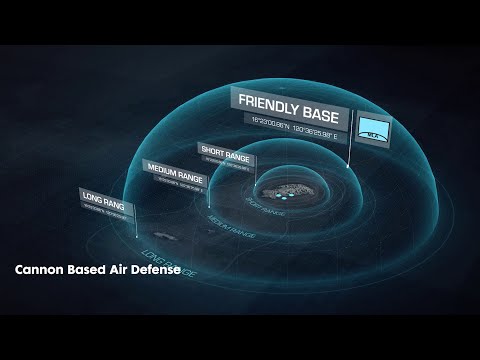
The company is also working on Cannon-Based Air Defense (CBAD), an alternative to missile-based air defense more adapted to the recent proliferation of cheap cruise missiles and suicide drones. It uses a special type of ammunition developed by Northrop Grumman that explodes in proximity to the target mid-flight.
“CBAD drastically decreases the number of rounds that must be fired to hit the target.
With cannon air defense we’re not firing thousands of rounds per minute. We’re executing very specific fire salvos – handfuls of rounds – at intended targets with extreme precision.”
As shooting a $1M missile to down a $20,000 drone is not sustainable, this kind of solution is likely to become standard practice for not just the US, but all the world’s military forces.
Offensive Missile Systems and Nuclear Deterrence
Northrop Grumman has been the producer of various strike missiles, like the Advanced Anti-Radiation Guided Missile (AARGM – 1,500 delivered), the Stand-In Attack Weapon (SiAW) Missile integrating with the F-35.
It is also developing the next generation of strike missiles with the Advanced Reactive Strike.
Northrop’s experience with rocketry and missile mix together with hypersonic missiles, using scramjet propulsion.
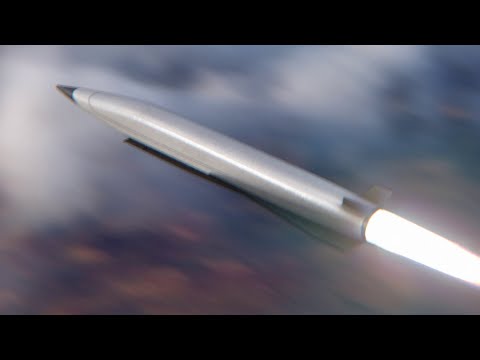
In September 2021, in partnership with Raytheon Missiles & Defense, a Northrop Grumman scramjet delivered the thrust for the first successful flight test of a scramjet-powered Hypersonic Air-breathing Weapon Concept.
Still, all US defense contractors have struggled to keep up with Russia and China in this field, so some skepticism about the imminent delivery on this topic is warranted.
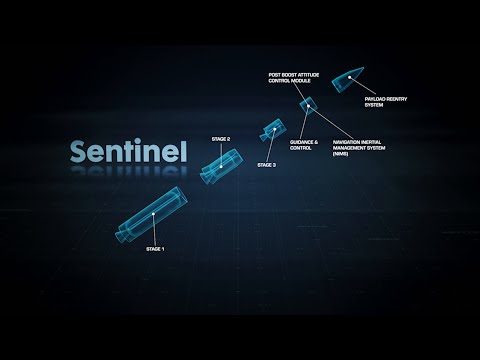
Lastly, the company is working on the replacement of the 60+ years old Minuteman III, the core of the US nuclear missile system, with the “Sentinel”. More than 450 missiles are planned to replace the aging and degrading Minutemen and maintain credible nuclear deterrence.
Electronics
Northrop has been a leader in hardening electronics for programs like the Apollo missions, intercontinental ballistic missiles, and the James Webb Space Telescope.
“The radiation hardening by process (RHBP) changes silicon chip fabrication.
In partnership with VORAGO Technologies and GlobalFoundries, the team has developed processing techniques to either more quickly create a new radiation-hardened design with commercial IP.
By adding a couple of steps to the typical fabrication process, we hope to greatly improve radiation protection at a minimal cost,”
These hardening methods are useful in space, but could become crucial in response to enemy electronic warfare as well.
Meanwhile, the company is working on its electronic warfare solutions, with the Ultra-Lite Electronic Attack (EA) Prototype System already in demonstration in 2023.
“This at-sea demonstration proves Northrop Grumman’s future low-size, weight and power, scaled EA solution can effectively support U.S. Navy missions,”
Monta Harrell – Director, maritime electronic warfare advanced solutions
Space Systems
As previously mentioned, Northrop Grumman was instrumental in developing the James Webb Telescope, currently the most powerful telescope ever conceived by mankind.
The company is able to design and place satellites for all orbits, including LEO (Low Earth Orbit), GEO (GEostationary Orbit), as well as less common MEO (Medium Earth Orbit) and HEO (Highly Elliptical Orbit).
LEO will be used for the proliferated low-Earth orbit architecture of data transport and missile warning/missile tracking satellites, using the proximity of LEO to speed up data transfer and resiliency of the warning system.
It is also building the Next-Generation Overhead Persistent Infrared (Next-Gen OPIR), the replacement for the current missile warning constellation (Space-Based Infrared System – SBIRS), as well as NextGen Polar (NGP). These satellites follow highly elliptical orbits, improving coverage of the polar region.
In GEO, the company managed the first-ever undocking between two commercial spacecraft in April 2025, extending Intelsat’s satellite lifespan by 5 years.
Satellite communication will benefit from the Arctic Satellite Broadband Mission (ASBM), boosting commercial and military access to broadband in the polar region.
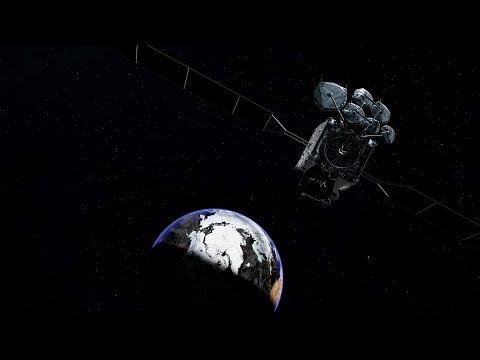
Regarding rockets, the expertise of the company is in solid-fuel rockets, with the test in 2025 of the most powerful segmented solid rocket booster ever built.
This technology is extremely reliable, but also more expensive than the liquid fuel now used in most modern orbital launchers, like those of SpaceX or Rocket Labs (RKLB -11.59%). So, as the SLS part of the Artemis Missions might be canceled in a few years, this segment of the company might struggle to keep up, being restricted to military launches.
Northrop seems to be making moves to solve this issue, notably by investing in the rocket company Firefly, whose Eclipse rocket uses Liquid Oxygen (LOX) & Refined Petroleum-1 (RP-1) as fuel for a respectable 16.3 tons of payload to LEO.
“Eclipse represents two powerful forces coming together to transform the launch market with decades of flight heritage, a rapid, iterative approach, and bold innovation.
With a 16 metric ton to orbit capability, Eclipse is a sweet spot for programs like NSSL Lane 1 and a natural fit to launch proliferated constellations in LEO, MEO, GEO, and TLI.”
Investor Takeaway:
With multi-year backlog visibility, exposure to nuclear modernization, missile defense, and next-generation space systems, Northrop Grumman offers leveraged upside to sustained U.S. defense spending and great-power competition.
Conclusion
Northrop Grumman has been a cornerstone of the American defense industry since before WWII, and has cemented this position with the B-2, various weapon systems, and a dense network of satellites to detect intercontinental missile launches.
It is certainly shaping to keep this position intact with the B-21, the Sentinel missiles, a wide array of drones and autonomous planes, as well as electronic warfare, satellites, and air defense.
The company is also the supplier to rely on when developing the most advanced space capabilities, from a record-breaking space telescope to recovering samples of Martian rocks.
In the context of intensifying geopolitical rivalry, regional wars, and a new space race, this put Northrop in a pole position to benefit from growing budgets to keep up with China, something that should benefit not just the company’s shareholders, but the USA as well.
Northrop Grumman Is Up 29% in 2026 With a $95.7 Billion Backlog and One Big Program Still in Limbo
247wallst.com
•
March 18, 2026
Why Europe may be the best place to bet on defense stocks
marketwatch.com
•
March 18, 2026
Ausdal Financial Partners Inc. Boosts Stock Position in Northrop Grumman Corporation $NOC
defenseworld.net
•
March 17, 2026
Bank of Nova Scotia Grows Stake in Northrop Grumman Corporation $NOC
defenseworld.net
•
March 16, 2026
Northrop Grumman Corporation $NOC Holdings Lowered by Banco Bilbao Vizcaya Argentaria S.A.
defenseworld.net
•
March 16, 2026
Aquatic Capital Management LLC Buys Shares of 14,224 Northrop Grumman Corporation $NOC
defenseworld.net
•
March 16, 2026



