Investing in Metals
NORI-D Deep-Sea Mining Project: Ready to Extract Battery Metals

Securities.io maintains rigorous editorial standards and may receive compensation from reviewed links. We are not a registered investment adviser and this is not investment advice. Please view our affiliate disclosure.

Industrial civilization has an almost unlimited hunger for metals, limited only by their availability and the cost of extraction. This has been especially true for metals that have recently become important for high-tech applications like EVs, aerospace, semiconductors, etc.
As such, investing in metal production can be profitable for investors, as we covered in many investment reports on, for example, tungsten, platinum, rhodium, copper, lithium, or titanium.
For now, most mining operations have been ongoing in a way that has not changed much since the century, although the scale and technologies used have evolved: drill some mountain or land until you find a big and rich enough metallic deposit, and extract the ores containing metal in either tunnels or a giant open pit, to them refined them into pure metal.
But this method leaves out of possible mining 70% of the Earth’s surface, which is covered in water by seas and oceans.
Polymetallic nodules are metal-rich small spheres very rich in various metals, forming at the bottom of oceans from the precipitation of metals dissolved into the oceans. Until now, this resource was known but also out of reach of commercially viable exploitation.
We will soon see if this can change, thanks to the deep-sea mining “NORI-D” project. The project is developed by The Metals Company, the first commercial-scale attempt to collect polymetallic nodules.
What is Deep-Sea Mining?
Rising Global Demand for Battery Metals
Many applications related to the energy transition and electrification, like EVs, batteries, fast chargers, solar panels, wind turbines, and upgraded power grids, will need a lot of copper, cobalt, nickel, manganese, and other metals.
The problem of sourcing enough of these metals is compounded by a parallel increasing demand from sectors like robotics, sensors, aerospace, advanced manufacturing, semiconductors, etc.

Source: IEA
For example, an electric vehicle with a 75 kWh battery pack and NMC (nickel-manganese-cobalt) chemistry needs 56 kg of nickel, 7 kg of manganese, and 7 kg of cobalt, plus 85 kg of copper for electric wiring
And discovery of new large deposits on dry ground has been stalling, with most of the world’s largest mines opened years or decades ago, and no new deposits of the same scale discovered since.
Lastly, the exploitation of these minerals often comes with difficult ethical questions about environmental damage (polluted water, deforestation) or the exploitation of the local workforce, like with cobalt from Congo.
The important part is producing enough today to accelerate the energy transition. Contrary to fossil fuels, these metals can, in theory, be infinitely recycled. So The Metals Company estimates that after three to four decades of EV and battery production, there should be enough cobalt, nickel, copper, and manganese in the system to meet demand by recycling alone.
At this point, The Metals Company will transition entirely to recycling and redeploying metal instead of mining.
Benefits and Potential of Deep-Sea Mineral Extraction
Since they were discovered by an exploring ship in the late 19th century, it is known that the bottom of the sea contains spheres made primarily of manganese. The exact composition is a bulk volume made of primarily manganese (up to 30%) and iron, but also enriched with nickel, copper, cobalt, lithium, and rare earth elements.
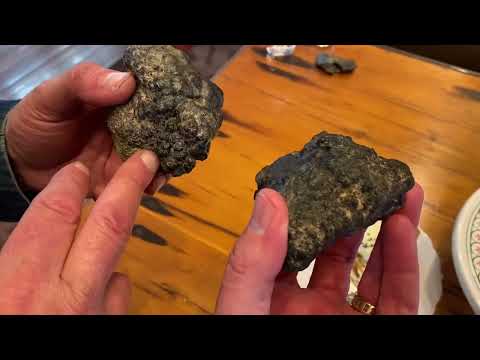
This makes polymetallic nodule an almost perfect resource for the green transition, with an abundance of exactly the metals we are missing the most and need urgently.
They are formed very slowly, being the result of the slow accumulation and deposition of dissolved metal oxides from seawater or sediment pore water, piling up around a nucleus like a shark tooth, volcanic ash, fish bone, etc.

This scientific discovery was, however, of little interest until the modern era, where progress in submarine technology made exploration and understanding of the deep sea floor possible, with a view of commercial exploitation a distant, but realistic future.
In the 1970s, an international consortium tested the harvesting of nodules at a depth of 5000 m in the Clarion-Clipperton Zone (CCZ) in the Pacific Ocean.
The experiment proved it was technically possible, but high operational costs, a relatively immature technology, and a fall in price for nickel (the main metal of interest at the time) suppressed interest in any commercial development.
Of course, the interest in manganese and cobalt, now in high demand in batteries, and higher prices for natural resources in general, can radically change the economics of the operation today. And undersea technologies have also made a lot of progress since the 1970s.
Which is why the NORI-D Project is now looking
Inside the NORI-D Project: The Metals Company Strategy
Mining the Clarion-Clipperton Zone (CCZ)
In 2011, the International Seabed Authority (ISA), an international body regulating activity undersea, granted a polymetallic nodule exploration contract in the Clarion Clipperton Zone (CCZ) to NORI / Nauru Ocean Resources, a subsidiary of The Metals Company.
This license area is ranked as #1 largest undeveloped nickel deposit in the world as well as one of the highest grade (metal concentration).
The Clarion Clipperton Zone is a vast abyssal plain in the central Pacific Ocean spanning approximately 4.5 to 6 million square kilometers (1.7 to 2.3 million square miles), or roughly the same width as the continental United States, located off the West coast of Mexico and Central America.

Source: The Metals Company
This is mostly a “muddy plain” punctuated by undersea mountains (seamounts), ridges, and trenches. The abyssal CCZ is a stable environment with little food, and one of the least productive areas of the ocean, with one of the lowest biomass levels of any planetary ecosystem.
The area is estimated to contain up to 21 billion tonnes of polymetallic nodules.
Composition of NORI-D Polymetallic Nodules
Since the attribution of the exploration contract, the company has performed 22 offshore research campaigns to assess the available resources. The nodule inferred resource is estimated at a remarkable 866 million tons, with a very concentrated presence of nodules of 15.6 kg / square meter (3.2 pounds / square foot).

Source: GCaptain
They are composed of 29.5% manganese, 2.3% nickel, 1.1% copper, and 0.2% cobalt.
During this evaluation, the company also gathered a wide range of meteorological and oceanographic measurements and data, including on biodiversity, deep-sea food chains, ecosystem function, geochemistry, and nutrient cycles.
In June 2025, it applied for an exploitation contract. The sponsoring state for this project is Nauru, an island nation located in the South Pacific. The island has historically suffered from environmental degradation from the degradation and then depletion of its phosphate resources, and is “dedicated to ensuring that future extractive activities are done responsibly”.

Source: The MIT Press Reader
A unique advantage to metallic nodules like the ones of the NORI-D project is that, unlike metallic land ores, sea nodules do not contain toxic levels of heavy elements. So producing metals from nodules has the potential to utilize nearly 100% of nodule mass.
This can let the company design a metallurgical flowsheet that generates no tailings and leaves nearly no solid waste streams behind, which is quite literally impossible in traditional mining techniques.
In addition, because the nodules are so concentrated, they do not require road infrastructure or digging, and are quite literally waiting to be picked from the seabed; the expectation is that, on average, 90% less CO2 equivalent emissions are compared to ores from land-based mines.
How Is Deep-Sea Mining Done?
The plan of The Metals Company for exploiting the seabed metallic resources is to deploy twin 15 m-wide seabed collectors. They will use seawater nozzles to lift nodules from the seabed with minimal disturbance, leveraging the ease of access to the nodules.

Source: The Metals Company
As the technique does not need explosives, other rock extractions, or the building of any infrastructures (tailing dams, roads, etc.), the mining of polymetallic nodules is technically simpler in many ways than traditional mining.
However, it does need unique machinery adapted to the oceanic conditions:
- Autonomous underwater vehicles (AUVs)as seabed collectors.
- “Risers”, a system able to lift the collected nodules to a boat above, with several kilometer depths to compensate for.
- A Production Support Vessel (PSV) that receives the slurry of mud and nodules and separates them.
- The partially dried nodules are collected, and the slurry is returned to the sea below the “photic zone”, the top layer of water where most sea life lives.

Source: The Metals Company
To reduce impact, The Metals Company collectors will already do a preliminary separation step that should leave a few hundred meters behind 90% of the disturbed sediments.
Once collected and piled up in a ship, the metallic nodules will be processed in a rotary kiln-electric furnace to convert nodules into intermediate products, including a nickel-copper-cobalt alloy and manganese silicate.
This will later on be refined further using hydrometallurgical methods into copper cathode, nickel and cobalt sulphates, plus fertiliser-grade ammonium sulphate.
In the long run, the company envisions the construction of two dedicated refining facilities in the USA, handling up to 12 million tons per year (mmtpa) of wet nodules and upgrading intermediates into high-purity nickel and cobalt sulphates and copper cathode.
AI-Powered Ecosystem Monitoring
An intelligent system will not be limited to the AUVs. The company will also use its “adaptive management system”. This is a mix of marine hardware and cloud-based artificial intelligence designed to create a virtual replica of the deep-sea environment.
This way, it will give eyes and ears to the regulator and various stakeholders during operation, making the operations as transparent as possible.
Risks And Controversies
Environmental Impact and Ecosystem Risks
As is often the case with any natural resource exploitation project, the idea of mining deep-sea nodules is not without opponents and controversies.
The main danger is to disturb or destroy poorly understood and fragile ecosystems, which have been barely studied or documented by scientists so far. More than 90% of the species recently collected in the region were previously unknown.
“There’s already overwhelming evidence that strip mining deep-sea nodule fields will destroy ecosystems we barely understand.”
Prof Murray Roberts – Marine biologist at the University of Edinburgh
One of the largest risks is the sediment plumes, both from the collection step and the dumping of the residual slurry by the production support vessel. This unnatural massive flow of mud, sand, and sediments into the sea can create a massive silt cloud that could travel hundreds of kilometers, and smother marine life or clog the filters of deep-sea organisms.
While proponents of deep-sea mining argue that this risk is very limited, we really have no way to know, as such disturbances have never been observed in real life, and deep seas are one of the most poorly understood environments on our planet.
In addition, the sea floor rich in nodules is relatively low in organism density, but not lifeless either. So it is likely that the cloud of silt and the scraping of the sea floor will destroy those habitats utterly, with organisms like deep-sea sponges, coral, anemones, and octopuses killed in the process.
Lastly, the offshore industrial activity in an area mostly left untouched means constant noise and artificial light. This could disturb the behavior and lifecycle of species like whales, tuna, and sharks.
Breaking Dark Oxygen Generation
For ages, we have known that a lot of the oxygen we breathe is produced in the oceans. But it was always assumed to be exclusively the result of photosynthesis by large and small algae and cyanobacteria, with living organisms splitting water into oxygen using the energy of sunlight.
But in 2024, a groundbreaking discovery revealed that some oxygen might also be produced by the seafloor, as deep as 4-5 km underwater, far from any sunlight. And it seems that metallic nodules of the Clarion-Clipperton Zone are responsible for this phenomenon.
The scientists responsible for the discovery measured the voltages on the surface of each metallic lump – essentially the strength of the electric current. They found it to be almost equal to the voltage in a typical AA-sized battery.
As such, metals are known to be catalytic, the ability to split water into oxygen and hydrogen is maybe not so surprising. It is, after all, exactly the type of electrochemical properties that make them so valuable for battery manufacturing.
“It’s like a battery in a torch. You put one battery in, it doesn’t light up. You put two in and you’ve got enough voltage to light up the torch. So when the nodules are sitting at the seafloor in contact with one another, they’re working in unison – like multiple batteries.”
It is currently unclear how much of the Earth’s breathable air is produced by this “dark oxygen” reaction from the polymetallic nodules. And even if this is small at the planetary scale, it could be very important for the local ecosystem or the oceans at large.
So the impact of mining the metallic nodules on ecosystems could be a lot larger than just disturbed silt, but potentially a collapse in oxygen levels as well.
At the same time, the absence of a clear energy source to sustain the reaction made many other scientists skeptical of the discovery, with the harshest critics coming from scientists at The Metals Company itself, blaming measurement errors instead of a real chemical reaction.
New expeditions and independent studies are currently underway to replicate these results, using more advanced sensors and control experiments to rule out equipment error.
Sea-Floor Mining Regulation
While some exploitation of these resources is now considered legal under international law, this is still controversial.
In practice, the International Seabed Authority (ISA) is still currently developing the corresponding regulations, and the mining code, the official rulebook for exploitation, remains unfinished.
Disagreement between participating nations led to a stalemate in the March 2026 International Seabed Authority (ISA) Council. More than 40 nations, including France, Germany, Brazil, and Mexico, are now calling for a precautionary pause or moratorium until more is known about the ecological risks.
As a result of the fragility of these ecosystems, several Areas of Particular Environmental Interest (APEIs) where mining is prohibited have already been established away from the exploration concession granted.
The long-term consequences of mining are also still debated by scientists, as experimental sites from the 1970s still show visible scars and lower biodiversity over 40 years later.
International regulations mostly concern international waters like the Clarion-Clipperton Zone. But nations like Norway or the Cook Islands are moving forward with authorized explorations within their exclusive economic zones.
Investing In Deep-Sea Mining Innovation
The Metals Company
TMC the metals company Inc. (TMC -0.47%)
The company has been at the forefront of pushing for the exploitation of polymetallic nodules. It is expected to produce some metals for the first time commercially by the end of 2027. It should be noted that this makes the company very quick in moving from test to production compared to traditional mines that require 10+ years of infrastructure building after permitting.
But hitting this deadline will require receiving a commercial permit, which is still uncertain. Regarding environmental risks, the company has some very good arguments.
For example, it points out that excess CO2 in the atmosphere is causing ocean acidification, affecting all oceans everywhere, which could cause catastrophic damage to the Earth’s ecosystem and climate. In comparison, localized damage to a life-poor ecosystem in the Clarion-Clipperton Zone sounds a little irrelevant.
In the same way, the potential damage made while exploiting this resource might be minor compared to the deforestation and pollution associated with traditional mining.
Still, there are significant risks, especially if “dark oxygen” is a real thing, and this might delay the progress of the company severely.
In parallel, the company is also being asked by Japan to help develop its own polymetallic nodule resource, showing that the expertise developed in the East Pacific could be valuable elsewhere.
If it works without many delays, The Metals Company could become a major company delivering just the right metal for the quick expansion of battery production. But if the regulation stays stalled or changes for the worse, the exploration permit could also turn essentially worthless, a clear risk potential shareholders in the company need to be aware of.
Overall, the extraordinarily rich resource, but also uncertain and complex environmental regulation associated with deep-sea mining, makes the stock a high-risk, high-reward play on the critical mineral supply chain.
Latest The Metals Company (TMC) Stock News and Developments
Should You Invest $500 in TMC The Metals Company Right Now?
fool.com
•
March 17, 2026
3 Rare Earth Stocks Quietly Building the Next Supply Chain
marketbeat.com
•
March 16, 2026
Should You Buy The Metals Company Stock While It's Below $7?
fool.com
•
March 16, 2026
Wabash Highlights Durable, Digitally Connected Trailer Solutions at TMC 2026
businesswire.com
•
March 16, 2026
Prediction: The Metals Company Stock Is a Buy Before March 26
fool.com
•
March 14, 2026
Better Mining Stock: The Metals Company (TMC) vs. SSR Mining (SSRM)
fool.com
•
March 13, 2026