

Aerospace
Mars Sample Return (NASA–ESA) – Bringing Mars to Earth

Securities.io maintains rigorous editorial standards and may receive compensation from reviewed links. We are not a registered investment adviser and this is not investment advice. Please view our affiliate disclosure.

Why Return Mars Samples Instead of Analyzing In-Situ?
Mars has long fascinated the imagination of scientists and science fiction writers, ever since primitive telescopes led us to believe in the presence of artificial canals on the planet’s surface.
Thanks to Elon Musk’s SpaceX, which has radically decreased the cost of reaching the Earth’s orbit, it seems we might be within a few years, or more likely at least a decade, from seeing the first manned mission to Mars.
When arriving on Mars, the first human explorers will face a very different set of tasks from the astronauts who first landed on the Moon. Far from a few-day expeditions on minimum supply, any Martian mission will be years long, with at least several months on the surface. As a result, a manned Mars mission will have to be a sort of proto-colony, requiring some utilization of the local resources to keep the astronauts alive.

Source: Explore Deep Space
So it is crucial that we know more about the planet’s surface and geology, what Martian minerals are truly like, instead of the guesses and estimates we have been able to do so far.
For that, local analysis by tools mounted on probes and robots is overall insufficient, as they have to be extremely energy-efficient and lightweight, precluding many of the most useful analytical methods.
Instead, bringing back to Earth a Martian rock sample would give scientists the possibility to use the most advanced and sensitive detection methods to better understand the history of the red planet.
This is the reason for the creation of the Mars Sample Return, under the direction of both NASA and the ESA (European Space Agency).
The idea is to sample and collect Martian dust and rocks and send them back to Earth. Due to the extreme distances, this is far from an easy task, and the project has had a rocky start, with troubled development and cost overrun, with even the threat of being canceled.
Our orbiters are already in place to provide data relay services for surface missions.
However, as other competing programs are looking to achieve the first time mankind will bring back minerals from another world, notably from the Chinese space program, it is likely that the American-European program will keep going in one form or another.
Perseverance’s Cache: What’s In the Tubes (2025 Update)
Launched in 2020 and landed in 2021, the Perseverance mission is the latest and most ambitious probe sent to Mars yet, with the rover weighing as much as a large car.

Perseverance was also teamed with the Ingenuity Mars Helicopter, the first ever helicopter to manage to fly in the very thin Martian atmosphere (2% of Earth’s). Ingenuity flew 72 flights, over 11 miles (18 kilometers).

These probes complement the 3.7 tonne ExoMars Trace Gas Orbiter (TGO), which arrived at Mars in 2016 and which created from orbit a global map of water distribution in terms of water-ice or water-hydrated minerals in the shallow sub-surface of Mars.
Perseverance landed in Jezero Crater, a 28-mile (45 kilometers) wide impact crater, which scientists believe was once flooded with water and was home to an ancient river delta. So not only had it likely contained water in the distant past, but it could also contain proof of ancient life.
Combined with the very flat landscape and a location just north of the Martian equator, the potential of water deposits still present deep under the surface would also make Jezero Crater a potential site for a manned Mars landing.
Perseverance drove around the Crater 18.5 miles (30 kilometers) over 3 and a half years.
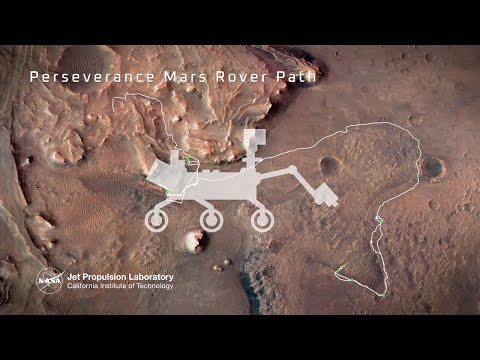
Maybe even more importantly, Perseverance also collected 25 samples of rock and regolith (small rock and dust of the surface), as well as one air sample along its exploration of Jezero Crater.
These samples were collected using a small drill that created a long tube of rocks, sealed in a metal container.
Another 5 “witness tubes” will be collected, as well as proof of the system’s cleanliness throughout the sampling process.

Source: NASA
The samples collected are a mix of sedimentary rocks (deposited by water) and igneous rocks (solid magma).

How Mars Sample Return Works: Lander → MAV → ERO → Earth
Until now, all Martian missions have been a one-way trip, with our rockets barely powerful enough to send to Mars and land on the surface the multi-ton rovers of each mission.
In that respect, Perseverance was not different, with the rover itself doomed to stay on the Martian surface.
To collect the harvested samples, another mission will need to be launched to land on the surface a dedicated system that will go back into space after having picked up the samples.
This would require a “fetch rover”, which will go collect the samples dropped by Perseverance on the Martian surface, using a robotic arm to pick them up and loading them into a rocket able to go back into space, the Mars Ascent Vehicle.
An orbiter will be there to receive the samples in the Martian orbit and ferry them back to Earth.

The sample will then be received in Earth’s orbit by a third mission, which will make it land safely and intact on Earth for analysis.

Source: ESA
NASA’s stated goal is to bring these samples to Earth by the 2030s. Before samples can be opened on Earth, they will be transferred to a BioSafety Level-4 (Planetary Protection Facility) now being planned by NASA and the European Space Foundation. All containment systems must prevent the release of possible Martian organics or microbes—an essential step to ensure planetary protection and public safety.
MSR Challenges: Cost, Schedule, and Architecture Debates
In 2023 and 2024, it became apparent that the initial plan and budget from the Mars Sample Return mission were in trouble, as it was going to be massively delayed (maybe up to the 2040s) and over budget.
With costs rising from the already massive $6B to at least $11B, this has put the program in the spotlight in a negative way.
So while the samples have been created efficiently by Perseverance, their collection and bringing them back to Earth might be suffering from the complex design of the mission.
Sample Retrieval Lander (SRL): Sky-Crane vs. Commercial Delivery
SRL has gone through many different concepts.
The lander design has evolved dramatically over the past two years, at one time being a very large lander with a sample fetch rover, then two landers, and now a medium-sized lander with no fetch rover and two helicopters.

Source: The Planetary Society
In January 2025, NASA announced that it is considering 2 possible designs for the landing phase:
- The first option will leverage previously flown entry, descent, and landing system designs, namely the sky crane method, demonstrated with the Curiosity and Perseverance missions.
- The second option will “capitalize on using new commercial capabilities to deliver the lander payload to the surface of Mars”.

Source: NASA
In both cases, the platform’s solar panels will be replaced with a radioisotope power system that can provide power and heat through the dust storm season at Mars, allowing for reduced complexity.
Overall, it seems that there is a hot debate inside NASA if they should pursue a “business-as-usual”, sticking to less ambitious and more expensive tried-and-tested methods, or take the risks of losing the Martian samples from Perseverance to an untested and cheaper newer design produced by private companies.
Mars Ascent Vehicle (MAV): Design, Risks, and Readiness
The designs of the Mars Ascent Vehicle (MAV) and the Earth Return Orbiter (ERO) are also in question.
MAV was designed as a two-stage rocket and would be stored within the SRL.

Source: NASA

Source: NASA
This makes the rocket difficult to build, as it needs to survive intact 15G of deceleration during the landing on Mars, and then deploy autonomously to launch automatically without direct control from Earth, due to transmission time lag.
So with no team on the ground for pre-launch repairs and adjustments, this raises the bar for reliability.
There is a perception that NASA’s Mars Sample Return (MSR) mission is being delayed by indecision, but the real delay has been multiple decades of seeking a heritage propulsion solution instead of a technology advance to develop and test a Mars Ascent Vehicle (MAV) for launching the samples to Mars orbit.
MAV is probably the trickiest part of the mission, and the one that is the least advanced in its development stage. Potentially, a heavier lander could solve the problem by allowing for a larger and easier-to-build MAV design.
Earth Return Orbiter (ERO): Hybrid Propulsion and Capture
So far, ERO is the responsibility of ESA; it would be the largest spacecraft to ever orbit Mars, with a 38-meter wingspan (125 feet).
This large size stems from its massive solar array, as it will be using the most powerful electric propulsion ever used for an interplanetary mission, while also using chemical propulsion to enter Mars orbit.

Source: ESA
It would take ERO about two years to reach its operational orbit around Mars, a year to perform its Mars mission, and another two years to leave Mars and return to Earth.
ERO is likely less problematic than MAV, as it is mostly a large version of tested designs that ESA is familiar with. However, cost controls have been an issue in the past for the European Space Agency.
FY2026 Budget Proposals: What’s at Stake for MSR
In April 2024, NASA announced it would start to “Seek Innovative Designs” for the Return Mars Samples mission.
“The bottom line is, an $11 billion budget is too expensive, and a 2040 return date is too far away.
We need to look outside the box to find a way ahead that is both affordable and returns samples in a reasonable timeframe.”
An extra pressure is the 2026 US Federal budget, looking to cut a lot of spending at NASA, including the return of Martian samples.
This comes as the same set of decisions that also plan for the SLS (Space Launch System) rocket and Orion capsules, previously core to the Artemis Missions, to be retired after Artemis III, and the replacement of the ISS by a commercial space station.
Consistent with the administration’s priority of returning to the Moon before China and putting an American on Mars, the budget will advance priority science and research missions and projects, ending financially unsustainable programs, including Mars Sample Return.
It can also be noted that the same presidential announcement criticized NASA for its green or progressive agenda, leading to concerns that Mars Sample Return is collateral damage of a mostly political struggle.
“This budget ends climate-focused “green aviation” spending.
This budget also will ensure continued elimination any funding toward misaligned DEIA initiatives, instead designating that money to missions capable of advancing NASA’s core mission.”
Most likely, the threat to Mars Sample Return is mostly a strategy of the White House to force NASA to consider new options for the project, instead of passively accepting a multi-billion dollar budget overrun, at a time when science project funding is being cut.
Private companies are coming to offer their own alternative, with many claiming to manage the tasks for a fraction of NASA’s forecasts.
Global Race: China’s Tianwen-3 and JAXA’s MMX
Swipe to scroll →
| Element | What It Does | Lead Agency | Status (2025) | Key Risks | Notable Industry Options |
|---|---|---|---|---|---|
| Sample Retrieval Lander (SRL) | Land near cache; load tubes to MAV | NASA JPL | Dual landing architectures under study (sky-crane vs commercial), nuclear power favored | Mass/power margins; EDL complexity | Commercial lander delivery; Lockheed InSight-heritage lander |
| MAV (Mars Ascent Vehicle) | Launch sample canister to Mars orbit | NASA MSR | Most technically risky; two-stage solid/liquid trade space | Autonomous launch, thermal loads, reliability | Lockheed/other primes; Rocket Lab Neutron-based concepts |
| ERO (Earth Return Orbiter) | Rendezvous, capture, cruise to Earth | ESA | ~38 m wingspan; hybrid propulsion; mission ~5 years | Power/prop duration, capture dynamics | Industrial team led by ESA; NASA Earth Entry System |
| Earth Entry System (EES) | Re-entry capsule; sample containment | NASA | Heritage from OSIRIS-REx; PPRO protocols | Sterile handling; chain-of-custody | Lockheed return capsule heritage |
| China’s Tianwen-3 (comparison) | Drone collection; ≥500 g return | CNSA | Launch ~2028; return ~2031 | Dual-launch complexity; deep drilling | Chinese industrial team |
Chinese Mission
A good reason to doubt a permanent cancellation of the Mars Sample Return mission, instead of a radical redesign from scratch, is that other space agencies are pushing for their own mission with similar goals.
Considering the USA’s intent to stay the leading space power, it would be politically unacceptable that China beat NASA to the task, something a return in the 2040s could make happen.
China has announced plans for a Mars sample-return mission called Tianwen-3, which would launch in late 2028, with the goal of returning “no less than 500 grams of Martian samples to Earth by around 2031”.
While this is a much smaller sample, the shorter timeline would still allow China to claim victory for the first-ever Martian sample brought back to Earth.
Tianwen-3 will not use a rover, but a drone to collect samples from locations within several hundred meters of the landing site.
The entire process of the mission plan is very complex, involving 13 phases and utilizing in-situ and remote-sensing detection technologies.
Tianwen-3 will be the first mission internationally to conduct 2-meter-deep drilling for sample collection on Mars.
Japanese Mission
The Japanese Aerospace Exploration Agency (JAXA) announced a plan named Martian Moons Exploration (MMX) to retrieve samples from Mars’s Moons, Phobos or Deimos.
While not exactly a Martian mission, this could have great interest, as these small asteroids orbiting Mars have often been considered for a permanent space station around the red planet.
This should also be a lot simpler, as much as landing on an asteroid can be called simple, as the probes and samples would not have to deal with landing and then escaping the Martian gravity well.

Source: ManyWorlds
Investing in Martian Innovators
1. Lockheed Martin
Lockheed Martin Corporation (LMT +0.94%)
Lockheed Martin is one of the world’s largest aerospace & defense companies.
So it is not only a space company, but also the one behind iconic aircraft like the Black Hawk helicopters or the F-16, as well as advanced equipment like the F-35, flying radar planes or logistical aircraft like the C-5 Galaxy & C-130J Super Hercules.

Source: Lockheed Martin
It is also the producer of some of the US military’s most important missile systems, like the JASSM, Javelin, ATACMS, and HIMARS, in extremely high demand following the depletion of stockpiles by the conflict in Ukraine.
It is also an important provider of anti-missile defense systems like the naval AEGIS and the THAAD (Terminal High Altitude Area Defense) against ballistic missiles.

Source: Lockheed Martin
Weapons are, however, not all that the company does. The expertise in military avionics and missiles converts well into expertise in rocketry and space vehicles.
Regarding the Mars Sample Return mission, Lockheed has extensive experience, having built 11 of NASA’s 22 Mars spacecraft over the years and supported all of them. It proposed a cheaper, streamlined mission that would use a smaller lander, a smaller Mars ascent vehicle, and a smaller Earth entry system.
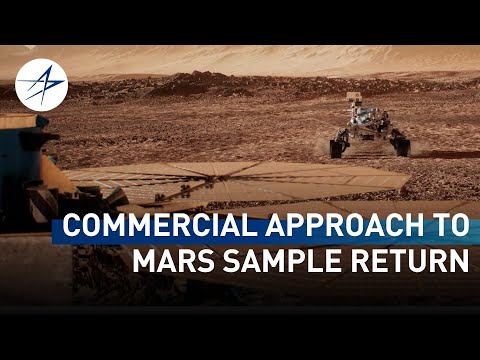
The targeted price tag would be “only” $3B. The lander would build on the basis of the InSight lander, which successfully landed on Mars in 2018.
Lockheed is also the lead contractor for the design, development, testing, and production of the Orion spacecraft, which is the least controversial or at risk of budget cut part of the entire Artemis program.
The company is active in other space programs, like the GOES-R weather satellites, the collection of asteroid samples by OSIRIS-REx, the Jupiter probe JUNO, and a wearable radiation-shielding vest, AstroRad.
Overall, from key military systems to equally important space vehicles and programs, Lockheed Martin is at the forefront of American innovation and deep space exploration.
The company should benefit from later iterations of the Artemis program, as well as many other deep space and Mars-focused missions in the long term.
(You can read more about the company in our dedicated investment report “Lockheed Martin (LMT) Spotlight: A Leader In Defense and Aerospace”).
2. Northrop Grumman
Northrop Grumman Corporation (NOC +0.11%)
Northrop Grumman is a defense aerospace company most famous for the creation of the iconic B-2 stealth strategic bomber, each one costing almost a billion dollars. This more than 20-year-old design is going to be replaced by the B-21, which is still in development.
The company is also at the very edge of space technology and has notably worked on the state-of-the-art James Webb Space Telescope.

Source: Northrop
The company derives most of its revenues from space and aeronautics systems, with another large segment, the mission systems division, covering a wide array of sensors, cyberdefense software, secured communication, and C4ISR (Command, Control, Communications, Computers, Intelligence, Surveillance and Reconnaissance).
It is also a leading producer of ammunition, from small caliber to guided projectiles and large caliber.

Source: Northrop
The company is looking forward to its position as a supplier of advanced weapons, with the development and deployment of autonomous weapons systems like the X-47B, helicopter drone Fire Scout, surveillance drones Global Hawk and MQ-4C Triton, or future autonomous strike drones.
The company is at the edge of the development of direct energy weapons (lasers), electronic warfare, anti-drone systems, and intercontinental ballistic missiles.
Northrop Grumman is providing the USA with some of its most advanced capabilities, from space to integrated command and stealth heavy bombers.
It could be affected by the cancellation of SLS, but is still a leader in space technologies like hypersonic vehicles, missile warning and tracking, satellite communications, and propulsion systems.
3. Rocket Lab
Rocket Lab USA, Inc. (RKLB -11.59%)
Rocket Lab is one of the most serious contenders to SpaceX in the reusable rocket market.
The company has initially focused on small rockets, with the Electron launch system (320 kg of payload), which is progressively being turned into a partially reusable rocket. So far, Electron has deployed 224 satellites in 70 launches.
Later on, Rocket Lab is looking at creating a medium-sized reusable rocket, the Neutron, comparable to Falcon 9 (8,000 kg to LEO in fully reusable mode, 1,500 kg to Mars or Venus).

Source: Rocket Lab
The Neutron will be powered by a methane-burning rocket engine (like Starship), which seems to be the trend for the next generation of rockets.
It will use the newly opened Launch Complex 3, as well as a custom-built landing pad at sea constructed by Bollinger Shipyards, the largest privately owned new construction and repair shipbuilder in the United States.

Source: Rocket Lab
Rocket Lab proposed to use the Neutron for a $2B Mars Sample Return mission. This is not the first time Rocket Lab has helped NASA:
- NASA’s forthcoming ESCAPADE(Escape and Plasma Acceleration and Dynamics Explorers) mission to study how the solar winds interact with Mars’ magnetic field and atmosphere will be built by Rocket Lab.
- It provides the cubesat spacecraft for NASA’s CAPSTONE (Cislunar Autonomous Position System Technology Operations and Navigation Experiment) mission to test the stability of the orbit around the moon that the agency’s proposed Lunar Gateway space
The company is also remarkable for its fully vertically integrated satellite manufacturing process, allowing it to optimize costs and design speed.
This resulted in multiple contracts with NASA & the US government, including a $515M military satellite contract. And a civilian $143m contract for Globalstar.
Rocket Lab is also a major manufacturer of solar panels for satellites after its 2022 acquisitions of SolAero Technologies, with 1000+ satellites powered by these panels, and 4MW solar cells manufactured in total.

Source: Rocket Lab
For now, its launch system is reliant on outside suppliers, but a series of strategic acquisitions is changing that, replicating for launch systems the vertical integration strategy already achieved in satellite design and manufacturing.
The company is also looking at the possibility of a telecom LEO constellation to generate recurring revenues. It is also contributing to research for in-space manufacturing with Varda Space Industries and orbital debris inspection.
While SpaceX had Elon Musk’s business talent (and money) to develop its technology from scratch, Rocket Lab used a mix of R&D and acquisitions to vertically integrate the technology required.
It has proven very successful in satellite manufacturing, and they are now looking to replicate this strategy for reusable rockets. Considering the existing cash flow from satellite production & the Electron successes, Rocket Lab is a good candidate to catch up with SpaceX’s head start.
(You can read more about the company in our dedicated investment report on Rocket Lab.)



