

Energy
The Iran War So Far: Recap, Analysis, And Investment Takeaways

Securities.io maintains rigorous editorial standards and may receive compensation from reviewed links. We are not a registered investment adviser and this is not investment advice. Please view our affiliate disclosure.

Since Saturday, the 28th February, the brewing conflict in the Middle East between Iran and its neighbors, plus the USA, has entered an active phase. So far, this has resulted in a more intense bombing campaign, both by and against Iran, than anything the region has experienced since the invasion of Iraq in 2003.
It seems the region is falling into a much larger conflict that many analysts expected, after the relatively subdued “12-Day War” of the mid-2025, lulling them into expecting a limited conflict.
Before delving deeper into the underlying causes of the conflict, discussing how it could escalate, and its effects on financial markets, we need to discuss some of the key events so far.
Summary:
- Massive escalations: The conflict is the largest in the Middle East since the 2003 invasion of Iraq, with a dozen nations seeing missiles and drone strikes.
- Mounting death toll and damage are hardening positions: Irreconcilable diplomatic positions lock the major players into a potentially long and destructive conflict.
- Near completion: The reaction of markets and commodities has been subdued so far.
- Investment angle: Oil & gas stocks and substitutes to Middle-East hydrocarbons are a primary way to protect investment portfolios.
Iran War Timeline: Key Events So Far
The First Steps Of the Iran War
The US and Israel initiated preemptive strikes that killed Iran’s supreme leader, the Shia cleric Khamenei, along with the head of the Revolutionary Guard and other senior leaders.
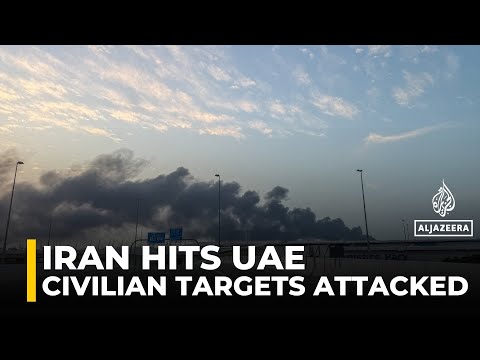
The Iranian retaliation went way beyond what was done in last year’s 12-Day War, with the country targeting not just Israel, but all the US military bases in range of its missiles and drones, irrespective of the country that hosted them. As a result, Jordan, the United Arab Emirates, Bahrain, Kuwait, Saudi Arabia, Oman, Cyprus, and Qatar were all struck, in addition to multiple strikes on Israel’s military assets, cities, as well as French and UK military bases.

Source: BBC
In total, Iran has already fired more than 500 ballistic missiles and 2,000 drones. Several military personnel and many civilians were killed in the attack, as well as extensive damage to military bases, harbors, and airports.
Meanwhile, Iran’s capital, Tehran, has also been subjected to an intense bombing campaign that has targeted military assets as well as police stations, and a girls’ school (165 killed) and several hospitals.
Continuous Bombings All Over The Middle-East
In the fog of war, conflicting declarations and obfuscations by all parties, it can be hard to fully understand the quickly evolving military situation.
A first lesson of these early days of the conflict is that considering the damages caused by the Iranian strikes all over the Middle East, it is clear that Western missile shields are not performing as efficiently as desired, which is maybe not so surprising after their moderate efficiency during the 12-Day War.
This can spell trouble for the UAE, especially Dubai, which has been intensely targeted, including several luxury hotels, the international airport, the Jebel Ali port, the US Consulate area, and residential areas. If the situation persists, this could cause trouble for the country’s financial systems and damage its image as a safe financial and business center.
Another emerging lesson is that Iran seems unwilling to engage in a path of de-escalation and rejected all calls for opening negotiations with the USA and/or Israel. This is despite intense bombing by US and Israeli air forces and navies, which claim up to 2,000 separate strikes, including 17 Iranian ships. As far as it is possible to tell, Iran’s leadership is preparing for an intense and long war.
Currently, the Strait of Hormuz, a strategic chokepoint through which 20% of the world’s hydrocarbons transit, is essentially closed for shipping, with insurers canceling policies and several tankers hit by drones.
Moderate damage to oil facilities has also been registered, but no blanket strikes on oil fields or ships have occurred.

Source: Forbes
The current military capacities of Iran are hard to assess, but the recent crash of three F-15s in Kuwait and the keeping of the US carrier groups far from Iranian coasts might indicate that it is not fully degraded, at least not yet.
Swipe to scroll →
| Key Facts | |
|---|---|
| Date of hostilities starting | 28th February 2026 |
| Countries hit by Iran | Israel, Iran, Jordan, the United Arab Emirates, Bahrain, Kuwait, Saudi Arabia, Oman, Cyprus, and Qatar |
| Confirmed casualties so far | Iran Supreme leader & key leaders & more than 1,000 Iranian citizens in total.
4 US soldiers 28 Israeli citizens |
| Critical infrastructures impacted | US, UK, & French Military Bases & Iranian command centers.
20% of global oil & gas shipping Saudi Arabia’s main oil export terminal and Qatar’s main LNG production facility. Dubai’s luxury hotels, airport, port, and residential areas. |
Why Did The War With Iran Start?
Although the USA is looking to call the situation “major combat operations”, the scale of the retaliation by Iran, and the lack of an end in sight to the conflict, make it likely that it will be considered as a true war instead.
At the core of the conflict is a piling of tensions between Iran, Israel, and the USA, resulting from the Iranian nuclear program. This program has long been considered a preparation for the building of nuclear weapons, a “red line” for Iran’s enemies, who repeatedly said they were ready to go to war to avoid the country becoming nuclear-armed.
A strong motivation to avoid a nuclear Iran is the durable hostility of the country to the USA and Israel, both countries that Iran’s leadership describes as the Great and Little Satan, respectively. So, despite assurances by Iran that the program is purely for energy & civilian use, skepticism dominates the sincerity of this claim.
Negotiations regarding the nuclear program have been ongoing for years, with many progresses made, but canceled by further setbacks (like the first Trump administration withdrawal from the JPCOA accord – Joint Comprehensive Plan of Action – in 2018) or the perception that Iran was not negotiating in good faith and just biding time to accumulate more fissile material.
As the conflict stopped all negotiations, the risk of Iran developing nuclear weapons to win this war is much higher today. In addition, the now deceased supreme leader Khamenei was one of the key opponents inside Iran’s regime of nuclear weapon development, having gone as far as enacting a fatwa against nuclear weapons in 2003 (fatwas are religious rulings about Islamic law).
Overall, it is hard to tell if the scale of the Iranian massive retaliations came as a surprise, or if it was considered by the Trump administration an acceptable risk to avoid Iran developing nukes.
“Trump said the war was initially projected to last four to five weeks but added the US military has the capability to go far longer than that.”
Complex Strategic Calculations
The conflict that had been brewing for years is seemingly coming to a boiling point now. And it might escalate further, as all parties are getting locked in conflicting and mutually exclusive positions.
On the US-Israeli side, a nuclear-armed Iran is unacceptable, as it would make it the only country in the Middle East with that capability besides Israel.
The continuous support of Iran of groups hostile to Israel or neighboring Arab states (Lebanese Hezbollah, Yemeni Houthis, Iraqi Shia militia, and, until recently, Assad in Syria) has also contributed to continuous hostilities.
The US side is likely hoping to degrade the Iranian military enough to engage in a protracted aerial bombing campaign, with the destabilization of the regime the ideal end goal.
On the Iranian side, the conflict is now perceived as existential, with the USA seen as not going to be satisfied with anything less than total regime change, and even maybe the partitioning of the country along ethnic lines.
In addition, the now-twice bombing of the country during negotiations about its nuclear program might make it unwilling to engage in further negotiations, as this could be the prelude to a third renewed round of bombing.
The Iranian side seems to aim to capitalize on depleting Western air defense inventory, already strained thin by four years of war in Ukraine, which could let it inflict serious damage with cheap and abundant strike drones.
“The Missile Defense Project at the Center for Strategic and International Studies, a Washington think tank, estimated that in 2025, the US fired up to 20% of the Standard Missile-3 (SM-3) interceptors it was expected to have on hand, and between 20% to 50% of THAAD missiles.”
Source: CSIS
Meanwhile, the Arab states of the Gulf are collateral damage of the expanding war, with the bombings forcing them into a position where they can no longer stay somewhat neutral and simply provide logistical assistance to the USA.
So even if many of these Sunni Muslim states are unwilling to appear in alignment with Israel, they seem on a collision course with Shia Muslim Iran.
“All the red lines have already been crossed. There are attacks on infrastructure. There are attacks on our residential areas. And the effects of these attacks are very clear. When it comes to possible retaliation, all options are with our leadership. But we have to make it very clear that attacks like these will not go unanswered and cannot go unanswered.””
How the Iran War Could Impact Global Markets
It is risky to make any prediction and conclusion this early after a major disruption like the start of this war with Iran. However, a few days of open market later, some patterns are emerging.
Of course, investors will ultimately want to correctly assess the gravity of the situation and monitor the evolution of the conflict.
As a rule of thumb, the larger it evolves and/or the longer it lasts, the worse and more widespread its consequences will be.
Oil & Gas
Unsurprisingly, thousands of air strikes and missile attacks in the Middle East have first and foremost economic consequences on the global oil & gas supplies.
So far, price action on oil has been relatively subdued, especially considering strikes on Saudi export facilities, tankers, and Iranian pipelines.
It seems that markets are either complacent or judging that this will be a quick flare-up, and only time will tell which is the correct interpretation.

Source: OilPrice
Gas prices have reacted much stronger, as Qatar interrupted production at its massive LNG facilities, responsible for a double-digit percentage of global LNG supply.
This is especially true for European gas prices, as the continent is at the time looking to give up Russian gas supplies, leaving it vulnerable to getting LNG only from the USA, or maybe Australia. European gas prices are roughly 75% higher than Friday’s close.
However, so far, the price shock is very far from the one the EU experienced in 2022 during the invasion of Ukraine, with the latest price still a fraction of the gas price in that period.

Source: Trading Economics
However, this is not to say that a balanced portfolio could not benefit from oil & gas stocks located in safe jurisdictions like those in the Western hemisphere, especially if the conflict escalates further and global oil & gas prices rise quickly.
Gold & Silver
Just as expectations for skyrocketing oil prices have so far disappointed, the same is true for gold, which has not reacted very strongly to the conflict for now. If anything, it went down in price after an initial surge. The same can be said for silver, which had a very volatile end of 2025 & beginning of 2026.

Source: Trading Economics
However, gold has historically been the refuge for money during wars, and has a long tradition of playing this role in Middle Eastern cultures. So if the war escalates or lasts longer than markets currently expect, we could see a surge in demand for gold.
Investors should also consider that gold has been on a winning streak in the past 12 months, so it is possible that, ultimately, some of the “flight to safety” was already priced in, explaining the recent lack of radical price moves.
Bitcoin
Bitcoin and cryptos have been rather popular in Iran, with up to $8B-$11B of crypto transactions in the country last year, in part due to sanctions making it difficult to take money in and out of the country. It seems that some of this money was moved out of the country early in the conflict.
Contrary to gold, Bitcoin had been struggling in the past few months, to the point of some calling it a new “crypto winter”. This, however, resulted in cryptos not making new lows at the news of war with Iran, with digital gold Bitcoin even rebounding to the news.
“This time, the price development was constructive, bitcoin gained despite the increasing instability … This divergence is significant. The absence of significant liquidations despite rising yields and geopolitical tensions suggests that positioning is adjusted compared to previous episodes.”
This might reflect a new stage for Bitcoin and other digital currencies, where they start to react in a similar fashion to gold and other “safe haven” assets in case of international and geopolitical instability.
Renewable Energy, Green Ammonia & Chemicals
In the case of oil & gas rising further in price in the coming weeks, the winners would be alternative energy sources that are not dependent on imports from the Middle East.
This will be true for utility companies with large renewable capacities in regions dependent on fossil fuel imports, like the EU and Asia.
Fossil fuels are not just used for transportation and heating; they are also a key feedstock of the chemical industry. So in that context, chemicals produced in low-price gas regions like the USA could become highly profitable to export to regions with natural gas shortages.
The same can be said for ammonia, including green ammonia produced from renewable sources (follow the link for 5 stocks active in this field), as the energy input of green ammonia will be unchanged, but the global market price of fertilizers is likely to rise.
Shipping
When the Red Sea trade lane closed due to Houthis’ bombings, many shipping stocks benefited greatly, as the travel around Africa, instead of through the Suez Canal, artificially increased the demand for cargo ships.
However, if the Strait of Hormuz is durably closed, the opposite might happen. With fewer exports of gas, oil, and chemicals, many shipping companies will suffer from less demand, especially those specialized in tankers carrying these goods. Contracting economic activity in Japan, Korea, and Europe due to high energy prices would hurt demand for shipping further.
If any oil & gas fields are seriously damaged, this could also durably dampen production and reduce the demand for shipping accordingly.
Europe & Asia
In the 1970s, the Yom Kippur War was a major trigger for the oil shocks and the subsequent stagflation that marked the whole decade. In 2026, the USA is a lot less dependent on Middle-East oil than in the 1970s, thanks to the shale oil revolution. This is not true for Europe and Asia ex-China.
On the 4th of February, the Korean market experienced the biggest one-day crash on record, plunging 12%. Japan and Taiwan’s stock markets also slipped, respectively by 3.6% and 4.2%.
“Many of the places people had been diversifying into prior to the Iran attacks suddenly now appear most vulnerable. The ‘sell-what-you-can’ phase is spreading. Asia’s selloff is turning disorderly because markets are no longer treating this as a ‘one-week headline shock.”
Charu Chanana – Chief investment strategist at Saxo in Singapore.
If high-energy prices become an issue for these economies, their stock markets are likely to react accordingly.
Defense stocks
At the news of a major war erupting, a reflex for many investors will be to move parts of their portfolio to stocks related to the defense industry.
This has been so far a good move, especially for aerospace defense stocks and the maker of missile defense and precision ammunition like Northrop Grumman (NOC +0.32%) (follow the link for an investment report on the company) or RTX/Raytheon (RTX -0.42%).
However, investors should be cautious, as these stocks have already risen significantly in the past few years due to the Ukraine War, making them somewhat pricey.
Another risk is that the White House seems dissatisfied with the rate of production of ammunition by the US defense industry. Already in January 2026, before the war with Iran started, Trump was threatening to force defense companies to suspend dividends and stock repurchases, redirecting their profits toward increased production capacity.
So investors interested in defense-related stocks should make good individual picks or take a long-term approach, with potential volatility stemming from pressure by the US President to be expected.
Investor Takeaways:
- Energy As The Primary Play: Alternative energy supplies, be it oil & gas and chemicals in safe regions, or renewable power generation, will benefit proportionally to how much Middle-East energy exports are disrupted.
- Safe havens are stable: Gold, silver, and Bitcoin have all shown muted reactions to the war so far. Underlying previous trends explain it largely.
- Key risk is escalation: Wars are easy to start, but hard to stop. Serious damage to the UAE, Saudi Arabia, or Iran’s infrastructure could have widespread consequences.
- Uneven Pain: Some economies are a lot more vulnerable, with Japan, Korea, and Europe the most likely to suffer from high energy prices.
- Defense In The Cross-Hairs: Defense companies should benefit from increased demand, but might get into trouble if they cannot produce enough ammunition.



