
Megaprojects
Hyper-Kamiokande: Japan’s Giant Neutrino Detector

 Add Securities.io to your preferred sources on Google
Securities.io may receive compensation when you use links to products we review. This does not influence our editorial evaluations. We are not a registered investment adviser; this is not investment advice. Read our affiliate disclosure.

Catching A Glimpse Of The Most Elusive Particle
As fundamental physics advances, we are beginning to better understand the subatomic particles that make up our universe.
Still, some questions remain unanswered, notably a unified theory of physics, bringing together Einstein’s relativity and quantum physics. The exact nature of antimatter and gravity is probably the key missing piece.
To study them, a better understanding of an elusive type of particle called a neutrino is needed. This could soon be achieved thanks to a series of new neutrino experiments.
We previously covered two of them: the Jiangmen Underground Neutrino Observatory (JUNO) and the Deep Underground Neutrino Experiment (DUNE).
Another important neutrino megaproject is the Japanese Hyper-Kamiokande, a successor and scale-up version of Super-Kamiokande, a previous experiment that has revolutionized our understanding of neutrinos.

Source: Kamioka Observatory
What are Neutrinos?
Neutrinos are electrically neutral particles with an extremely small mass, so small that it had long been thought to be null.
Currently, we do not know why neutrinos have mass, except that it seems to work in a different way than for other particles.
What makes neutrinos unique is that they are essentially “ghost” particles, barely interacting with other forms of matter at all. This is because neutrinos only interact with 2 out of the 4 fundamental forces in the Universe: gravity and weak interaction.
As the weak interaction has a very short range, and gravity barely affects the low-mass neutrinos, neutrinos usually pass through matter without interacting or being slowed down. As a result, neutrinos usually travel at almost the speed of light.

Neutrinos are fundamental particles that cannot be broken into smaller components and come in 3 variants: electron neutrinos, muon neutrinos, and tau neutrinos. To complicate matters even further, neutrinos seem to regularly shift between these 3 variants.
The transition between all 3 variants of neutrinos is linked to the mass of each neutrino’s type and contains answers about the fundamental nature of matter and the Universe itself.
It is also possible that a 4th type of neutrino exists as well, sterile neutrinos, that would interact with matter only through gravity, making it even harder to detect than the others.

And then there are antineutrinos, the antimatter version, which are even less understood, and which will be an important focal point of Hyper-Kamiokande.
Most neutrinos are produced by nuclear reactions, from nuclear fusions in stars to radioactive decay at the center of the Earth.
Despite their elusiveness, neutrinos are thought to be the most abundant particle in the Universe. Roughly a thousand trillion neutrinos pass through our bodies every second.
(You can learn more about neutrinos on the dedicated website “all things neutrinos” created by Fermilab).
Hyper-Kamiokande Design
From Kamiokande → Super-K → Hyper-K
Hyper-Kamiokande is the heir to Kamiokande and Super-Kamiokande, the previous smaller versions of neutrino detectors built on the same research site in Japan, respectively in 1983 and 1996.
Kamiokande was the first observatory to detect neutrinos from a supernova explosion and from our Sun, creating the field of neutrino astronomy.
Super-Kamiokande was responsible for the discovery of neutrino oscillations, showing that neutrinos have mass.
The core of the Hyper-Kamiokande detector consists of a cylindrical tank with a water depth of 71m and a diameter of 68m. This will make it the world’s largest underground water tank.
Each of the iterations of the concept has gotten larger and more massive, helping it increase the quality of its neutrino detection capabilities. For example, Kamiokande used 4,500 tons of water, Super-Kamiokande 50,000 tons, and Hyper-Kamiokande will use 260,000 tons.

Source: Hyper-Kamiokande
On the water tank wall, 20,000 ultra-high-sensitivity photosensors and 1,000 compound eye photosensors have been installed in order to detect the very weak Cherenkov light generated in the water. This is about 4x more than in Super-Kamiokande and 40x more than Kamiokande.
Photomultiplier tubes are like the sensors (pixels of) an ultra-high-performance camera. Thanks to this, the Hyper-Kamiokande is a giant camera that can capture even a single photon. They are so sensitive that they could capture the light from a flashlight on the moon’s surface.
These results were achieved thanks to an improved photosensor design, which can withstand twice the water pressure and has half the residual background radioactive activity of previous versions.
Water Cherenkov: Turning Tracks into Light
The key concept of the Kamiokande observatory series is the “water Cherenkov detector”. It detects a faint bluish light emitted by charged particles traveling through water faster than the speed of light in water (which is lower than in the air or a vacuum).
When a neutrino hits the atoms in the water, they create charged particles as well as the Cherenkov radiation in a cone shape along their path.
The timing and intensity of the light signals are used to reconstruct the original particle’s properties.
Going Underground
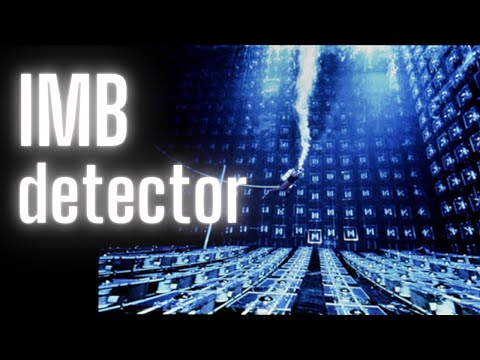
Hyper-Kamiokande is built under a mountain to reduce the interference from other particles than neutrinos. Cosmic rays, radioactivity, and other interferences could create a similar signal to neutrinos hitting the water molecules.
Once under a deep layer of rocks, the impact of these other energy sources becomes negligible, leaving only the elusive neutrinos as possible causes.

Source: Hyper-Kamiokande
The reason for the massive water volume is that neutrinos interact very rarely with matter. So the more “reactive mass”, the more chance that some interaction will occur and be detected.

Source: Hyper-Kamiokande
When a neutrino interacts with the water, it can produce neutrons. The gadolinium atoms then capture these neutrons thanks to their large neutron capture cross section, emitting a gamma ray that can be detected.

Source: Hyper-Kamiokande
Gadolinium exists naturally in Japanese soil at a concentration of about 3 to 7 ppm, so the project is not considered to create a risk of pollution from water leaks.
J-PARC Beam + Natural Sources
In addition to natural neutrinos such as atmospheric neutrinos and solar neutrinos, a high-intensity and high-quality neutrino beam from the J-PARC particle accelerator in Tokai will be used.
Hyper-Kamiokande is expected to observe 20 times as many neutrinos as the previous experiments after the increase in the J-PARC beam power. Hyper-Kamiokande and J-PARC are separated by 295 km (183 miles), a distance long enough to study the shift from one type of neutrino to another.

Source: Hyper-Kamiokande
Each of the Hyper-Kamiokande detectors is divided into an “Inner Detector” and an “Outer Detector”, which are optically separated from each other.

Source: Hyper-Kamiokande
The Inner Detector is the main detector, while the Outer Detector’s role is to reject the incident cosmic-ray muons that make up part of the background in the measurement of nucleon-decays and neutrinos. More than 99.9% of cosmic-ray muons reaching the detector are removed, after being already heavily filtered by the mountain above.
(For learning more about Hyper-Kamiokande design, you can also consult this complete official 282-page design report.)
Swipe to scroll →
| Detector | Medium | Mass / Size | Key Hardware | Primary Goals | Timeline |
|---|---|---|---|---|---|
| Kamiokande | Water Cherenkov | ~4,500 t; 16 m H × 15.6 m Ø | ~1,000 PMTs | Solar & SN1987A neutrinos | 1983–1995 |
| Super-Kamiokande | Water Cherenkov | ~50,000 t; 41.4 m H × 39.3 m Ø | ~13k PMTs; **SK-Gd** 0.01–0.03% | Neutrino oscillations; SRN | 1996–present |
| Hyper-Kamiokande | Water Cherenkov | ~260,000 t; ~71 m H × 68 m Ø | New ultra-sensitive PMTs; >99.9% muon veto | CPV, proton decay, solar/SN, DSNB | Ops target 2027; data-taking 2027–28 |
Notes: Mass/size & PMTs and muon-veto from Hyper-K/SK pages; SK-Gd figures from SK-Gd docs.
Hyper-Kamiokande Schedule
The project was approved in 2020, and excavation of the tunnel was started in 2021, together with the mass production of photomultiplier tubes.
The detector’s main cave excavation was finished in June 2025.

Source: Hyper-Kamiokande
Since then, the construction of the observatory itself has started, with the first observations expected for 2028.
It should be noted that while complex and very powerful, this design is ultimately now well understood, and is being built relatively quickly when compared to other fundamental physics megaprojects and next-generation telescopes.
Hyper-Kamiokande’s Goals
The overarching goal of Hyper-Kamiokande is to elucidate the history of the evolution of the Universe and the Grand Unified Theory of physics, which unified all fundamental forces of the Universe into one common equation, a situation that is thought to have briefly existed right 0.00000000001 seconds after the Big Bang.

Source: Hyper-Kamiokande
Solar & Supernova Neutrinos — and Dark Matter Searches
Thanks to its greater mass and efficiency, Hyper-Kamiokande will be able to detect a lot more neutrinos coming from our Sun and distant exploding stars.
By observing special types of neutrinos, it will be able to better understand the Sun’s fusion reactions and make the first observation of the higher-energy HEP neutrino flux.
Supernovae are the other big source of neutrinos in the sky, creating massive bursts when they explode. On February 23, 1987, Kamiokande observed neutrinos from a supernova explosion that occurred in the Large Magellanic Cloud (MCLOUD.BO ).

Source: Shio’s HP
Unfortunately, no supernova explosions occurred during the experiences with Super-Kamiokande.
Thanks to a greater detection range, Hyper-Kamiokande is a lot more likely to catch supernova explosions. If a supernova occurs in our galaxy (10kpc), Hyper-Kamiokande will be able to detect approximately 50,000 neutrinos.
This should give scientists a clue not only about the detailed mechanisms of supernova explosions, but also to further elucidate the nature of neutrinos.
Hyper-K and DUNE are almost perfectly complementary in their sensitivity to supernova neutrinos, with DUNE detecting νe (via scattering off argon) and Hyper-K ν̅e (via inverse beta decay).
Hyper-Kamiokande might even be able to detect the diffuse supernova neutrino background, coming from very distant supernova explosions that have accumulated a neutrino flux over the entire history of the Universe.
These specific radiations will especially be detected thanks to the addition of gadolinium to the detector (inverse beta decay, instead of just muon decays neutrinos).
Lastly, dark matter could also be responsible for the production of neutrinos. So if such a neutrino source is detected at a place with high dark matter concentration, like the center of the galaxy, it could help elucidate the nature of dark matter.
Proton Decay Searches
The occasional decay of protons into lighter subatomic particles, such as a neutral pion and a positron, is something physicists have tried to prove the existence of and measure since the construction of the original Kamiokande.
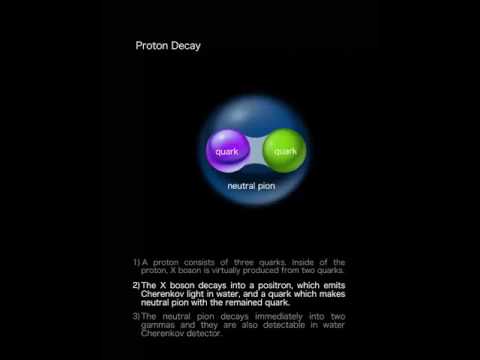
Specifically, Hyper-Kamiokande will be able to detect the 2.2 MeV gamma ray from neutron capture on hydrogen, which will be a distinct detection event from the one caused by neutrinos.
If the detector measures proton decay, it will not only prove it happens, but help estimate the rate of this decay, which has been revised upward when none was detected by Super-Kamiokande, as well as how they decay.
If still nothing is detected, this would force physicists to find out why protons decay even less than previously thought, or maybe not at all.
No one knows the answer to when proton decay can be observed or whether it ever really breaks down in the first place. However, we cannot move forward without actually conducting the experiment.
I believe that protons decay. We hope that readers will look forward to the day when proton decay is discovered.
Dr. Masato Shiozawa, the co-spokesperson of Hyper-Kamiokande.
CP Violation: Why Matter Won
At the origin of the Universe, physicists think that the same amount of matter and antimatter was created.
Neutrino oscillations could be different from antineutrino oscillations, a hypothetical phenomenon called CP violation, or the breakdown of Charge conjugation-Parity (CP) symmetry.

Source: Hyper-Kamiokande
CP violation has already been confirmed for quarks (the constituents of protons and neutrons). However, this alone is only one trillionth of the difference needed to create the current universe.
The neutrinos and antineutrinos created in the J-PARC particle accelerator will be key for this experiment.
Hyper-Kamiokande plans to increase the intensity of this J-PARC beam by a factor of 2.5 compared to Super-Kamiokande, to reduce errors due to insufficient data and to increase the number of measurements to further improve reliability.
It is expected to be possible to determine whether the CP symmetry is broken or not for neutrinos in 10 years, with results in the 2030s.
Conclusion
Neutrino observatories like Hyper-Kamiokande, DUNE, and JUNO are likely going to be very important science experiments to finally solve questions regarding physics that have been unanswered for decades, and have blocked the development of further progress in theoretical physics.
While this might sound a little far from our daily concerns, many of our cutting-edge technologies actually need a better understanding of neutrinos to progress.
For example, a quantum computing chip (Majorana-1) built recently by Microsoft (MSFT )
literally created a new state of matter (topoconductors) using a Majorana particle, a type of particle that is its own antiparticle.
In the same way, better understanding the Sun’s fusion reaction could help us unlock artificial fusion.
So a better understanding of neutrinos, antimatter, or dark matter is not just a giant science project, but can have very direct applications in the development of new world-changing technologies like quantum computing or fusion power plants.
Investing in Neutrino Science
1. Microsoft
MSFT Price Chart
Microsoft is one of the world’s largest tech company, having a quasi monopoly on operating systems, and a very strong position on B2B software, through its Office365 software, its Azure cloud computing systems, LinkedIn social media, as well as a strong presence in video game (Xbox and many of the world’s largest videogame studios), ads, and programming tools (GitHub).
The company is also very active in AI, notably with the deployment of its Copilot AI throughout all its products. Microsoft AI efforts were initially through a collaboration with OpenAI, and now it is more on its own.

Source: Microsoft
Microsoft is also active in quantum computing, with the stunning announcement of its Majorana-1 chip.
When cooled to near absolute zero and tuned with magnetic fields, these devices form topological superconducting nanowires, containing so-called Majorana Zero Modes (MZMs) at the wires’ ends.

Source: Microsoft
(You can read more about all the business activities and opportunities of Microsoft in our dedicated investment report on the company.)
2. Neutrino Energy
While rich in potential future applications, neutrino science seems far from being directly used for commercial applications.
This could be changing, according to a very ambitious German private startup, Neutrino Energy.
The company is exploring the very novel concept of neutrinovoltaics, or the generation of electricity from the constant flux of neutrinos around us. How this works is by using a layer of graphene, a 2D material made of carbon (follow the link for a complete explanation of 2D materials like graphene or goldene).
This method aims to convert the constant motion of graphene atoms, influenced by surrounding radiation and particles like neutrinos, into usable electricity. While promising in theory, the process is still unproven and remains highly experimental.. A similar phenomenon is happening to graphene, with neutrinos “pushing” the atom nuclei, as with argon atoms in the DUNE neutrino detector.
The company has been announcing its upcoming first prototype, called the Powercube, which is supposed to demonstrate the technology developed with the assistance of AI.
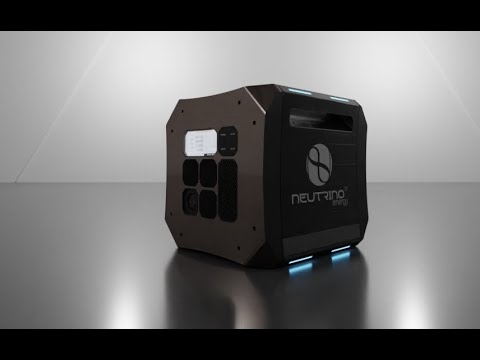
The company has also been working with the Centre for Materials for Electronics Technology (CMET) in India, aiming “to create a self-charging electric vehicle powered by neutrinovoltaic technology”.

It is hard to tell how close to any commercialization the concept is, as it seems that, for now, it is just that, a concept with little reveal about the potential power output or economics.
It is also so extraordinary in its claim of a fuel-less infinite source of energy that a heavy dose of skepticism is in order, especially considering the very low level of interaction of neutrinos and other forms of matter.
But this is definitely the closest to a “neutrino company” currently on the market, with the risk of a deceptive presentation of the technology’s potential to be kept in mind by potential investors.



