

Transportation
Ford Scales Back EV Plans After F-150 Lightning Struggles

Securities.io maintains rigorous editorial standards and may receive compensation from reviewed links. We are not a registered investment adviser and this is not investment advice. Please view our affiliate disclosure.

For decades, the Ford (F ) F-150 has been the best-selling vehicle in North America, a symbol of mainstream automotive dominance. Its electric variant was supposed to mark the true arrival of EVs in the mainstream automotive industry. Instead, just a few years later, it has already been axed.
So what happened? Are EVs merely a dream, something to hope for but never fully realize? Are EVs just promising in theory but flawed in reality? With Ford pulling the plug on the F-150 Lightning to scale back EV ambitions, we take a closer look at what is happening with the automaker and where the industry goes from here.
Summary
Ford’s decision to scale back its electric vehicle ambitions reflects a broader industry reality: large, fully electric trucks have struggled to reach profitability. After weak demand and mounting losses tied to the F-150 Lightning, Ford is pivoting toward hybrids, extended-range EVs, and energy storage—areas where customer adoption is stronger and margins are clearer. Rather than abandoning electrification, the automaker is choosing a more economically sustainable path forward.
The Ford F-150 Lightning: Why Electrifying America’s Top Truck Fell Short
Ford Motor Company is a major multinational automaker that has been ruling the American market for several decades.
Founded by Henry Ford in 1903, the company is known for revolutionizing mass production with the assembly line. Today, it produces Ford trucks, sport utility vehicles, commercial vans, and cars, as well as Lincoln luxury vehicles, with a focus on electrification, mobility, and connected services.
The family-controlled public company is best known for its F-Series, a line of light-duty trucks that Ford has been manufacturing since the 1948 model year. Since 1977, the F-Series has been the best-selling pickup truck line in the US.
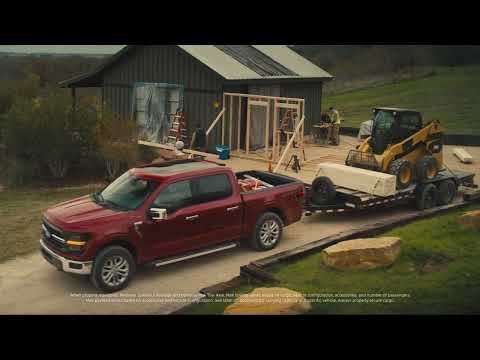
While the series involves a range of vehicles, the iconic full-size pickup truck, the Ford F-150, stands out for its power, capability, and versatility. The model debuted in 1975 as part of the sixth generation of the F-Series lineup and was initially designed as a heavier-duty option. The popular model is currently in its fourteenth generation, which was introduced for the 2021 model year.
Ford has sold more than 41 million F-150s since the vehicle debuted half a century ago.
Even in 2025, the F-150 continues to be the best-selling vehicle, surpassing popular SUVs from brands like Tesla (TSLA ) and Toyota (TM ). Compared to the next-best-selling vehicle of 2025, the Chevrolet Silverado, which sold 284,000 units, the Blue Oval sold over 412,000 F-150 units as of August this year.
What has helped the F-150 take over people’s hearts and the roads is the vast number of F-150 configurations to fit all kinds of drivers, a wide range of trim varieties to suit different lifestyles, several bed length options, and multiple engine choices to balance power, efficiency, and strength.
The pickup truck is further known for strong towing and hauling, with features like smart suspension sensors and onboard generators.
In addition to muscle, the F-150 is packed with modern tech, including the Ford SYNC infotainment system. Its advanced, cloud-connected infotainment system offers large-screen usability, wireless Apple CarPlay/Android Auto, powerful voice control, and over-the-air updates.
Driver Assistance features such as adaptive cruise control, blind-spot monitoring, lane-keeping assist, and hands-free driving are also available on select trims of the F-150.
Packed with these details, the F-150 has become a popular choice among Americans, the majority of whom are repeat customers, reflecting deep brand trust. As a long-standing market leader, the F-150 has solidified its status as a trusted vehicle.
The vehicle has become a cultural icon, with its blend of power, style, and modern innovation serving as a symbol of American resilience that resonates with drivers across generations.
The success of the Ford F-150 isn’t built on just its capability and reliability, but also on the company’s ability to evolve alongside changing consumer needs and industry trends. As the automotive market shifts toward greater efficiency and sustainability, Ford has expanded the F-150 lineup beyond traditional gasoline powertrains.
Today, the F-150 is available with conventional gas engines, the PowerBoost hybrid system, and a fully electric variant, the F-150 Lightning, which starts at around $55,000 and can top $90,000.
With the Ford F-150 Lightning, the Detroit automaker attempted to translate what customers value about the F-150 into an electric platform. The idea was to use electrification as a tool to modernize its most iconic vehicle while preserving the qualities that made it America’s best-selling truck.
But just five years after officially introducing the all-electric Ford F-150 Lightning, Ford is dramatically scaling back its large EV ambitions. While production of the Lightning has been paused and reduced amid weak demand, the company is shifting future investment away from full-size battery-electric trucks toward hybrids and extended-range electric vehicles (EREVs).
New Path Forward for Ford’s EV Dreams as Ambition Meets Economics
On December 15, Ford announced its pivot away from its ambitious electric vehicle (EV) plans and towards more efficient hybrid EVs.
However, the leading automaker isn’t entirely giving up on EVs; rather, it is scrapping production of certain larger EVs. This means the company won’t be producing any F-150 Lightning electric pickup trucks; rather, it will refocus its investment and efforts on building an EV with extended range that incorporates a gasoline-powered engine.
It will be propelled 100% by electric motors, offering rapid acceleration and quiet operation but without the need to stop and charge during long-distance driving. The extended-range electric vehicle architecture (EREV) is estimated to add 700 miles or more and will be built at its Rouge Electric Vehicle Center in Dearborn, Michigan.
As part of the pivot, the company has also introduced manufacturing changes, under which it is renaming the Tennessee Electric Vehicle Center to the Tennessee Truck Plant.
The facility, which is part of the BlueOval City campus and has been driving the future of Ford’s EVs, will now produce new Built Ford Tough truck models, starting in 2029. Its Ohio Assembly Plant, meanwhile, will start producing new gas and hybrid cars in four years.
Furthermore, the company will use its battery plants in Kentucky and Michigan to build LFP (Lithium Iron Phosphate) batteries, gaining an entry into the energy storage business and capitalizing on the rising demand from the growing number of data centers.
Once production for the F-150 Lightning is concluded, the company will redeploy one-third of its workforce on a gas and hybrid model of the F-150. Ford also said that it will employ thousands of workers in the next few years to staff its domestic plants.
This shift, Ford CEO Jim Farley noted in a statement, is customer-driven, and they are now looking “to create a stronger, more resilient, and more profitable Ford.”
He added:
“The operating reality has changed, and we are redeploying capital into higher-return growth opportunities: Ford Pro, our market-leading trucks and vans, hybrids, and high-margin opportunities like our new battery energy storage business.”
The decision comes amidst financial losses and waning consumer demand that have been affecting the entire EV industry, which has injected massive funds into the electrification trend.
Ford has invested billions of dollars in the F-150’s electrification but has struggled to turn a profit. In fact, Ford has lost $13 billion on EVs since 2023. It is expected to take a massive $19.5 billion hit in the fourth quarter of this year.
The latest change will bring in about $5.5 billion in cash impact, with the majority paid next year and the remainder in the year after.
With this move, Ford aims to realize more of its upside potential. This, Farley said on FOX Business Network, “is a better play” for both the company and shareholders.
“Rather than spend billions more on these large EVs that we had planned that have no path to profitability, we’re going to pour our investments into higher margin areas,” he added.
This means more American-built trucks and vans, along with hybrids and affordable EVs. Also, “we’re going to go into the energy storage business in the Midwest, make our country stronger,” Farley said.
As a result, the automaker expects 50% of its global volume to be hybrids, EREVs, and full EVs by the end of this decade, up from a mere 17% in 2025.
Hybrids are already 30% of Ford’s mix, with Farley noting that, “It’s not just because you can tow or get better gas mileage, it’s because you can also power your house with your F-150 hybrid or a job site. These hybrids are more than just economical now, and they’ve been more popular than we ever expected.”
Ford is also seeing a rise in demand for hybrids, while the company’s sales have been flat.
So, in response to this customer preference, Ford is revising its EV strategy and redeploying capital. “Now we’re going to have hybrids across our range. Instead of investing that money in very large EVs that won’t be profitable, we’re going to give Americans more affordable vehicles built here in America that are going to save people money,” Farley said.
Ford has been struggling to sustain demand for its Model e line for years.
The segment, which includes the sale of its EVs, reported an EBIT loss of $1.4 billion in the third quarter, with revenue and volume growth driven by new products in Europe.
But with its latest step, the company says, it will achieve robust returns and improve its margins not just in the Ford Model e segment but also across Ford Pro and Ford Blue. It is actually expecting Ford Model e to reach profitability by 2029, with improvements beginning next year. In early 2023, Ford had predicted profitability by 2026.
At the company’s Q3 earnings, Farley announced that affordable EVs, starting at around $30K, are “right around the corner” at Ford.
The key here is the new Ford Universal EV Platform, announced in August.
With its modified production process, the company will first produce a four-door electric spacious pickup truck in 2027. The electric truck, which will be able to go from 0-60 as fast as a Mustang EcoBoost but with more downforce, will be powered by lower-cost batteries. The automaker has previously announced a $3 billion investment to build the battery factory.
Ford also shared its plan to invest almost $2 billion in retooling a Kentucky factory to produce EVs that it said will be not only more affordable but also more profitable to build and will outcompete rival models.
“It represents the most radical change on how we design and how we build vehicles at Ford since the Model T,” Farley said at the time.
Now, in its latest announcement about EV changes, Ford has raised its EBIT guidance for the full year by $1 billion to about $7 billion and reasserted its adjusted free cash flow range of $2 billion to $3 billion.
As for 3Q25, the company’s adjusted EBIT was $2.6 billion and adjusted free cash flow was $4.3 billion. Its revenue reached a record $50.5 billion, and net income was $2.4 billion. At the end of the quarter, Ford had almost $33 billion in cash and boasted $54 billion in liquidity.
(F )
Ford also declared a dividend of 15 cents per share for the fourth quarter. Meanwhile, the company’s stock price jumped 34.24% this year and is now trading at $13.31.
Partial Electrification as the Bridge to the Future
Swipe to scroll →
| Powertrain | Avg Margin | Customer Adoption | Infrastructure Risk |
|---|---|---|---|
| Battery EV | Low / Negative | Weakening | High |
| Hybrid | High | Strong | Low |
| EREV | Moderate–High | Emerging | Medium |
Ford’s decision to end the F-150 Lightning didn’t really come as a surprise, as the company has been struggling to sell EVs and fill its plant’s capacity.
The automaker sold 164,925 vehicles in November, which was a mere 0.9% YoY decline, but its EV sales fell a whopping 61% to 4,247. Sales of the Mustang Mach-E fell 49%, E-Transit plunged by 82%, and F-150 Lightning saw a 72% drop, with a mere 1,006 units sold last month. Its hybrid sales, however, rose 13.6% to a record 16,301.
Still, Ford grew its market share in the US by 0.5% in November 2025 to 13.2%
According to the company, affordability is currently a key concern for customers across sectors, as evidenced by the Maverick, the lowest starting MSRP of any pickup truck in the US, posting a 43.3% gain in November, while the sales of the entry-level Maverick XL skyrocketed 76.2%.
So, with an affordable EV, Ford will be able to fill a noticeable gap in the weakened EV market, which has seen several automakers make changes to their electrified product plans in recent years.
Besides cost, range anxiety, long charging times, unreliable charging infrastructure, and concerns about battery life, resale value is another factor for EV buyers. On top of it all, policy shifts have led automakers to slow EV investment and scale back production.
President Donald Trump’s ending of EV tax credits in September led to EV sales accounting for 10.5% of new vehicle sales in Q3 of 2025. This jump was driven by consumers rushing to claim tax credits, with overall growth slowing compared to prior years.
Back in September, Farley had warned that the end of the tax credit would suppress demand for EVs. He said during a Ford event:
“I think it’s going to be a vibrant industry, but it’s going to be smaller, way smaller than we thought, especially with the policy change in the tailpipe emissions, plus the $7,500 consumer incentive going away.”
He also noted at the time that the industry has learned that “partial electrification” like hybrids is easier for customers to accept for the time being.
Much like Ford, almost every major brand from Hyundai to Kia, Honda, and Toyota experienced a drop in EV sales in November. They are also shifting their focus from fully battery EVs to hybrid offerings.
Toyota (-26.6%) even sold fewer EVs in Q3 2025, though Volkswagen (+230%), Honda (HMC ) (+60%), Hyundai (+97.8%), and General Motors (GM ) (+95%) posted gains, as per data from Cox Automotive.
“The training wheels are coming off,” said Cox Automotive’s Director of Industry Insights Stephanie Valdez Streaty a few months ago, noting that the federal tax credit was among the key catalysts for EV adoption, now that it has expired, we will see if the EV market is “mature enough to thrive on its own fundamentals or still needs support to expand further.”
Cox Automotive is predicting EV sales to drop notably in Q4 and continue doing so through the early months of 2026, though it believes EVs are the future and that vehicles powered solely by internal combustion engines (ICE) will continue to decline over the long term.
So, which automaker is most primed to benefit from this view? While Ford, GM, and Hyundai are fighting for second place, Tesla continues to dominate the crowded EV field despite having its market share fall from 62% in 2022, 55% in 2023, and 49% in 2024 to 41% in Q3 2025.
Elon Musk’s Tesla is a $1.59 trillion market-cap company whose shares are currently trading at $478, up 18.83% YTD. It has an EPS (TTM) of 1.44 and a P/E (TTM) of 331.44.
(TSLA )
When it comes to electric carmaker’s financials, Tesla recorded a 12% increase in third quarter revenue to $28.10 billion. Automotive revenue jumped 6% to $21.2 billion, but revenue from regulatory credits fell 44% to $417 million. During this period, its net income dropped 37% to $1.37 bln, or 39 cents per share, due to lower EV prices and increased operating expenses.
The company delivered a record 497,099 vehicles in the last quarter, bringing total production to 447,450. Its deliveries through the first three quarters, meanwhile, were about 1.2 million, 6% less than last year.
Much like Ford and other legacy automakers, Tesla is also developing cheaper versions of its popular models to make electric cars “more accessible to customers in the wake of the expiration of the EV tax credit in the U.S.”
Interestingly, Tesla’s biggest growth engine was its energy generation and storage business, which includes large backup batteries and solar photovoltaics. This segment recorded a 44% surge in revenue to $3.42 billion, now accounting for one-quarter of the company’s overall revenue.
Tesla is currently working on starting “volume production” of its heavy-duty electric Semi trucks, a new battery energy storage system, and first-generation production lines for humanoid robots.
Investor Takeaway
Ford’s EV reset prioritizes capital discipline and profitability over aggressive electrification targets. By reallocating investment toward hybrids, extended-range EVs, and battery energy storage, the company is positioning itself for steadier cash flow, improved margins, and reduced execution risk in a slowing EV market. For investors, the shift signals a focus on near-term returns and resilience rather than speculative EV growth.
Conclusion
Ford is discontinuing its flagship all-electric F-150 Lightning after only a few years of production, underscoring a broader re-evaluation across the global auto industry as full electrification proves far more complex and costly.
The Lightning showed that even America’s most trusted truck brand could not escape the realities of the EV market.
Against the headwinds of high costs, thin margins, infrastructure constraints, and weakening consumer demand, Ford is taking a more practical approach by pivoting toward hybrids, extended-range EVs, and energy storage. And as EVs normalize, the broader trend is becoming clear: growth will likely be slower, more uneven, and more dependent on economics than on policy incentives.



