

Energy
Ford Pivot to Grid Batteries: The $6B BlueOval SK Plan

Securities.io maintains rigorous editorial standards and may receive compensation from reviewed links. We are not a registered investment adviser and this is not investment advice. Please view our affiliate disclosure.

Western automakers, and especially US auto manufacturers, have struggled to adapt to the EV revolution initially brought globally by Tesla, then by Chinese brands, and then by the rest of the industry. One reason has been a question of branding, as the legacy automotive brands have a long-established expertise and image linked to combustion engines.
Another one has been the slow adoption of new technologies, and trying to shoehorn EV technology into older designs. As a result, EVs from these brands have been relatively unpopular among consumers, leading to large financial losses.
This is the case for Ford, which recently registered a $19.5B loss to its book value, as it wrote down the majority of its investment in EVs, a loss as large as 40% of the whole company’s book value.
This is not a total loss, however, as the company is pivoting its battery manufacturing capacity toward a new promising market: stationary energy storage, especially for AI data centers. This $6B investment might pay off and transform the venerable automotive company into an energy company as well.
Summary:
- Moving away from electric trucks: Ford is giving up on the F-150 Lightning after disappointing sales, and have suffered a $19.5B write-off.
- A new strategy: The large electric truck is replaced by a model with range extender and a focus on hybrid and smaller EVs.
- Moving to energy storage: The battery factory will be redesigned for $6B to start producing large energy storage modules for AI data centers and utilities, using advanced licensed technology from CATL.
- Investment angle: Ford is still selling fuel car well, and it is evolving into an battery manufacturer as well.
Ford Motor Company (F -2.2%)
Ford & EVs – What Went Wrong?
Why the F-150 Lightning Failed to Meet Market Demand
Ford’s best-selling model is the famous F-150, which has not just been Ford’s best product, but America’s best-selling truck for 48 consecutive years and the best-selling vehicle overall for 44 years.
So on paper, it made sense that as Ford looked to transition to EVs, it would focus on what worked best for the company, with the launch of the electric version of the F-150, the Ford F-150 Lightning.
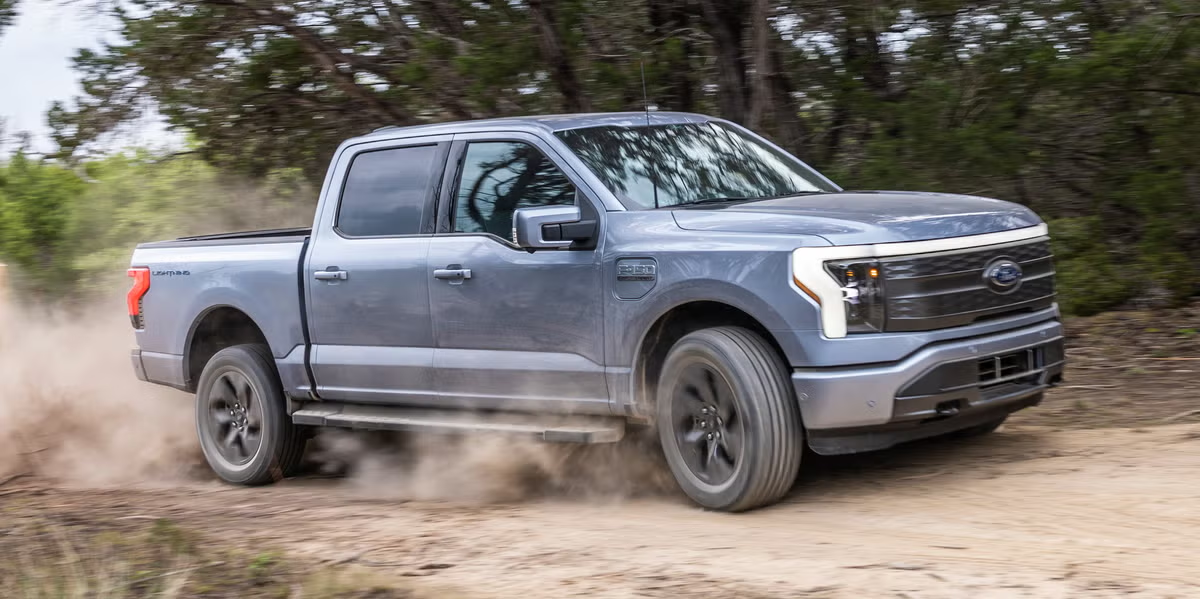
Source: Car & Driver
Overall, while many other EV brands in the past had either focused on sport models, luxury models, or small and affordable ones, Ford was going big. An extra advantage to this plan was that the F-150 Lightning sales would help offset the carbon emissions of the rest of the automotive group.
“Analysts estimate that each F-150 Lightning sold allowed Ford to sell about 16 gas F-150 trucks without paying the gas guzzling tax.”
However, a few things went awry.
The first one was that Ford struggled to get production of the F-150 Lightning going, with multiple delays making it not the expected first large electric truck, but arriving on the market after Rivian and GMC’s own electric pickups.
But the death blow came from the consumers. It appeared quickly to all participants that electric pickup trucks were just not what they wanted.
Poor towing range damaged the image of these trucks, which are expected to do a lot more heavy lifting than most EVs. It is also clear that the demographic that loved the F-150 was also one of the most hostile to EVs in general, making it a poor match to the model’s branding and market position.
The final nail in the coffin was when the Trump administration canceled the EV tax credit at the end of September, and removed the emissions credit system, further worsening the economics of the truck and removing the incentive of selling F-150 Lightnings to compensate for the other Ford models.
“U.S. EV sales have never lived up to expectations. That was true even while the tax credit was in place. Now, there’s no more tax credit, and EV sales have fallen off a proverbial cliff.”
Pavel Molchanov – Managing director at financial services firm Raymond James.
Ford will also keep up its EV ambitions in Europe, especially with its new line of all-electric heavy-duty trucks.
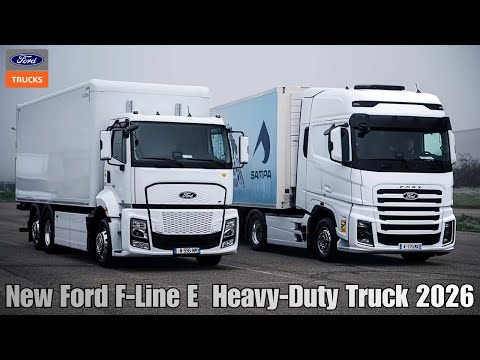
New EV strategy
As a result, the company is redirecting its automaking strategy toward fuel and hybrid vehicles instead of large EVs.
It will also use its flexible Universal EV Platform for its remaining line of pure EVs, with smaller & affordable models. The first model is slated to be priced at about $30,000 and go on sale in 2027.
“This is a customer-driven shift to create a stronger, more resilient and more profitable Ford. The operating reality has changed, and we are redeploying capital into higher-return growth opportunities: Ford Pro, our market-leading trucks and vans, hybrids and high-margin opportunities like our new battery energy storage business.”
This is not to say that Ford will completely give up on electric pick-up trucks, but the strategy now is to answer the problem of limited range by not relying solely on batteries.
Instead, Ford will use Extended Range Electric Vehicle (EREV) technology, which uses a small fuel-powered generator to reload the battery, increasing range while still keeping all the benefits of electric motors’ superior torque and acceleration.
Redesigning EV Battery Factories
Letting Go Of The Past
The pivot hits particularly hard in the southeastern U.S. Battery Belt, where Ford had invested in multi-billion-dollar Blue Origin plants to produce batteries and electric vehicles.
The EV battery facility in Glendale, Kentucky, will lay off about 1,600 employees, and local outlet the Memphis Commercial Appeal reported that a Ford factory in Tennessee will hire around 1,000 fewer workers than previously planned, now that it is making gas trucks instead of electric ones.
The biggest change is Ford’s “$6 billion pivot” concerning the BlueOval SK joint venture it had made with the South Korean battery conglomerate SK On (096770.KS).
The partnership will be dissolved, the subsidiary Ford Energy will take full ownership and liability for the two plants in Glendale, Kentucky, and will assume approximately $3.8 billion in debt held by the joint venture.
Meanwhile, SK On will fully own and operate the Tennessee battery plant.
“This agreement is a strategic restructuring of assets and production scale to enhance operational efficiency. We will focus on strengthening profitability in the North American market by supplying batteries and ESS for electric vehicles to Ford and other clients from the 45GWh-capacity Tennessee plant.”

Source: KED Global
This situation is not unique to Ford, as LG Energy Solution is also moving to sell “all assets related to L-H Battery Company” to its partner Honda.
Moving To Energy Storage
Ford is investing an additional $2B over the next two years to retool the Kentucky facilities for its battery production to be used for energy storage instead. The factory will produce LFP (Lithium Iron Phosphate) cells for BESS modules (Battery Energy Storage System) and 20-foot DC container systems.
The average energy storage system out of this factory is expected in the 5 MWh+ range. Ford currently plans to deploy at least 20 GWh annually by late 2027.
This represents a logical shift for the company, as the market for energy storage in North America is exploding. In 2025, it grew at an astonishing more than 60% compound annual growth rate (CAGR), from 40 GWh to 65–70 GWh.
This is also one of the only logical steps to use the already built facilities and still turn a profit.
“They have built up battery manufacturing capacity, and now they need to do something with it. While EV demand is languishing, U.S. energy storage deployments are skyrocketing.”
Pavel Molchanov – Managing director at financial services firm Raymond James.
Swipe to scroll →
| Metric | 2023 | 2025 | Projected 2030 |
|---|---|---|---|
| North America BESS Installations | ~25 GWh | 65-70 GWh | 150+ GWh |
| Utility-scale battery projects | 150+ | 400+ | 1,000+ |
| Major demand driver | Solar integration | Grid stability | AI data centers & renewables |
Advanced Battery Technology
The technology for the batteries will be one of the most advanced on earth, as Ford is licensing it from the global battery leader CATL (300750.SZ – follow the link for an investment report on CATL).
This is important, as energy storage is a different sector, but no less competitive than automotive manufacturing, and the determining factor is the combination of costs and the battery chemistry used.
CATL’s TENER containerized fixed energy storage technology is currently one of the world’s most advanced, having demonstrated the world’s first five-year zero degradation energy storage system, with 6.25MWh capacity.
No capacity degradation over years of charge-discharge cycle is a massive improvement for utility applications, as it means the battery system can be amortized over decades, instead of mere 8-10 years like previous generations of batteries, making it functionally 2- 3x cheaper.
So the same technology licensed to Ford could give the automaker a definitive edge against its competitors, including new energy leaders like Tesla, which
It should, however, be noted that CATL is recently moving some of its energy storage activity to NAXTRA, a sodium-ion-based chemistry, even if the design is primarily aimed at EV applications.
But in any case, Ford’s close relationshipwith CATL should prove instrumental in the automaker staying at theedgeof battery technology, without having to spend massive R&D budgets to re-invent the wheel.
Investing In Ford’s Move Into Energy Storage
The recent $19.5B write-down was certainly a disappointment for Ford’s shareholders, who had hoped for the F-150 Lightning to be the backbone of the company’s successful transition to the EV era.
At the same time, it did not radically affect the company’s stock price, as its sales of fuel-powered vehicles are holding on.
Its internal combustion engine sales are steady, with an almost unchanged number between February 2026 and the same month in 2025 (around 136,000 vehicles in the month), and make up 90% of total sales. The company F series is also holding well, making up 33% of total sales, and whose sales are up 8.3% in 2025.
Another supportive element was the company marking $187.3B in revenue in 2025 and the 5th consecutive year of revenue growth, with a U.S. market share of 13.2%. As a result, the company is financially solid, with a strong cash balance, and a >4% dividend yield supported by enough free cash flow.

Source: Ford
The move into the energy storage system could prove a valuable and unexpected diversification for the automotive company that has always been naturally exposed to the cyclical nature of its industry.
The AI boom and its gigawatt-scale data centers are ongoing, and the trend of electrification and higher renewable capacity in the energy mix means that demand for stationary, utility-scale batteries will only go up in the upcoming years. This will be especially true as energy availability at peak consumption hours is becoming the most critical resource for both AI data centers and utility companies.
So the new activity could prove a solid extra revenue stream for the company in case of a recession or weakening consumer sentiment.
CATL’s LFP technology is now a mature, well-understood technology whose battery’s chemistry allows for decades-long stability in a wide range of temperatures with virtually no capacity loss, making it a perfect match for utility-scale applications.
Investor Takeaways:
- Theme to watch: Ford have taken a hit, but is now moving past its mistake with the F-150 Lightning and entering promising new markets.
- What matters financially: Ford’s sales and revenues are as strong as ever, and the company is financially sound.
- Key risk: The future success of the redesigned EV line is not guaranteed, nor is the concept of an electric F-150 with range extender.
- Optional add: Ford move into the energy storage market is supported by the licensing of CATL’s technology, the world’s leader in battery manufacturing.
Latest Ford (F) Stock News and Developments
Ford Motor Company (NYSE:F) Receives Average Rating of “Hold” from Analysts
defenseworld.net
•
March 28, 2026
Ford's "Most Radical Change" Was Supposed to Reduce Costs. What if It Does the Opposite?
fool.com
•
March 28, 2026
These Top Stocks Have a Big China Problem to Solve
fool.com
•
March 27, 2026
“Cold-blooded decision on hospital funding,” says CUPE in response to Ford government's 2026 budget
businesswire.com
•
March 27, 2026
Ford Issues 2026 Proxy Statement, Sets Virtual Annual Meeting for May 14
businesswire.com
•
March 27, 2026
Griffith Ford Seguin Announces the Arrival of 2026 Ford Models for Sale to Meet Evolving Driver Demand
newsfilecorp.com
•
March 26, 2026



