

Energy
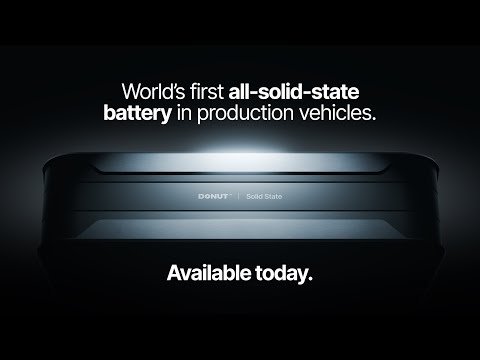
Donut Lab Claims First Road-Ready Solid-State Battery

Securities.io maintains rigorous editorial standards and may receive compensation from reviewed links. We are not a registered investment adviser and this is not investment advice. Please view our affiliate disclosure.
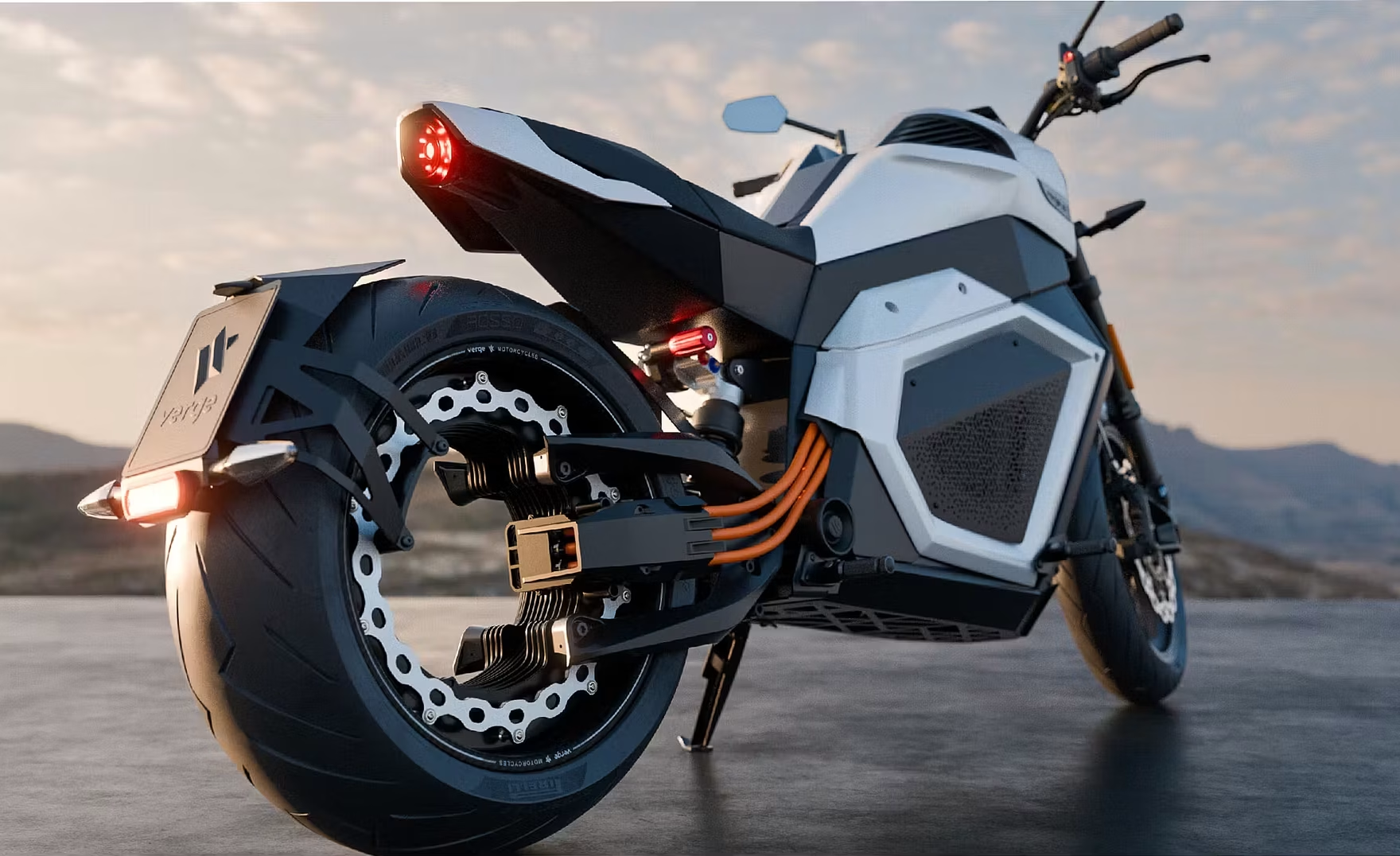
Solid-State Batteries Already On The Road
The race to commercialize the next generation of battery, solid-state batteries, is heating up steeply in 2026.
We knew the technology was reaching maturity, as companies like QuantumScape (QS ) partnered with Volkswagen to commercialize solid-state batteries in Ducati bikes soon, and the rest of the car maker models soon after. Meanwhile, other companies like Toyota (TM ) or SES AI Corporation (SES ) are also moving fast toward the commercialization of solid-state batteries (you can read more in our article “5 Best Solid-State Battery Stocks to Watch or Buy”).
But everyone was caught by surprise when another company, the Finnish Donuts Lab, announced it was releasing “the world’s first all-solid-state battery ready for immediate OEM vehicle production”.
“Donut Lab proudly introduces a breakthrough that will redefine what the industry believes is possible in battery technology.
Until now, no production vehicles have operated with solid-state batteries, and those promised for the future have come with significant compromises in performance, cost, and scalability.”
So, how does this battery look, and how important is this announcement for the automotive and energy industries?
Donuts Lab Overview
So far, Donut Lab has been known as an electric motor company, with a focus on its Donut Motor. It is a “world’s first in-wheel motor combining exceptional torque and battery power density within an ultra-lightweight design”.
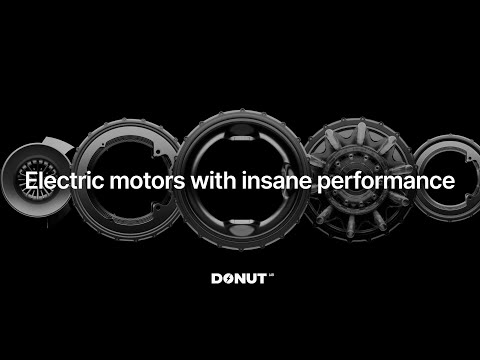
The announcement of the Donut Motor at the CES 2025 (“the most powerful tech event in the world”) had already made a sensation, before the CES 2026 announcement for the battery.
This is indeed a radical redesign of electric motors, making it an integral part of the wheel, removing all possible moving parts, up to over 100 traditional parts, and using 30–50% fewer materials.

Source: Donut Lab
Building on this technology, the company also collaborated with WattEV, an EV platform deployable for both EV and commercial vehicles, and Longbow Motors, an ultra-light electric sports car.
But the partnership that might turn out to be the most important is with Verge Motorcycles, an electric bike with up to 600 km range, 200kW charging speed for 80% charge in less than 10 minutes.
Donut Lab is itself a spin-off of Verge Motorcycle, and two brothers, Marko Lehtimaki and Tuomo Lehtimaki, are the CEOs of Donut Lab and Verge respectively.
Donut Lab also offers Donut Control, an EV high-performance, AI-ready compute unit, and DonutOS, a software to design EVs and other electric systems.

Source: Donut Lab
Donut Lab Solid-State Battery
Coming Out Of Nowhere
The first surprise is how long the company waited to make its announcement, with the world of solid-state batteries more used to long-term goals that nevertheless get constantly delayed, sometimes by almost a decade, like in the case of Toyota.
Instead, Donut Lab waited to go public until the battery was already being installed in commercial vehicles.
Donut Lab waited to announce our solid-state battery breakthrough until the technology was fully tested, validated, and already operating in vehicles.
As of today, these batteries are real, in production vehicles, and represent the future of electric mobility.”
The first vehicles using the battery will be Verge Mortocycles bikes, and it is already a done deal for Q1 2026.
“Donut Lab has engineered a new high performance solid state Donut Battery that can be scaled to major production volumes and seen now in real world use in the Verge Motorcycles bikes out on the road in Q1.”
Needless to say, this surprised the world of battery manufacturing and green energy enthusiasts.
“When we first introduced the Donut Motor last year at CES, many didn’t believe it was possible until they saw the technology working out on the road and setting world records for performance.
Now, with our all-solid-state Donut Battery, Donut Lab is doing the same.
Besides Verge Motorcycle, the batteries are also being deployed into WattEV, CoraPower’s electric truck trailers, and defense-grade platforms of the ESOX Group.
Technicals Specs
Besides its surprisingly advanced stage of commercial readiness, the Donut battery also claims remarkable technical specs:
- Energy density of 400 Wh/kg.
- Supporting full five-minute charging to 100% capacity.
- Like all solid-state batteries, no flammable liquid electrolytes and thermal runaway risks.
- Up to 100,000 charge cycles with minimal capacity fade.
- Retaining more than 99% capacity in temperatures ranging from –30°C (–22°F) to above 100°C (above 212°F), without ignition or performance loss.
- It is made from abundant, geopoliticallysafe materials and avoids rare elements.
- It is claimed to cost less than lithium-ion alternatives.
- A modular architecture allows custom sizes, voltages, and geometries, making it applicable to all sorts of uses, not just a specific EV design.
Comparison To Other Batteries
Swipe to scroll →
| Metric | Donut Lab “Donut Battery” (claimed) | QuantumScape (publicly disclosed) | High-Nickel Li-ion (typical) | LFP Li-ion (typical) |
|---|---|---|---|---|
| Gravimetric energy density (Wh/kg) | 400 | ~301 (cell-level disclosed) | ~240–300 | ~140–200 |
| Volumetric energy density (Wh/L) | Not specified | ~844 (cell-level disclosed) | ~500–750 | ~300–450 |
| Fast-charge claim | “~5 min to 100%” | “~10–80% in ~15 min” (reported, with conditions) | ~15–30 min (10–80% typical, varies) | ~20–40 min (10–80% typical, varies) |
| Safety / electrolyte | All-solid-state; no flammable liquid electrolyte (claimed) | Solid separator; nonflammable/noncombustible (disclosed) | Liquid electrolyte; thermal management required | Liquid electrolyte; generally more stable than high-nickel |
| Cycle life (full cycles) | Up to 100,000 (claimed) | Thousands-range publicly discussed (varies by test regime) | ~1,000–1,500 typical (higher with gentler regimes) | ~2,000–6,000 typical (chemistry-dependent) |
| Operating temperature window | -30°C to >100°C with >99% capacity retention (claimed) | Cold-weather performance improving; still a key industry constraint | Performance drops in cold; fast-charge limited at low temp | Better low-temp stability than some high-nickel, still constrained |
| Commercial status | “In vehicles / Q1 2026” (claimed) | Pilot-stage / automotive qualification pathway (public) | Mass produced globally | Mass produced globally |
Note: Donut Lab figures above are company-stated claims. Li-ion ranges are broad industry-typical bands and vary by cell format, supplier, and test conditions.
So the energy density is around the same as QuantumScape, for example (300-400 Wh/kg), and might perform even better in cold weather (maybe not so surprising for a technology coming from Finland). This put Donut Lab’s battery in the range of the best performer in the solid-state space, not just against lithium-ion batteries.
And it should be noticed that the durability of the battery is truly extreme, with 100,000 charge/discharge cycles being an order of magnitude higher than the 1000-1,500 cycles for regular lithium-ion batteries, or even the 5,000 cycles of high-end lithium-ion batteries.
In practice, this means that these batteries will massively outlast the vehicle they are designed for, and be reusable for other vehicles or for home battery storage for many decades after.
How Did They Do It
The company, since the release of its Donut Motor, has been working solely through word-of-mouth and the remarkable performance presented at conferences like the CES. This has cut marketing and promotion budget significantly, helping redirect more resources toward R&D.
“We haven’t actively pursued a single lead ourselves. When you build something that genuinely works better and costs less, people notice. It’s as simple as that.
You don’t need a billion-euro budget anymore. You need a good idea and access to the right tools.”
Redesign from first principles had been a key in achieving the performance of the Donut Motor design. A team that incorporates ex-employees of McLaren and BMW helps as well.
But for the battery, another factor came into play: a partnership with academia and a little-known innovative battery company.
This company is Nordic Nano, the child of the collaboration between Finnish entrepreneurs and a PhD student working on solid-state batteries, Bela Bhuskute.
Donut Lab invested in Nordic Nano in June & October 2025. Nordic Nano uses Atomic Layer Deposition (ALD), essentially “printing” a battery one atom at a time.
If Bela Bhuskute’s published doctoral dissertation work is an indication, this would make Donut Lab battery use titanium dioxide (TiO₂)-based nanoparticles, which were initially deployed by Nordic Nano for making better solar panels.
A Credible Story
The technology already caught the attention (and funding) of the European Space Agency (ESA), thanks to its remarkable performance in a wide range of temperatures, which is generally an issue in the void of space and in orbit.
Nordic Nano also secured a €2.98M grant from the EU’s Just Transition Fund.
So, while there aren’t any patents for this technology, usually a red flag in tech, this network of connections to innovative companies, academic research, and public agencies gives credibility to the claims of Donut Lab.
And with Verge Motorcycle bikes shipping with the battery the same quarter, the possibility of outright fraud or exaggeration seems unlikely.
We can even assume that quite a few Verge bikes will be bought and dismantled by competitors and experts for analysis of their batteries.
Public Solid-State Battery Investment Options
QuantumScape
(QS )
For now, Verge Motorcycles, DonutLab, and Nordic Nano are all privately listed companies, unreachable for most investors.
So there is still the star of the solid-state publicly-listed space, QuantumScape.
QuantumScape is particularly innovative for its anode-free design. This allows it to integrate multiple cathode materials, positioning the company to benefit from future improvements in the rest of the battery components (solid electrolyte, cathode).

Source: QuantumScape
A key milestone was reached in 2025 when QuantumScape debuted its battery in the Ducati V21L electric motorcycle, a result of its partnership with Volkswagen.

Source: QuantumScape
QuantumScape’s design is significantly superior to lithium-ion batteries in almost all metrics:
- It can charge in just 15 minutes (10-80% at 45 ºC).
- The separator replacing the liquid electrolyte is nonflammable and noncombustible.
- Its battery cells’ energy density is 844 Wh/L and 301 Wh/kg.
- For reference, Tesla’s 4680 cells stand at 643 Wh/L and 241 Wh/kg, and BYD’s blade cells at ~375 Wh/L and 160 Wh/kg.
Volkswagen’s battery subsidiary, PowerCo, will provide QuantumScape up to $131 million in new payments over the next two years upon achieving certain milestones, demonstrating the group’s commitment to solid-state technology.
However, these remarkable achievements are somewhat less impressive after the Donut Lab announcement, especially considering that an at-scale deployment is expected more for 2028 than this year.
At the same time, the deep integration of QuantumScape technology with Volkswagen, the #2 larger automaker in the world (VW, Audi, Porsche, Skoda, Ducati), will likely give it a large market anyway, while VW’s competitors might go to Donut Lab, CATL and other leading battery manufacturer to themselves get performance in the same range as QuantumScape’s.
(You can read more about QuantumScape in our dedicated investment report.)
Latest QuantumScape (QS) Stock News and Developments



