Market News
BRICS+: Expansion, Risks, and Geopolitical Stakes

Securities.io maintains rigorous editorial standards and may receive compensation from reviewed links. We are not a registered investment adviser and this is not investment advice. Please view our affiliate disclosure.

A Changing World Power Balance
International institutions tend to reflect the balance of power between major countries at the time they were founded. They are essential as they shape how trade, economic imbalance, technology transfers, and military conflicts are managed at the global level.
For example, the United Nations was founded in 1945 and has a closed Security Council formed of only five permanent members, each with a veto power: China, France, Russia, the United Kingdom, and the United States.
It should be noted that these countries are among the first ones to have obtained nuclear bombs, and at the time, both the UK and France were major global powers with extensive colonial empires. So it makes sense that countries like India would not be included, as they were not even independent at the time.
Of course, a lot has changed in the world since 1945. The USSR collapsed, China became the world’s factory, and the old colonial empires have all disappeared.
This is why new international organizations are forming, reflecting a changing balance of power. Maybe one of the most discussed and debated ones is the so-called BRICS, which some people describe as a failure and some as the future of international relations, replacing the outdated post-WWII world order.
The truth is likely in between these two positions: the BRICS are a rising star among international organizations but face serious limitations and opposition from incumbent structures.
BRICS: From Acronym to Intergovernmental Bloc (2001–2025)
Interestingly enough, the term BRICS does not come from a top-down initiative by some major countries to organize an alternative to the United Nations, but from a 2001 moniker created by a Goldman Sachs financial analyst, Jim O’Neill, to designate the group of emerging markets with the most impact in their respective region:
- Brazil.
- Russia.
- India.
- China.
- South Africa.
The idea behind the acronym is that investors neglected each of these countries, but each had great future potential thanks to either natural resources, ongoing growth, demographic dynamism, or industrial and scientific potential.
It also described well a group of countries “out” of influence in most of the global economic institutions, which are usually dominated by appointees from Western countries, like the IMF or the World Bank.
As such, the BRICS came to be seen as a shorthand for the “other” section of the world economy, out of the West and its closest allies like Japan and South Korea.
2009–2011: First Summits and South Africa’s Accession
The idea of the BRICS having common interests and concerns about the international system began to take root, and the first BRICS meeting, bringing together representatives of these countries, began in 2009 as an “informal diplomatic club”. South Africa would join formally in 2011.

Source: BRICS
For many years, the BRICS has become an alternative forum where these countries could meet and discuss common issues independently of Western countries. But besides boilerplate declaration, relatively little came out of it.
2024–2025 Expansion: BRICS+ Membership & Institutions
This has progressively changed, with the BRICS creating new multilateral institutions like the New Development Bank and the $100B BRICS Contingent Reserve Arrangement, as well as 60 intragroup institutions and an extensive network of think tanks.
Another development has been the evolution of the BRICS into the BRICS+ in 2024, with the acronym largely a legacy of its founding.
Many countries expressed interest in joining and have been granted full membership or a status that could lead to later membership. Among the most notable additions from the 2024 expansion are the United Arab Emirates, Iran, Egypt, and Ethiopia. Indonesia formally joined in January 2025.

Source: Geopolitical Economy
Many other countries in Asia, Africa, and South America were invited to participate as “partner countries”: Algeria, Belarus, Bolivia, Cuba, Indonesia, Kazakhstan, Malaysia, Nigeria, Thailand, Turkey, Uganda, Uzbekistan, and Vietnam.
BRICS+ and the Emerging Multipolar World Order
Multipolarity
Between 2009 and 2025, a lot of things happened that also changed the impact of the BRICS meeting. Both on the economic side and the international relations aspect.
This has given rise to a new concept called Multipolarity. In theory, it could provide an alternative to the Western-controlled “rules-based order”, where the world is instead managed by multiple “poles” of power, centered around a larger regionally important country, but with much fewer global institutions.
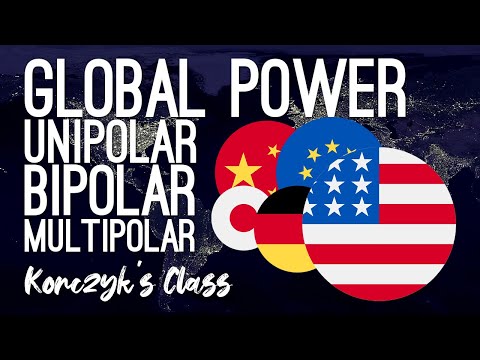
In many ways, this is a return to the Cold War and pre-WW2 concept of “zone of influence”. Or to the post-Napoleonic War order established in Europe in the 19th century.
In this vision, the current “West vs the rest” would be replaced by centers of power, with most likely the countries or unions like the USA, EU, Russia, China, India, Brazil, Iran, etc., each exercising a much greater level of power and autonomy at the regional level.
China’s Industrial Scale and BRICS Leverage
In that interval, China went from a developing country to one of the world’s largest economies, and arguably the world’s largest when it comes to industrial capacity or impact on international trade.

Source: Statista
This rise of China also led to a parallel growth in tensions with the USA, culminating in several waves of trade wars during the Biden and the two Trump administrations.
It also saw China becoming dominant in many industries, such as drones, solar energy, batteries, cheaper EVs, rare earths, and lithium, as well as the world’s largest producer of concrete, steel, and ships.
In that context, the rising capacity of China is sometimes seen as an existential threat to American influence in a way the USSR may never have managed, as it was more solely reliant on military capacity.

Source: The Economist
Russia’s Geopolitical Constraints and BRICS Diplomacy
The relations between the West and Russia steadily degraded over that period, with a succession of increasingly more violent flashpoints:
- Russo-Georgian War in 2008.
- Maidan revolution and Crimea in 2014
- Russian military action in Syria started in 2015.
- “Special Military Operation” in Ukraine since 2022.
In this context, organizations like the BRICS, but also the Shanghai Cooperation Organization (SCO), have been important to Russia to maintain international relations, vital trade, and diplomatic connections.

Source: Visual Capitalist
Why the Global South is Migrating to BRICS Forums
The economic growth and development of South America, India, and South-East Asia are also drivers behind the growing interest in the BRICS and other organizations seen as representing the “Global South” better.
As the non-Western nations become increasingly richer, so do they desire to be heard and more influential in international matters.
By offering alternative forums to the UN or G7/G20, like the BRICS to Global South countries, including to nations considered “rogue states” like Iran, major powers like China and Russia, or emerging major powers like India and Brazil, can themselves get more influential.
What Has BRICS+ Achieved So Far?
Critiques / Pro-BRICS+ Case
Detractors of the BRICS organization are often pointing out, correctly, that very few practical decisions have come out of the forum so far, and that real-world impact have been minimal.
One key reason is that, unlike, for example, the UN Security Council, the IMF, or NATO, the BRICS organization is much less formal and consensus-based. So declarations and decisions taken in the BRICS meeting are non-binding and require being boiled down to the lowest common denominator.
The diverse profile of BRICS countries is also a hindrance:
- Still, developing countries like South Africa, Egypt, or Brazil are not at the same stage of development as China.
- Nuclear powers like China, Russia, or India are rarely supportive of interest in nuclear development by countries like Iran.
Lastly, relations between individual BRICS members are often tense. For example, India and China have regular border scuffles in the Himalayas, and China’s close relation to Pakistan adds to tensions with India.
All these limitations come together in limiting what the BRICS meeting can accomplish, as diverse interests, mutual conflicts, and the interest of many members to stay close to the Western bloc prevent it from becoming a viable alternative to Western-led institutions.
Supporters
Swipe to scroll →
| Metric | BRICS+ | G7 | Notes (method/date) |
|---|---|---|---|
| Share of world population | ~45–49% | ~10% | UN/BRICS data, 2025 |
| Share of global GDP (PPP) | ~35–36% | ~28–30% | IMF/Statista 2024–2025 |
| Oil output | ~30% | ~20–22% | Carnegie/IEA 2025 |
| Gas reserves | ~53% | ~6–7% | BRICS policy analyses 2024 |
| Internet users | ~40% | ~12–14% | Wikipedia/UN ITU, 2024 |
In short, BRICS+ now encompasses nearly half the world’s population and over a third of global GDP (PPP). Its members dominate energy and commodity production and play a growing role in internet connectivity and low-carbon energy development.
Supporters of the BRICS initiative will, however, correctly point out that the recent waves of expansions and interest by new countries to join reflect a dire need for new international institutions.
The joining of countries like Iran and Indonesia also reflects a changing balance of power, with military and economic development granting new countries a more powerful position in international negotiations.
More specifically, the integration of Iran and the persistent influence of Russia can be described as a rejection of the Western-led attempts to isolate these countries from the rest of the world.
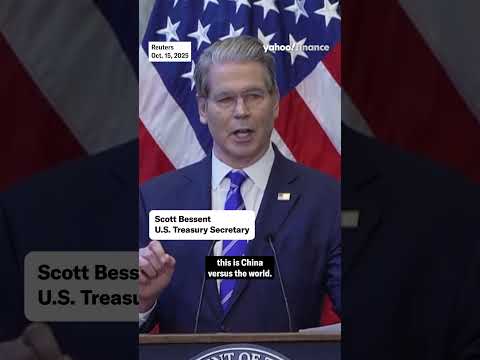
Similarly, as the US looks to describe its trade war with China as a global problem (“Make no mistake, this is China versus the world”), the BRICS members seem to reject this point of view.
In that respect, the lack of a cohesive agenda and an enforcing mechanism is sometimes described as a good thing, allowing for open discussion even in a decade with record geopolitical tensions and conflicts.
Lastly, BRICS+ enthusiasts will correctly point out that the organization is now bringing together the majority of humankind and as much, if not more, economic capacity than the West.

Source: Statista
BRICS’ Future
Cooperation Or Conflict?
A lot of the future impact of BRICS+ and similar organizations like the SCO will depend on the global trajectory regarding trade, military conflict, and economic development.
Overall, it seems unrealistic for Western countries to forever decide alone the fate of the world as they did in 1945, not while Asia, South America, the Middle East, and Africa are quickly developing economically.
This does not necessarily mean that new organizations need to replace older ones, but it does mean that legacy institutions like the UN, the IMF, the World Bank, the WTO, and others need to reform to give a greater influence to other countries.
If they fail to do so, BRICS+ and others will likely fill the void instead.
Development Model
A deeper impact of the economic rise of China has been to challenge the assumption about economic development models. Until recently, access to the American market and capital was considered an absolute necessity for developing countries.
But China is now much richer, and seemingly able to handle a full trade war, sanctions against its semiconductor industry, etc.
This provides many countries with an alternative for both capital and as a development model to the finance-led West.
Instead, a vision built on infrastructure building (hydropower dams, high-speed, harbors, etc.) and connection to the Chinese supply chain, financed through initiatives like the Belt and Road Initiative, powered by Chinese money, could be adopted and move away from financial and industrial connections to the West.

Source: Belt And Road Research Platform
Critics will point to the risk of predatory loans, dependency on China, and foreign political interference.
Counter-critics will respond that the same can be said about IMF and World Bank loans.
De-Dollarization: Payments, FX, and Gold
De-dollarization
Most likely one of the most controversial topics among investors and economists, the question of de-dollarization is looming in the background of any discussion regarding the BRICS+.
The topic of reducing the role of the US dollar in international monetary reserves and international trade is one of prime interest for rival powers like China and Russia. It is less so for countries with a friendlier relationship to the USA and Europe, like India.
Still, the BRICS countries have been developing national alternatives to the West-dominated financial infrastructures like the SWIFT network.

Source: GIS Reports
Trade between BRICS members is also increasingly done in local currency, instead of passing by the intermediary dollar, as has been the standard for decades.
It should also be noted that this is a global trend, not limited to BRICS members, as growing economies are looking for greater control over their currency and trade.
While for now no unified financial system has been developed by the BRICS, the piecemeal approach of connecting together multiple national or regional systems is likely to persist and grow in importance.
Gold, mBridge, and Settlement Experiments
Another hotly debated topic, including within the organization itself, has been the issue of a common BRICS currency.
As a cohort of countries with a massive portion of the world’s commodity, energy, and industrial production, they could in theory decide to create an energy- or commodity-based currency as an alternative to the dollar.
In practice, this idea is likely not going to work for at least three reasons:
- Different members have different natural resources, making a synthetic commodity backed by oil, gas, metals, and other resources a negotiation nightmare, with each member having an interest to value their favourite commodity higher.
- This could also give extra negotiating power to commodity producers like Russia, Brazil, the UAE, and Iran over China, something unlikely to be supported by China.
- An aggressive push for an alternative to the dollar is unwelcome for countries like Brazil and India, looking to avoid confrontation with the West and keep as good as possible relations with “all sides”.
- Fluctuation of commodity prices could make such a system very unstable.
Historically, an alternative for international trade that has been universally accepted to settle the balance of payment between countries has been gold.
Gold can be used as a “neutral” currency, not tied to any country in particular, and convertible into any other currencies.
This also neutralizes the risk of any country to “weaponize” its currency, the way Russian USD and Euros-denominated reserves have been frozen after the start of the war in Ukraine.
Some signs point to tentative interest in that direction, with Shanghai actively working at becoming an international gold trading hub.

Source: Jim Bianco
In addition, the de facto convertibility of the yuan into gold will be supported by the opening of new physical-delivery vaulting in Hong Kong and plans for more warehouses abroad, including in international financial centers like Dubai.
A key BRICS plank, he said, is the cross-border central bank digital currency pilot often called mBridge. It was launched by China, Hong Kong, Thailand, and the United Arab Emirates, with Saudi Arabia recently joining.
It lets participants settle in local currencies rather than dollars. Against that, he set out a US path that leans on dollar stablecoins, digital tokens backed by short-term Treasuries.
“‘Paper gold is over’ as BRICS nations build dollar-free payments” in Mining.com.
It has also been speculated that China and Russia have been silently accumulating gold reserves for years, with China’s gold reserves potentially as large as double or triple its officially recognized reserves.
Certainly, the recent bull market in gold prices might have made the yellow metal more attractive as an alternative to the US dollar as well, with central banks’ purchases (especially from China) the driver of the price rise.
Whether this initiative will be successful is yet to be seen.
But certainly, considering the hard push back against tariffs by China with export restrictions on rare earth elements, it seems that the Chinese government and at least some of its BRICS partners are willing to challenge the USA much more aggressively than before and push back against the weaponization of the US dollar.
Conclusion
From an investment bank acronym in 2001, to a fully fledged international organization bringing together most of the world population, GDP, and resources, the BRICS+ organization has changed tremendously in the past 2 decades.
At the same time, it has often struggled to convert this remarkable reach into actual influence or power.
In large part, this is due to the same causes that make the UN often seem impotent: lack of leadership, conflicting interests, and difficulty in reaching a unanimous consensus for anything impactful.
Still, the Western countries and the organization they lead should not dismiss it too easily.
As developing countries get frustrated with the limited impact their voice can have on policies at the UN, IMF, World Bank, and WTO, they might start to look at alternatives. Especially as the USA is at the same time retreating into a more protectionist stance, and Europe is stuck in an escalating conflict with Russia.
So while the BRICS+ might not turn out into the ideal example of multipolarity some imagine, it might at least bring some changes to the international diplomatic order by bringing some competition and challenge to the incumbent institutions.
Investing In BRICS
1. iShares BIC 50 UCITS ETF.
As the BRICS are large economies, not one company can be invested directly to get diversified exposure in a portfolio, although companies like Alibaba (BABA -6.55%), Mercadolibre (MELI -1.81%), NuBank (NU +0.39%), or SEA (SE -4.1%) can provide exposure to e-commerce and technology in the corresponding countries (China, Brazil, Indonesia) (follow the links for a report dedicated to each company).
Another way is to use dedicated ETFs. One good example is the iShares BIC 50 UCITS ETF.
The ETF follows an index composed of 50 of the largest Brazilian, Indian, and Chinese companies. Like the overall BRICS+’s GDP, the bulk of the ETF is made of Chinese companies, with tech companies like Alibaba and Tencent, but also companies like banks, insurance, refineries, or car manufacturers (BYD, Xpeng, Geely).
The Brazilian iron miner Vale (VALE -1.5%) is also present.

Source: iShares
The consumer discretionary sector dominates the index, followed by financials and ICT, and a relatively small exposure to material, energy, or real estate, at least compared to the size of these sectors in the BRICS+ economies.

Source: iShares
It should be noted that the index used to contain Russian stocks as well, like Gazprom, Sberbank, and Rosneft, but these have been written down to essentially zero value since the invasion of Ukraine.
So, of course, this illustrates that investors in this ETF, and the BRICS+ countries in general, might want to be more aware of geopolitical risks than for other international ETFs.
2. iShares MSCI BRIC ETF
iShares MSCI BIC ETF (BKF -1.31%)
Another option is this ETF, which looks to track the investment results of an index composed of Chinese equities that are available to international investors, and Brazilian and Indian equities.
Here too, the top holdings are in majority Chinese, but with some efforts to increase exposure to the other 2 countries, like with Indian bank HDFC Bank in top holding #3 and with Reliance, a top Indian energy and industrial company making the #5 largest holding of the ETF.
Vale, Nu Holdings, and other Indian and Brazilian stocks are also included in the ETF.

Source: iShare
Overall, the index is heavily focused on ICT and financials, with consumer discretionary, industrials, materials, and energy as the other major economic sectors.

Source: iShare