
Bitcoin
Why Cheaper Power May Make Bitcoin Mining More Wasteful

 Add Securities.io to your preferred sources on Google
As AI mania takes over the world, the technology is dominating headlines for its insatiable appetite for electricity. According to the International Energy Agency (IEA), data centers powering AI consumed over 500 terawatt-hours (TWh) of electricity in 2025, equivalent to what Germany generates in a year.

AI’s power consumption now accounts for about 1.5% of the world’s electricity generation. But before AI became the focus of public scrutiny, Bitcoin (BTC ) mining was the one being criticized for its energy consumption. Although AI workloads are likely to have surpassed Bitcoin mining in electricity use, cryptocurrency mining still attracts significant attention in debates over energy use and emissions.
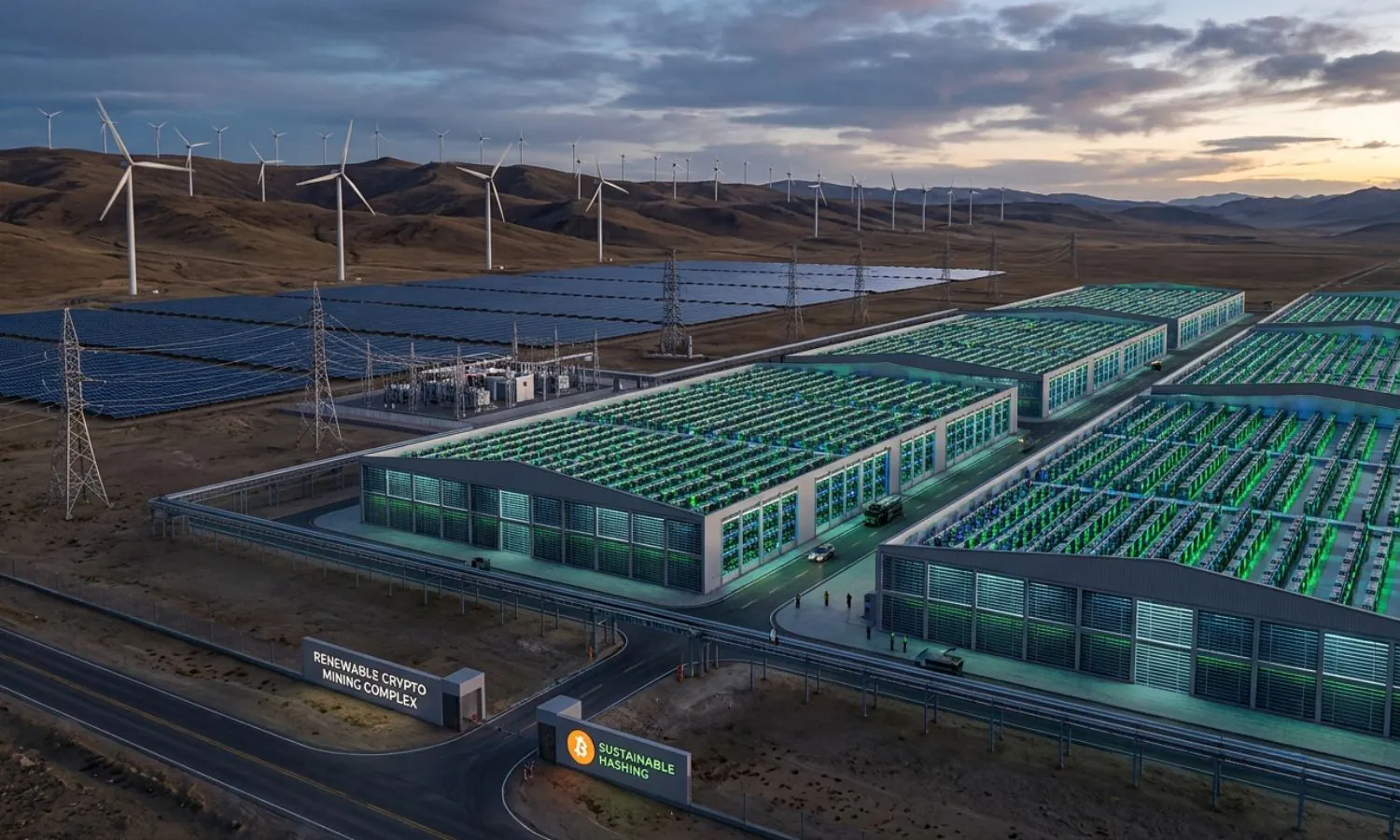
This continued scrutiny comes despite the industry embracing lower-cost and lower-carbon energy sources, including surplus renewable electricity, stranded natural gas, curtailed wind and solar generation, and demand-response programs.
While this transition appears to align economic incentives with environmental goals, with cheaper, cleaner electricity reducing both operating costs and emissions, research suggests that this isn’t always the case.
Bitcoin Mining Is Getting Cleaner But Is It Getting Greener?
The world’s largest and leading cryptocurrency network, Bitcoin, allows for permissionless and censorship-resistant transfer of money.
To do so, it relies on the decentralized Proof-of-Work (PoW) consensus mechanism, where miners compete to solve cryptographic puzzles for a chance to validate transactions and secure the blockchain in exchange for BTC rewards.
PoW consensus, as the latest study noted, “constitutes one of the most significant digital innovations in recent decades,” that “enables decentralized and trustless value transfer among anonymous and self-interested participants without relying on trusted intermediaries.”
This process addresses the issue of double-spending and makes Bitcoin highly resistant to fraud and censorship, as an attacker would have to control the majority of computational power to make changes to the blockchain.
Therefore, mining serves as the economic security layer of the Bitcoin network. The enormous computational effort of thousands of miners creates a massive financial barrier against such attacks, making the blockchain trustworthy without requiring a bank, government, or company.
This security model has always been a key element of Bitcoin but has become even more vital as the cryptocurrency has grown into a multi-trillion-dollar asset class.
While essential to securing the leading network and bringing new coins into circulation, Bitcoin mining is a resource-intensive process, primarily in terms of electricity and specialized mining hardware.
Miners have to run racks of specialized chips round the clock, consuming a lot of electricity and resulting in significant carbon emissions in regions that rely heavily on fossil fuels. Not only that, but the hardware itself, ASICs, becomes economically obsolete in just a few years. This means miners have to turn to newer and faster machines to stay profitable, generating a steady stream of electronic waste.
These issues have consistently been raised by regulators and environmental groups, and in response, the crypto industry has shifted toward renewable and otherwise wasted energy.

According to the Cambridge Centre for Alternative Finance’s recent report, over half of Bitcoin’s electricity (52.4%) now comes from zero-emission sources, up from 37.6% in 2022.
These sustainable energy sources include hydropower and wind energy, which are leading the way at 42.6% of the share. For instance, hydro-rich jurisdictions like Paraguay have become significant mining hubs thanks to dams that generate more power than the local grid can absorb. At 9.8%, nuclear is also making a meaningful contribution.
Alongside renewables, miners have also turned to stranded and surplus energy. Natural gas that would otherwise be flared at oil wells is being captured on-site and converted into electricity. As a result, natural gas’ share has increased 13.2 percentage points to 38.2% over three years, replacing coal, whose share has fallen 27.7 percentage points to 8.9% during this period, as the single largest energy source used in Bitcoin mining.
Methane from landfills is also being intercepted before it escapes as a potent greenhouse gas. Meanwhile, in El Salvador, miners are using geothermal energy drawn from volcanic activity.
In addition, Bitcoin miners have been participating in grid-balancing programs, agreeing to power down within seconds during periods of peak demand in exchange for credit. Back in 2022, when Texas experienced a blistering heat wave, “nearly all industrial-scale Bitcoin mining” operations shut down their rigs and freed up 1,000 MW of electricity to be redistributed by the grid. These developments have helped make Bitcoin mining cleaner and more economically efficient.
Miners have also been using the heat that mining generates, which is typically treated as waste. For instance, in Finland, MARA has integrated Bitcoin mining into existing district heating systems, while in Canada, Canaan is exploring recycling it for commercial agricultural operations.
With rewards halving every four years, set to decrease from the current 3.125 BTC to 1.5625 BTC in April 2028, many publicly traded miners have further diversified into adjacent businesses such as AI and HPC for additional revenue streams.
Despite this progress, the question that remains is whether access to cheaper and cleaner electricity, more efficient hardware, and new revenue streams actually reduces the Bitcoin network’s overall environmental footprint, the way efficiency gains have historically done for other digital technologies.
The Productivity Trap: Why Efficiency Doesn’t Reduce Bitcoin’s Footprint
In order to test whether efficiency gains reduce the Bitcoin network’s resource intensity and environmental footprint, the study titled “Bitcoin’s productivity trap1” built a formal economic model of the mining market and found that they don’t, due to structural rather than incidental reasons.
This isn’t what’s seen in other industries like information technology and data centers. In most computing applications, cheaper electricity and more efficient hardware mean the same task can be done using fewer resources.
But that’s not the case with Bitcoin mining, where lower input costs actually encourage more mining activity.
That’s because the computations performed by miners, which involve making trillions of guesses every second to find a specific target output, have no value in themselves. This activity exists only as a costly signal that prevents attacks on the network by making them extremely expensive.
“In PoW systems, the computational output—hashes—has no intrinsic productive value. It functions solely as a cost signal that sustains decentralized consensus,” stated the study. “In contrast to data transmission (Internet) or information processing (AI), where computational results deliver direct utility, the hashes generated in PoW are economically and functionally relevant only because of the cost incurred in their production.”
The output of all this computing is fixed and doesn’t scale up with cheaper computation.
Given that mining is perfectly competitive, where the winner takes the reward (currently 3.125 BTC per block plus transaction fees), any reduction in the cost of participating, whether due to cheap surplus energy, more efficient chips, or added revenue streams, simply attracts more miners into the race until total spending is back to its previous equilibrium level.
With the reward pool also predetermined, lower production costs don’t increase the value generated by the network. But what they do improve is mining profitability, attracting additional computational power until competition once again erodes excess returns. Here, efficiency gains get absorbed through greater participation rather than higher productivity.
So, the network ends up just as secure as before, but with more hardware plugged in and more electricity flowing through it.
This dynamic is termed the “productivity trap” by the authors, where inputs expand, but output or network security does not. “This pattern (sharply) constraints the scope of externality reductions through productivity gains,” wrote the authors.
As a result, the resource-to-output ratio never improves the way it would for other digital technologies like a more efficient data center or a more efficient factory, thus fundamentally differentiating Bitcoin from conventional industries.
For instance, the IEA projects that AI-computing will account for over half of the growth in the U.S. electricity demand until 2030, but as a study documents, algorithmic efficiency is improving at a faster rate, “by a factor 2.5 per year,” suggesting that, much like previous innovations, rising energy demand may eventually stabilize due to technological progress.
To demonstrate this mechanism, the authors examined three major sources of efficiency gains – surplus renewable energy, improved mining hardware, and additional revenue streams – that are increasingly common across the mining industry.
Although all three sources differ technologically and economically, the study concludes that they all operate through the same competitive mechanism: lower effective costs or higher effective revenues encourage additional mining investment rather than reducing aggregate resource use. The study stated:
“Within the PoW paradigm, efficiency gains systematically expand resource use, as in the competitive equilibrium cost reductions are endogenously absorbed through additional mining. The failure is that external costs are not internalized in miners’ price signals, hence, the incentive mechanism optimizes against social welfare.”
The Environmental Limits of Efficiency and the Search for Solutions
In the latest research, the authors don’t consider improvements in software efficiency because PoW-hash computations are deliberately simple, designed for the very purpose of enforcing probabilistic competition among miners; this structure is integral to the PoW security model, and altering it would mean a fundamental change to the consensus mechanism itself.
Instead, they studied externalities within Bitcoin’s PoW constraint, and calibrated their model using real figures, including current Bitcoin rewards, Texas industrial electricity prices, and the widely used Bitmain Antminer S21 Pro mining rig.
What they found was that when miners used cheap surplus renewable power instead of fossil-fuel electricity, carbon emissions fell as one would expect and as the industry has stated.
But that’s not all. The authors argued that the reduction in operating costs that accompanies this enables miners to deploy more ASIC machines, which then increases total electricity consumption and accelerates hardware replacement.
So, while emissions may decline, electronic waste rises due to a meaningful increase in the number of active mining rigs, which means more hardware becomes obsolete sooner.
The overall environmental outcome therefore depends on the relative importance assigned to carbon emissions versus electronic waste, rather than improving through cleaner electricity alone.
Interestingly, the trade-off becomes more pronounced the cleaner the electricity becomes. In an extreme case of essentially unlimited, near-free surplus energy, the model finds that carbon emissions could fall to zero, but then the fleet of mining rigs doubles and annual e-waste climbs correspondingly.
But the reality is that when surplus electricity already largely replaces fossil-fuel generation, the carbon benefits of further substitution start to diminish because there is less fossil energy left to displace.
Under such scenarios, where electricity is already predominantly renewable, additional low-cost power mainly expands mining activity without producing meaningful reductions in emissions. In these circumstances, the study argues that overall environmental externalities may actually increase because electronic waste continues to rise while opportunities for further carbon reductions largely disappear.
Similarly, improvements in mining-hardware efficiency and new revenue streams lower the cost of mining and expand the equilibrium size of the network rather than shrinking its footprint.
Beyond this, the paper also evaluated potential policy responses and their efficacy.
One of the policy interventions recommended is a globally coordinated Pigouvian tax2 on carbon-intensive energy that can reduce both emissions and electronic waste by increasing miners’ operating costs, thereby lowering the equilibrium number of mining rigs, without weakening Bitcoin’s economic security. It added:
“Since the cost effect is larger for higher levels of fossil-powered energy in the network, the effectiveness on externalities is conditional on the energy mix.”
Implementing a multilateral Pigouvian tax, however, has been a significant challenge for decades.
So, the authors caution that imposing the tax unilaterally, by only a subset of countries, can backfire, as Bitcoin mining is highly mobile. Miners can relocate almost frictionlessly to wherever electricity is cheapest, as has happened in the past. The shift to jurisdictions with no tax and more carbon-intensive energy would increase global emissions through carbon leakage rather than reducing them.
“Unilateral national regulations are likely to exacerbate externalities due to Bitcoin’s decentralized nature and its ability to evade local regulation,” argued the paper.
For investors, the study highlights that the technologies marketed as making Bitcoin mining greener may simultaneously strengthen low-cost operators while accelerating network competition, equipment obsolescence, capital requirements, and regulatory exposure.
For the industry as a whole, the findings caution against relying on voluntary efficiency gains or a patchwork of national regulations to resolve mining’s environmental issues. Instead, the study points toward either internationally coordinated carbon pricing, a redesign of how mining rewards are distributed within the protocol, or a more radical option of moving away from PoW, as already proven feasible by Ethereum (ETH ), something the Bitcoin community has shown little appetite for.
Company in Focus: Riot Platforms
The integrated digital infrastructure company Riot Platforms (RIOT ) is focused on developing and optimizing its power assets through Bitcoin Mining and Engineering segments.
Its Engineering segment manufactures power distribution equipment and custom-engineered electrical products, in addition to providing critical infrastructure to government and commercial customers, serving clients across utility, power generation, data center, and alternative energy markets.
Riot is also engaged in developing power capacity for AI and HPC uses, much like the broader Bitcoin mining industry, to counter the effect of shrinking profits as block subsidies continue to decline and production costs stay above market price.
Then there’s the Bitcoin Mining segment. Riot is one of the largest mining companies in the US, with a market cap of $8.179 billion, and its business model is built around the logic of securing the cheapest possible power and using that cost advantage to run as much mining hardware as the balance sheet and the grid will allow.
RIOT Price Chart
When it comes to Riot’s market performance, its shares are currently trading at $21.64, up 71.43% YTD and 55% over the past year. It has an EPS (TTM) of -2.58 and a P/E (TTM) of -8.39.
As for the Bitcoin miner’s financial performance, it reported total revenue of $167.2 million for the three-month period ended March 31, 2026, up from $161.4 million during the same quarter a year prior.
This was the first quarter in which Riot reported Data Center revenue, which came in at $33.2 million, comprising $32.2 million in tenant fit-out services revenue and $0.9 million in operating lease revenue.
“The first quarter of 2026 marks a definitive inflection point for Riot, as we officially transitioned into an active, revenue-generating data center operator,” said CEO Jason Les.
More importantly, the company announced that Advanced Micro Devices (AMD ) has expanded its capacity at Riot’s Rockdale, Texas campus. “Our ongoing delivery of initial capacity to AMD, and their decision to already double their footprint with a 25 megawatt expansion, validates our ability to execute at institutional scale with the most demanding tenants,” added Les.
The company now has 50 MW contracted with AMD, with the potential to upsize to 150 MW. The agreement, per Riot, can generate about $636 million over a 10-year term.
“We have the secured power, the in-house development expertise, and the significant financial resources required to capitalize on strong market demand with high-quality tenants in order to drive compounding shareholder value,” added Les.
Engineering revenue was $22.2 million. Meanwhile, Bitcoin mining revenue was $111.9 million in Q1 2026, down from $142.9 million in Q1 2025. This drop was driven by lower average BTC prices and an increase in the global network hash rate, but was partially offset by an increase in the company’s average operating hash rate.
The company produced 1,473 BTC during the quarter, with an average cost to mine Bitcoin, excluding depreciation, of $44,629. This cost increased 1.87% due to a 24% increase in the average global network hash rate, partially offset by a 169% increase in power credits received in Q1 2026.
Riot reported a strong liquidity position, with 15,679 BTC at the end of March 2026. Holdings remain largely unchanged at 15,680 BTC, putting it among the ten largest publicly traded Bitcoin treasury companies. The company did, however, sell 3,688 BTC during Q1. It ended the quarter with $282.5 million in cash, of which $76.9 million is restricted.
Conclusion
Over the past decade, the Bitcoin mining industry has made substantial progress in sourcing cleaner and cheaper power. This shift is real, but as the new study points out, there is a “productivity trap” at the heart of Bitcoin’s PoW design, which is a reminder that good inputs don’t automatically produce good outcomes when the underlying system rewards spending on computation for its own sake.
To address the environmental challenges associated with PoW, better energy sourcing alone won’t be sufficient; rather, there is a need for continued technological advancement, thoughtful market design, and well-coordinated policy measures.
References
1. Gill, M., Stinner, J. & Tyrell, M. Bitcoin’s productivity trap. Energy Economics, 109505 (2026). https://doi.org/10.1016/j.eneco.2026.109505
2. ScienceDirect Topics. Pigouvian Tax. https://www.sciencedirect.com/topics/economics-econometrics-and-finance/pigouvian-tax



