

Commodities
BHP: A Mining Giant Betting on Copper

Securities.io maintains rigorous editorial standards and may receive compensation from reviewed links. We are not a registered investment adviser and this is not investment advice. Please view our affiliate disclosure.

Summary:
- Resources like metals are key: The green transition and tech industry exist only thanks to a steady supply of key metals from mining.
- Growing populations make fertilizer equally important: Industrial agriculture requires rising fertilizer inputs, while few major new potash mines are coming online.
- BHP long-term strategy: BHP has moved away from thermal coal to double down on copper and enter the potash market.
- Investment angle: BHP is positioned to benefit from surging demand for copper, iron ore, and fertilizers as electrification, infrastructure spending, and population growth accelerate
While the investing world sometimes seems to only care about digital technology, from AI to telecommunication and cloud computing, the world is also still very much run on physical resources: oil & gas, lithium, copper, iron, aluminum, rare earths, etc.
In that context, mining companies are there to provide the physical basis for all of the major technological progress: silver for solar panels, copper for electrification, lithium for batteries, rare earth for memory & computer chips, etc.
As we are seemingly heading for a repeat of the 1970s macroeconomic conditions, with an oil shock, stagflation (inflation + economic stagnation), and global instability, it can make a lot of sense for investors to get more exposure to commodities, a sector that strongly outperformed an otherwise stagnant stock market in the 70s.
It is, however, a complex industry to invest in, as it carries many often unseen risks: expropriation by local dictatorship, ecological disaster at a given mine, no control over very volatile commodity prices, etc.
For this reason, betting on the larger mining companies can considerably reduce one-time off risks linked to a specific country or mine, while still maintaining exposure to the broader sector. And thanks to their scale, large miners are also more able to generate cash flow or raise money to fund the multi-billion-dollar budgets needed to open new mines, a process that often takes 10+ years.
This is an idea we previously explored in previous Stock Spotlights, with general miner Rio Tinto (RIO +2.52%), gold miner Newmont (NEM +1%), lithium miner Albemarle (ALB -3.22%), and platinum miner Sibanye Stillwater (SBSW -3.47%) (follow the link for details reports on each company).
There is another company matching these criteria, with increasing exposure to copper production, and that recently moved away from production of coal: BHP Group Limited.
BHP Group Limited (BHP -0.69%)
What Is BHP Group?
While it is listed on the NYSE, BHP is considered an Australian mining company, headquartered in Melbourne. The company is the result of the 2001 merger of already large mining companies Broken Hill Proprietary Company Limited (BHP) and the Anglo–Dutch company Billiton plc.
BHP was the world’s largest mining company in 2025, and would have been even larger if it had managed to acquire Anglo American for £31B in 2024, but its repeated and persistent offers were rejected (instead, Anglo and Teck Resources are looking at a $60B merger).
In 2025, the company produced large amounts of various metals:
- 2 Mt (millions tons) of copper.
- 263 Mt of iron ore.
- 18 Mt of steelmaking coal (coking coal).
It will also soon become a major potash producer (fertilizer) with first production at the Canadian Jansen mine planned for 2027, with further ramp in production by 2031.

The two most important countries for BHP are Australia and Chile, both considered top-tier mining jurisdictions with friendly business conditions and safe and stable legislation and political systems.

Source: BHP
The company is a major contributor to the economies in which it operates, having notably paid in taxes $6.8B to the Australian government and $3.2B to the Chilean government, making it one of the largest taxpayers in both countries, with a single mine (Escondida) representing several percentage points of Chile’s total GDP.
BHP Core Business Segments
Swipe to scroll →
| Commodity | Key Uses | BHP Role | Demand Outlook |
|---|---|---|---|
| Iron Ore | Steel production, construction, and infrastructure | Core revenue driver with large Australian operations | Stable long-term demand tied to global infrastructure |
| Copper | Electrification, EVs, renewable energy, electronics | Major producer via Escondida and Olympic Dam | Expected demand growth through 2050 |
| Metallurgical Coal | Steel production | Australian export operations | Stable until green steel technologies scale |
| Potash | Fertilizers for global agriculture | Jansen project in Canada | Strong growth as food demand rises |
Iron Ore
Iron, especially Australian iron, is the historical core of the company. Iron deposits in Western Australia have actually been the source of some of the largest mining companies in the world, with #2 Rio Tinto also fitting in this category.
A key reason Australian iron mining companies have become so big and dominate the global mining landscape today is that this is one of the world’s cheapest iron deposits, so concentrated that its exploitation is inherently cheaper than that of almost any other competitor.
The direct consequence is not just profits, but a source of mining income that keeps providing positive cash flow even during recessions and periods of low commodity prices, which can normally be devastating for the mining sector, as they can last as long as 5-20 years.
This free cash can then be redeployed to buy assets in distress cheaply.
So it is the geological nature of BHP iron deposits, a very hard-to-replicate asset, that has supported the company’s steady growth over the past century into the giant it is today.
“For all we’ve achieved over 140 years, I firmly believe our best days are ahead of us. The quality of our resources, our choice of commodities, and our financial strength provide resilience in an uncertain world.”
Mike Henry – BHP CEO
Iron is also THE commodity of the modern world, which consumes 20x more iron than all other metals put together, mostly in the form of steel (1 tons of steel require 1.6 tons of iron ore).
The company’s iron ore train bringing the metal for the mine to the shores for exports can be as long as 264 ore cars, or 2.5 kilometers (1.5 miles). It is later loaded on massive ships with a capacity equivalent to 47 Olympic-sized swimming pools.
The other location for production of iron by BHP is in Brazil with the joint venture Samarco, another global location of a low-cost iron deposits, which has made the fortune of the local mining giant Vale (VALE +0.47%), which owns the other 50% of Samarco.
Copper
If iron is the backbone of the modern world, copper is its nervous system. The red metal is essential for any application using electricity, from heavy industry to piping, electrification via EVs, batteries, and charging stations, as well as any computing activity and HVAC (heat pump, air conditioning).

Source: BHP
Due to these many applications, almost all of which are seeing growing demand, it is estimated that copper demand will double by 2050. Because of its growing importance, BHP has been doubling down on its presence in copper, acquiring new mines and expanding its existing ones.
Its largest mine is in Chile, the Escondida mine, a country with 2 other copper mines, with Australia’s Olympic Dam another important copper source for the company. The company also has a joint venture between BHP, Mitsubishi, Teck Resources, and Glencore in Peru (Antamina) and one of the largest undeveloped copper deposits in the world, located in Arizona (Resolution Copper).

Source: BHP
In total, BHP produced 2 Mt (million tonnes) of copper in 2025, a growing number from 1.7 Mt in 2023.
Metallurgical Coal
While green hydrogen might one day replace it, metallurgical coal is a special type of coal currently indispensable to produce steel from iron ore, adding the right amount of carbon and removing impurities from iron ore to make this essential alloy.

Source: BHP
For example, 750 kilograms of coal are required in the production of a mid-size car, and 790 tons for an offshore wind turbine.
BHP mines coal in Eastern Australia, in Queensland, and then exports it by ship to China, Asia, Europe, and Latin America.

Source: BHP
BHP used to have more coal mines, but divested the mines that produced non-metallurgical coal, selling them to Whitehaven Coal (WHC.AX) for up to $4.1B, according to its strategy to pursue a greener profile.
Potash
Potash, a potassium salt, is one of the three key components of chemical fertilizer supporting the global food production (nitrogen-potassium-phosphorus). Around 70 million tonnes of potash are produced each year globally, predominantly in Canada and the former Soviet Union.
BHP has invested more than $10B in the Canadian Jansen project to enter the potash market. It is expected to produce up to 8.5 Mt per year, or more than 10% of the current global supply, with the potential to produce up to 16 to 17 Mtpa in future stages.
As modern industrial agriculture is growing increasingly potash-intensive, this new supply will be needed to keep enough food production for a growing global population.

Source: BHP
With tensions rising with Russia and Belarus, as well as China, all key producers of potash, Jansen might turn out to be a very important asset for BHP to supply Western countries.
Nickel
BHP also used to produce nickel at its Nickel West operation in Western Australia, but suspended production since October 2024 due to low nickel prices. Nickel is mostly used in EV batteries and for the production of stainless steel.
Low prices are in large part due to overproduction and the market being flooded by low-cost producers in Indonesia.
BHP is said to be looking to sell its nickel mine, with British mining giant Glencore (GLEN.L) potentially interested.
BHP Growth Strategy and Future Projects
Besides potash production at Jansen starting at the end of the 2020s, BHP’s main focus in the past few years has been to consolidate its dominant position in the copper market. The company is among the rare ones to increase copper production (+0.2 Mt), while its direct competitors will experience a cumulative decrease in production of 1.5 Mt by 2027.
One part has been to build enough infrastructure and perform more exploration to add another 50 years to the lifespan of BHP’s Spence mine in Chile.
Another one is looking to make a reality an active mine at Resolution Copper in Arizona (owned 45% by BHP, and operated by Rio Tinto, which owns 55%). Located 60 miles east of Phoenix, the mine is in the last stages of permitting and engineering.
As the USA is looking to reindustrialize and relocalize its supply chains closer to home, the mine could be a major step in reaching this goal.
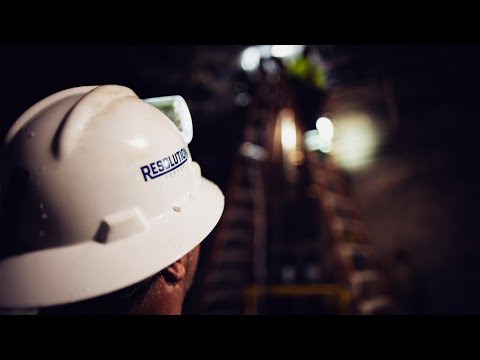
However, this is only a very long-term prospect, as construction of the mine will take at least 10 years, to be followed by around 40 years of production.
Another major copper project is the Vicuña district, where Escondida is located. It could become one of the top5 global gold & copper producers, with >70 years of mine life and up to 800,000 tons of production per year by the mid-2030s.

Source: BHP
BHP Sustainability Strategy and Mining Technology
BHP has been among the leaders in electrifying its mining operations, with many of its mines now fully using only green electricity. In total, BHP aims to reduce its greenhouse emissions by 30% by 2030, while also having 30% of the land and water it handles under conservation, restoration, or regenerative practices.
However, switching its entire fleet of vehicles and ships to renewable energy (batteries and green power) or sustainable & carbon-neutral fuel (sustainable artificial fuel or hydrogen) will take a lot longer.
We believe the future is increasingly clear and our strategy, portfolio, capabilities, and approach to social value position us to play an important role in meeting the twin objectives of an accelerated energy transition and continued economic development and improvement in living standards.
Mike Henry – BHP CEO
BHP is also focused on commodities that will all benefit from the green transition and growing demand, with many like copper and potash expected to see demand going up 2x in the next 30 years compared to the past 30 years.

Source: BHP
Another major technological improvement underway at BHP is on saving water, thanks to new methods of treating wastewater that can reuse the water at its Olympic Dam mine. Tapping into non-freshwater resources at Escondida is also helping.
“BHP has eliminated the use of groundwater with a switch to desalinated water. However, by terminating fossil fuel-based electricity supply contracts early, from 2022, the desalination unit will run on 100 per cent renewable power sources.”
Lastly, BHP is highly digitalized, already using automation & AI to manage risk, improve asset performance, and support management’s decision-making.
BHP’s Financials
The company generated roughly $51 billion in revenue and about $9 billion in net income in 2025. Management expects between $6 billion and $10 billion in annual free cash flow over the next five years, depending on commodity price scenarios.

Source: BHP
The company has delivered no less than $110B, or 70% of its market capitalization, in dividends and buy-backs to its shareholders since 2017, with distribution increasing when the company spun off its oil production activity or on exceptionally good years thanks to high commodity prices.
Overall, BHP combines a long-term forward-thinking approach of exposure to commodities lifted by the green transition (copper) and the growing global population (potash) with its historical core of profitable and reliable iron mining.
Together with a profile of profitability and reliable dividends, combined with safe jurisdictions, this makes BHP a relatively defensive stock compared to many other miners that might have more risks of capital misallocation, while also potentially capturing the upside of commodity markets running hot in a decade of resource shortage, international conflicts, and stagflation.
Investor Takeaways:
- Theme to watch: Electrification, AI, and booming population support commodities prices.
- What matters financially: Profitability from iron mining gives BHP the cash to expand into promising markets in all price environments.
- Key risk: As global tensions and debt levels rise, resource nationalism and extra taxes could dampen miner profits.
- Optional bonus: High oil & gas prices from wars will supercharge the green transition, boosting further demand for copper.
Latest BHP (BHP) Stock News and Developments
BHP vs. SCCO: Which Copper Stock is the Better Buy?
zacks.com
•
March 30, 2026
BHP Iron Ore Output Up 2% in 1H26: Can Expansion Drive Future Gains?
zacks.com
•
March 27, 2026
Reviewing Vox Royalty (NASDAQ:VOXR) & BHP Group (NYSE:BHP)
defenseworld.net
•
March 27, 2026
BHP and VALE Are Home Run Stocks As Copper Demand Goes Parabolic
247wallst.com
•
March 23, 2026
BHP CEO appointment reignites debate on diversity in mining leadership
reuters.com
•
March 20, 2026
BHP (BHP) Moves to Strong Buy: Rationale Behind the Upgrade
zacks.com
•
March 18, 2026



