

Aerospace
Top 5 Places Alien Life May Exist in the Solar System

Securities.io maintains rigorous editorial standards and may receive compensation from reviewed links. We are not a registered investment adviser and this is not investment advice. Please view our affiliate disclosure.

The idea of alien life is as old as humanity’s realization that other stellar bodies, like the Moon or Mars, are not just luminous dots in the sky but Earth-like places that could, in theory, be inhabited.
Unfortunately, the hostility of deep-space environments has removed the prospect of finding the lunar or Martian civilizations imagined by science-fiction writers.
This is not to say there is zero chance of life in our solar system outside Earth. Actually, there is even evidence that some of these planetoids could harbor life right now through the detection of specific Biosignatures—chemical markers that suggest biological processes.
What Are We Actually Looking For? When scientists discuss “alien life” in our neighborhood, they aren’t looking for advanced civilizations or intelligent species. Instead, the hunt is for microbial life—single-celled organisms that may have evolved in the deep-freeze of moon oceans or the acidic clouds of Venus. Finding even a single bacterium would be a “Second Genesis,” proving that life is a fundamental feature of the universe rather than a terrestrial fluke
As our ability to explore other worlds increases, finding out the answer might become one of the primary goals of future space probes.
Swipe to scroll →
| Planet / Moon | Confirmed Potential Habitat | Potential Biosignatures | Next Major Mission |
|---|---|---|---|
| Enceladus | Under ice ocean | Organic molecules in icy geysers | Enceladus Orbilander (Concept) |
| Europa | Under ice ocean | Sulfur-based streaks on the surface | Europa Clipper (Arriving 2030) |
| Titan | Methane seas & lakes | Organic materials & water-like cycles | Dragonfly (Launching 2028) |
| Mars | Underground aquifers | Seasonal methane & ammonia | JAXA MMX (Launching Sept 2026) |
| Venus | Higher atmosphere | Phosphine & ammonia production | Venus Life Finder (Summer 2026) |
1. Enceladus (Moon of Saturn)
Overview: Geothermal activity, a liquid ocean under the ice, and precursor molecules to life make it a good candidate for life.
Enceladus is one of the many moons of Saturn, the sixth-largest, 1/7th the diameter of our Moon. It is covered in ice, with a thick layer of freshly deposited snow, making it one of the most reflective bodies of the Solar System.

Source: USGS
The Science: Data from the Cassini probe in 2014 proved the existence of a massive under-ice ocean around 10 km (6 miles). Cryo-eruptions, massive icy geysers, are regularly venting some of this water to the surface, creating the fresh snow surface.

Source: NASA
Life Potential: Cassini’s Ion and Neutral Mass Spectrometer (INMS) initially detected salt and molecular hydrogen (H2) and organic molecules like methane and ammonia that could be coming from microorganisms similar to those living in Earth’s geothermal vents. The geothermal hydrogen could form the energy source required for life, even deep under the ice and away from sunlight.
Additional discoveries in recent years of hydrogen cyanide, acetylene, propane, and ethane could potentially support extant microbial communities or drive complex organic synthesis leading to the origin of life.

2. Europa (Moon of Jupiter)
Overview: Geothermal activity, a liquid ocean under the ice, and more water than all of Earth’s oceans combined make it a good candidate for life.
Europa is one of the largest of Jupiter’s moons, and the closest to the gaseous giant. As a result, it is exposed to massive tidal forces, creating geothermal activity and melting the ice between the bedrock and its surface.

Source: AGU
The Science: Europa has been considered as a top contender for alien life for even longer than Enceladus, thanks to its massive under-ice liquid water oceans. It also displays water vapor plumes proving the existence of this hidden ocean, which is estimated to be 100 km (62 miles) thick.

Source: NASA
Life Potential: The surface of the moon is stricken with orange strips that might be rich in magnesium sulfate, sulfuric acid, or other sulfur-based compounds, or abiotic organic compounds collectively called tholins. Salt, carbon, and ammonia were also detected, and water could reach as deep as 25 kilometers (15 miles) into the rocky interior through cracks in the seafloor, driving key chemical reactions.
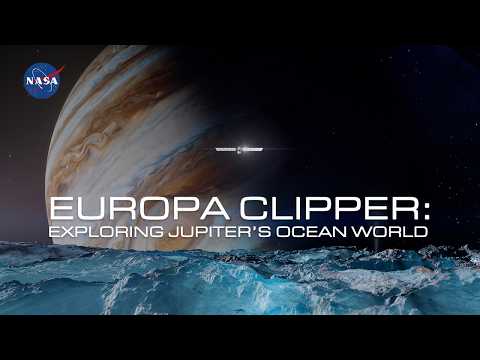
NASA launched Europa Clipper on October 14, 2024, to determine whether there are places below Europa’s surface that could support life. It is currently cruising toward a 2030 arrival.
3. Titan (Moon of Saturn)
Overview: Clouds, rain, and seas made of ultra-cold hydrocarbon could push the limit of what we consider acceptable for life to appear.
Titan is the only world besides Earth with standing bodies of liquid on its surface.
But the largest moon of Saturn (50% wider and 80% more massive than the Moon) has a surface temperature of -179°C (-290°F), with a rain cycle made not of water but liquid methane and ethane.

Source: Scientific American
The Science: It is the only moon in the solar system with a dense atmosphere, made of nitrogen and some methane. It likely also has a subsurface (35 to 50 miles / 55 to 80 kilometers under the surface) ocean of liquid water. Titan may have volcanic activity as well, but with liquid water “lava” instead of molten rock.
The origin of the methane is unclear, and some scientists have a hypothesis that it could be of biological origin, despite the ultra-cold conditions.
Life Potential: Life on Earth uses a layer of lipid to form cell membranes, which is not an option in Titan’s methane & ethane lakes. Instead, scientists consider the possibility of “azotosome”, a methane-based membrane that can form in cryogenic temperatures, which would radically expand the possibility of life beyond Earth.
NASA will send Dragonfly, a drone-like space probe, to Titan’s surface. While originally slated for earlier, it is now targeting a 2028 launch to explore the moon’s prebiotic chemistry.

Source: NASA
4. Mars
Overview: While Mars did not yield the imagined civilization with canals first believed in, its surface used to be Earth-like. It could still harbor life underground.

Source: NASA
The Science: Recent seismic data from the InSight lander suggest a massive reservoir of liquid water trapped in the Martian mid-crust (roughly 10–20km deep). Minerals linked to biological activity were also found, as well as signs of liquid water on the surface in recent years.
Life Potential: If life existed on Mars before the planet dried up, it could have retreated into the deep, warm aquifers. Trace presence of methane in the atmosphere, which fluctuates with the season and the day-night cycle, could indicate just that.
Formaldehyde and other organic compounds were also detected, increasing the chance of microorganisms living in the Martian regolith.
5. Venus
Overview: The Upper atmosphere of Venus mixes reasonable temperature, organic material, and sunlight, making it a potential habitat for life, with a unique chemical signature that might just prove that.
Venus is the same size as Earth and used to have a habitable surface, even if it is today a hellish temperature on average at 464 °C/867 °F, hot enough to melt lead, with intense volcanic activity and a strongly acidic atmosphere.

Source: NASA
The Science: Surface conditions had long made scientists dismiss Venus as potentially life-bearing. But further examination discovered that 50km/31 miles above the surface altitude range, conditions of temperature and pressure are somewhat similar to Earth, far from the acidic hell of the surface.
Life Potential: A long-debated discovery was confirmed in 2024, that phosphine exists in Venus’ upper atmosphere, a compound produced on Earth by decomposing organic matter, and with no known inorganic synthesis pathway. Ammonia, another biomarker, was also discovered in Venus’ clouds.
“There may be something really exotic going on – but none of the normal chemical processes that we are aware of can produce the amounts of phosphine and ammonia.”
Even more striking, persistent, dark streaks appear on top of Venus’ clouds, unexplained yet. But the only probes ever sent to Venus, the Soviet Veneras, did detect particles in Venus’ lower atmosphere about a micron in length – roughly the same size as a bacterium on Earth.
So while life on Mars might have gone underground as the planet’s conditions worsened, life on Venus might have gone up.
Investing in Alien Life
The Commercial Frontier: Scouting for Life
While NASA and other national space agencies have traditionally led the charge in deep-space exploration, the search for life is increasingly moving into the private sector. Smaller, more agile aerospace companies are now developing the “scout” missions necessary to verify these potential biosignatures. Leading this new wave of private interplanetary research is Rocket Lab, which is currently preparing the first-ever private mission to search for life in the clouds of Venus.
Rocket Lab (RKLB)
Rocket Lab is a competitor to SpaceX, and is rapidly improving its reusable rocket line-up with Neutron, the successor to its light rocket Electron. Neutron is to be launched in 2026 and will be roughly equivalent to SpaceX’s Falcon 9.

Source: Erik Engheim
Rocket Lab is also a builder of satellites and satellite components, being the first “end-to-end space company” for non-telecom satellites (where SpaceX could claim the crown). This makes it a key partner for defense contractors, and scientific & telecom companies.

Source: Rocket Lab
Rocket Lab is also looking to make history by making the first-ever private mission to Venus, specifically to search for organic biosignatures (like phosphine) in the clouds, in partnership with the MIT, the Venus Life Finder mission. It is scheduled for launch in summer 2026.
Rocket Lab’s short-cycle launch and ultra-flexible launch schedule is ideal for space probes and has become a partner of choice for NASA and other space agencies, making it an ideal “scout”.
As the quest for alien life in our solar system accelerates, the company will likely benefit from the associated research budgets, especially as Neutron arrives on the market and allows for more massive scientific instruments.
And if the Venus Life Finder mission is a success, this will dramatically raise the profile of the company with both the general public and investors.
(You can also read more about Rocket Lab in our dedicated investment report)
Investor Takeaway:
- Life might be a lot more abundant in our solar system than previously thought, with 5+ potential planetary bodies.
- The space economy that has been driven by the orbital economy (telecom and maybe soon AI data centers) could get a boost from the search for biosignatures of alien life.
- Exploration of other worlds has become a topic for private companies, with Rocket Lab leading the way on one of the most likely and easiest to confirm life signatures through its Venusian probe to launch this year.
Latest Rocketlab (RKLB) Stock News and Developments
[stock_news symbol=”RKLB”]



