
Spotlights
Air Products & Chemicals (ADP): The Backbone of the Green Transition

 Add Securities.io to your preferred sources on Google

When we think of industrial materials, we mostly think of commodities like steel, coal, aluminum, ceramics, and other easy-to-identify solid materials. But equally important are all the various gases used by the chemical and metallurgical industries.
Hydrogen is used in countless chemical reactions for products as diverse as food, pharmaceuticals, and chemicals, and it is becoming a key product for green steel and aluminum.
Carbon dioxide (CO2) and monoxide (CO) are also important base components for an endless list of chemical compounds. Natural gas powers most metallurgical processes. Helium is a key component for superconductive magnets (maglev, MRI, etc.) and semiconductor manufacturing.
Nitrogen and oxygen are also important for many manufacturing methods and vital medical gases. Other specialty gases like argon, xenon, sulfur hexafluoride, and others are also important supplies that sustain our modern civilization.

Source: Air Products & Chemicals
This makes companies dealing with industrial gases an absolutely essential part of the supply chain involved in reindustrialization, semiconductor manufacturing, and the green transition.
A strong leader of this segment in Air Products & Chemicals, a more than eight-decade-old company that has been at the forefront of supporting America and the world’s industrial production.
ADP Price Chart
Air Products & Chemicals Overview
Air Products & Chemicals History
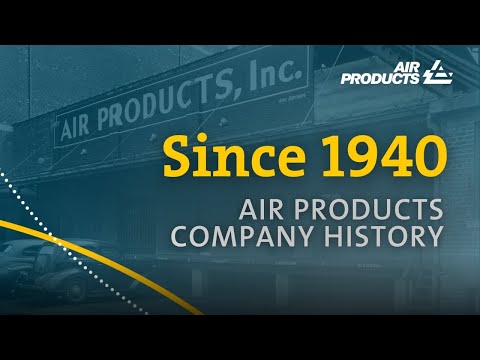
Founded in 1940 in Detroit, Air Products was established to provide on-site production and sales of various forms of industrial gas to what was at the time the core of America’s industrial activity, including in vehicles and aircraft.
With the joining of the US in WW2 a year later, Air Products added to its offer the supply of oxygen used for high-elevation flights of the US and Allied Air Forces, which boosted the company’s sales. Toward the end of the war in 1944, the company relocated to Tennessee and then to Pennsylvania, where it still holds its headquarters in the manufacturing hub of the Lehigh Valley.
In the 1950s, the company moved liquid hydrogen from a lab curiosity to an industrial commodity. It also supplied oxygen and nitrogen for America’s growing missile and space program. In 1957, it expanded its activities to the UK.
In the 1960s, Air Products began producing polymers and reactive chemicals for plastics. It also became the global leader in helium production by developing the method to recover this rare gas from natural gas production. During that period, it expanded into Belgium, West Germany, and South Africa.
It was in the 1970s that the company reached for the first time $1B in sales by expanding into electronics. It also entered the nascent cryogenic market, both in transport and storage of gases, and with its Cryo-Quick food freezing method, essential for standardized freezing of food products for quickly growing companies like McDonald’s.
The 1980s saw further expansion with the acquisition of minority positions in industrial gas companies in Korea, Japan, Malaysia, Hong Kong, China, Thailand, Taiwan, and Mexico, as well as the production of epoxy.
The 1990s persisted in that trend, with acquisitions in Japan, Korea, Mexico, Italy, Indonesia, and Spain. The company also became important for semiconductor manufacturing with products like nitrogen trifluoride.
In the 2000s, Air Products was active in the liquefaction of natural gas, building a position that would later benefit from the boom in LNG demand (Liquefied Natural Gas). It also expanded in Central Europe through the acquisition of former Soviet industrial sites.
In 2012, Air Products acquired a controlling stake in INDURA, the largest independent industrial gas company in South America at the time.
In 2013, it added liquid CO2 to its product offering.
In 2015, it built, owned, and started operating the world’s largest industrial gas complex to supply Saudi Aramco’s refinery being built in Jazan, Saudi Arabia.
In 2018, it launched its new world-scale industrial gas complex within the Integrated Refinery Expansion Project (IREP) of the BPCL Refinery located in Kochi, India. In the same decade, it also built many facilities in China for large-scale coal gasification and petroleum projects.
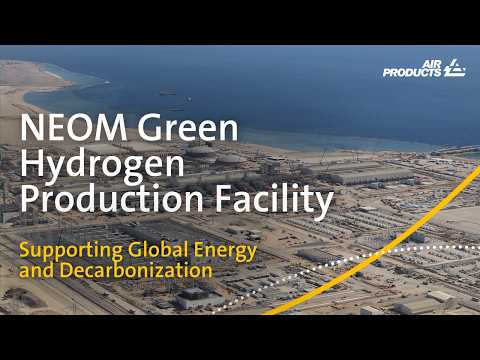
In the 2020s, one of the company’s largest projects is a world-scale carbon-free hydrogen-based ammonia production facility powered by renewable energy at the NEOM future city in Saudi Arabia. Once operational, the facility will export up to 1.2M tonnes of green ammonia annually, supporting global energy and decarbonization efforts. It is built in collaboration with the German industrial group Thyssenkrupp (TKA.DE).
Lastly, in 2024, Air Products sold its LNG process technology and equipment business to Honeywell (HON ) for approximately $1.8B in an all-cash transaction (follow the link for our report on Honeywell).
The Pivot and the Proxy Battle
While Air Products’ multi-decade trajectory highlights steady expansion, its recent history has been defined by intense corporate drama. Throughout late 2024, activist investor firm Mantle Ridge launched an aggressive proxy campaign criticizing the company’s capital-intensive strategy.
Mantle Ridge argued that pouring billions into unproven, mega-scale green hydrogen projects risked dragging down equity returns compared to industry peers like Linde. They also targeted the lack of a clear leadership succession plan under longtime CEO Seifi Ghasemi.
The battle concluded at the January 2025 annual shareholder meeting, where Ghasemi lost control of the board. By February 2025, Ghasemi was out, and the reconstituted board appointed industrial gas veteran Eduardo Menezes as the new Chief Executive Officer. Menezes is now tasked with balancing the company’s massive, high-risk green energy legacy projects with strict Wall Street capital discipline.
Air Products & Chemicals By The Numbers
Air Products & Chemicals has grown steadily since its founding, reaching 85 years later with 250,000 customers served by 21,300+ employees.
It runs 750+ production facilities in 50 different countries, across more than 30 different global industries.
The production is also assisted by a dense network of 1,800 miles of industrial gas pipeline. In 2025, the company was the world’s largest supplier of hydrogen.
Overall, the company’s business model is capital-intensive, relying on extensive physical infrastructures requiring money, time, and expertise to build and operate. This reflects in almost $30B in physical assets on its balance sheet, like plants, buildings, and machinery/equipment.
In 2025, the company invested $5B in capital expenditure and another $2.4B in NEOM Green Hydrogen Company (“NGHC”), a joint venture dedicated to this project, to finance additions to plant and equipment. Air Products expects to spend capital expenditures of approximately $4B for the fiscal year 2026.
The company has shown 40+ years of consecutive dividend growth, supported in 2025 by $12B in sales and $2.86B in operating income.
With an adjusted operating margin of 23.7% and an adjusted return on capital of 10.1% in 2025, the company is profitable with positive net income.
Despite its expansions and acquisitions in other regions, North America remains the core of the company, with 42% of sales from Canada and the USA. The other two major markets for the company are Europe/MENA and China.

Source: Air Products & Chemicals
Air Products By Industry & Models
The company has a very diverse array of customers, giving it a diversified revenue base that is likely to fluctuate only alongside the global economy. For example, even its largest served industries like the energy, chemical, or electronics industries are never more than 1/5th of total revenues.

Source: Air Products & Chemicals
The business model is split between the site of production and the ownership model. Some gases are produced directly on the industrial site using them, while others are produced in centralized facilities and then transported to the final user.
Liquid bulk (liquid air, liquid oxygen, liquid hydrogen, etc.) is the largest product of the company, delivering to customers the liquid gas produced in centralized industrial sites.

Source: Air Products & Chemicals
On-site HyCO (Hydrogen and Carbon Monoxide), producing either each gas separately or together (“syngas”), and on-site ASU (Air Separation Unit), separating ambient air into oxygen, nitrogen, and argon, are the next-largest offerings of the company, together accounting for 52% of the company’s revenues.
The on-site sales are extremely stable, as they are tied to decades-long supply contracts with de-risked energy and raw material supplies.
In contrast, bulk liquid deliveries are based on shorter-term contracts, depending on the local supply chain, and are potentially more profitable in periods of boom and more risky during supply crises or low prices.
Packaged gas is for smaller volumes, like gas cannisters with a short-term contract.
“On-site gases supply mode serves customers who require large volumes of gases and have relatively constant demand. Sales of both liquid bulk and packaged gases do not include minimum purchase requirements, as they are governed by contracts and/or purchase orders that reflect the customer’s specific needs.”

Source: Air Products & Chemicals
This breakdown between on-site and liquid bulk is highly dependent on the geography. In Asia, liquid bulk is a smaller part of the overall business, while in Europe, packaged gas is making 1/3 of total sales, versus <5% in other regions.

Source: Air Products & Chemicals
Air Products by Gases
Hydrogen
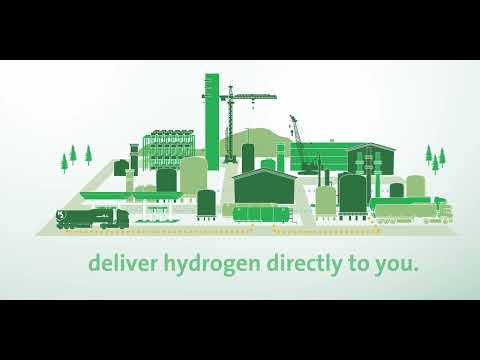
As mentioned, Air Products is the world’s largest hydrogen producer. Like most current hydrogen production, this is mostly done through the consumption of natural gas. As hydrogen is a gas notorious for being difficult to store and transport, most of the production is on-site, directly where the hydrogen will be consumed.
Hydrogen is used either directly or combined with carbon monoxide to form syngas.
Today, the main use of hydrogen is in oil refineries to make lower-sulphur, cleaner-burning transport fuels. Metals industries use hydrogen to reduce metal oxides and to prevent oxidation during the heat-treating process.
Hydrogen is used in semiconductor and glass manufacturing to reduce atmospheres to prevent oxidation.
In the chemical, pharmaceutical, and food industries, hydrogenation processes are used to combine hydrogen molecules with other compounds (for example, oils and fats) and so help extend product shelf life.

Source: Air Products & Chemicals
Two new applications for hydrogen are emerging, each with eventually a much larger potential than the entire current hydrogen market:
- Metallurgy, with “green steel” replacing coking coal with hydrogen, and green aluminum, where it is replacing natural gas.
- As a fuel, either directly in fuel cells, or in the form of green ammonia.
Oxygen
As the most readily available oxidizing gas on Earth, oxygen is used in many ways by industrial processes, for example, in combustion, oxidation, fermentation, wastewater treatment, and aquaculture.
Combined with fuel gases or with argon (Ar) and carbon dioxide (CO₂), oxygen is also used for metal cutting, welding, scarfing, hardening, cleaning, and melting applications.
In the food industry, oxygen is used to maintain red meat’s fresh, natural color.
And of course, it is also used for providing oxygen in breathing support systems to people in airplanes, hospitals, etc.

Source: Air Products & Chemicals
Carbon Dioxide & Monoxide
Carbon monoxide (CO) is utilized as a feedstock in the production of chemicals ranging from acetic acid to polycarbonates to polyurethane intermediates. So it is ultimately found integrated in chemicals, plastics, detergents, etc.
As this is a very toxic gas to humans, it needs handling by specialists, leading to most clients preferring Air Products to handle its production, storage, and distribution.
Carbon Dioxide (CO2) is used as a cryogenic agent to remove heat, economically and precisely controlling the temperature of both the product and process for food chilling, cooling, and freezing applications, and to preserve quality and shelf life. Another food application is creating consistent flavor, carbonation, and taste for alcoholic and non-alcoholic beverages.
It can also boost plant growth in greenhouses and is a safer and economical alternative to acids and chemicals in water treatment applications for pulp & paper mills, industrial operations, and municipal water treatment facilities.

Source: Air Products & Chemicals
Specialty & rare gases
Argon is a non-flammable gas that forms 0.9 percent of the Earth’s atmosphere. It is used as a pure gas for the metal industry for metal production, processing, and fabrication (shielding, blanketing, annealing).
Its chemical inert properties also make it popular in the glass industry for double glazing, the food industry for removing oxygen from wine barrels, and analytical laboratories that use it as a carrier gas in gas chromatography and as a coolant in 3D printing.

Source: Air Products & Chemicals
Other very rare gases like neon, krypton, and xenon can be commercially extracted only from large air separation plants, which produce more than 1,000 tonnes of oxygen per day, giving an advantage to large-scale companies like Air Products & Chemicals. They are used in many niche, but essential applications:
- Ion thruster for satellites and space probes (xenon).
- Laser (krypton and neon).
- Double and triple-insulated windows (krypton + xenon).
- Electronics like optical readers and wafer dicing (neon + helium).
- Bright white light and long-lasting incandescent bulbs(krypton), lightning signs (neon), and ultra-bright applications like stadiums, automotive HID, head lights, IMAX theaters (xenon).
Food-grade nitrogen is used for ultra-quick freezing (liquid nitrogen) or modified atmosphere packaging to remove the oxidative oxygen or moisture. It can also be used as a gas to create bubbles in food (whipping) without causing oxidation.
Helium
Helium is a very common element in the Universe at large, but very rare on Earth, making up less than 0.001% of the ambient air. However, it can be found at 0.1% concentration in natural gas, which concentrates its production from the natural radioactive decay of heavy elements in the earth’s crust, in particular, uranium and thorium.
While also an inert rare gas like argon, helium’s rarity makes it mostly used for its extremely cold temperature when liquefied (< -269 °C / -452.20 °F). This is especially useful to make some material become superconductive, like in the powerful magnets used by Magnetic Resonance Imagery (MRI), Nuclear Magnetic Resonance (NMR) spectroscopy, and particle physics research.
Still, it can also be used in gaseous form as an inert shielding gas in metal arc and laser welding. It is also used as a coolant to transfer heat effectively, thanks to its high thermal conductivity, in the fiber optics and electronics industries. It serves as a carrier gas for gas chromatography (GC) in analytical laboratories and as a leak detection gas in a wide range of industries.

Source: Air Products & Chemicals
As helium comes from natural gas production, the world is preparing for potential serious helium shortages in the aftermath of the bombing of Iranian and Qatari gas processing facilities in the Middle East.
In total, three sources are (were) producing 75% of the world’s helium supply, with Qatar alone responsible for 35% of global production. And these facilities in Qatar have been severely damaged, with estimates expecting several years before a return to normal, even if the bombing stops today.
Air Products is mostly producing its helium in safe US sites (and partially Algeria and Qatar), turning the current crisis into an opportunity for the company. It also owns a dedicated helium storage cavern in the USA, which ensures a strong buffer in supply.

Source: Air Products & Chemicals
This could create an opportunity for the company to quickly grow its presence in the helium market, especially in Asia, where the production of semiconductors in the midst of the AI boom is threatened by a helium shortage.
With the electronic industry likely very price-insensitive as long as AI chips keep coming out, this could be a windfall for the company’s helium operation and the value of its stored helium.

Air Products & Chemicals’ Future
NEOM
Besides a potential helium boom, Air Products is also working on several megaprojects. The first one is the world’s largest hydrogen + ammonia plant, part of the NEOM project, previously mentioned. However, the war with Iran could potentially derail this project.
You can read more about the world’s largest clean fuel hub, with 2.2GW worth of electrolyzers, in our article dedicated to this topic.
Louisiana Clean Energy Complex
This project could become a leading facility in the USA for the production of low-carbon hydrogen and ammonia to power industrial markets in the Gulf Coast region and around the world.
The facility will capture and sequester 95% of its carbon dioxide emissions (over 5 million tons per year), permanently sequestering the CO₂ in ideal geological pore space in Louisiana.
It will also be the largest US investment by Air Products and would be the world’s largest carbon capture for permanent sequestration operation.

Source: Air Products & Chemicals
Under a 25-year offtake agreement, Air Products will supply hydrogen to fertilizer-producer Yara (YAR.OL) to produce 2.8 million tons of low-carbon ammonia annually. Yara will also commercialize and distribute renewable ammonia globally from Air Products’ facilities in Saudi Arabia.
Canada Net-zero Hydrogen Energy Complex
The goal of this project is to boost the carbon capture of industrial-scale hydrogen. With classical Steam Methane Reforming (SMR) technology, only about 55% of the carbon emissions can be cost-effectively captured.
Instead, an advanced process technology, Auto-Thermal Reforming (ATR), which enables cost-effective capture of more than 90% of the carbon emissions, for permanent sequestration safely underground.
The installation will be integrated with Imperial Oil Limited’s (IMO ) new renewable diesel facility. Imperial will produce renewable diesel from locally sourced non-petroleum feedstocks. This process produces a biogenic renewable off-gas (ROG) by-product that will be used as a feedstock within the Air Products hydrogen complex, displacing fossil natural gas.
Conclusion
Air Products & Chemicals is among the top industrial gas producers in the world, with an especially solid presence in the USA, Canada, and some of its closest allies like Saudi Arabia.
The company’s position is especially strong in hydrogen, the largest producer in the world, just when this gas is turning from an industrial process gas to a major energy storage, fuel, and alternative to coal and natural gas, potentially making its future market several orders of magnitude larger. This turn is actually pursued by Air Products, making it firmly a potential “green hydrogen stock”.
Air Products is also strong in several other gas markets like oxygen, nitrogen, CO & CO2, etc, which provide it with stable revenues and profits, as well as scale in engineering, R&D, and procurement of gas-handling equipment.
Lastly, its production of helium in the USA could prove a boon thanks to the war in Iran, potentially compensating for a likely slowdown in Saudi investments linked to the same geopolitical turmoil.
Overall, the company is a key supplier to industrial facilities worldwide and will prove a keystone supplier to the effort of reindustrializing North America, as well as ensuring a stable supply to essential industries like plastic, metallurgy, food, and semiconductor production.
Latest Air Products & Chemicals (ADP) Developments



