

Transportation
What Will Bridge the Gap Between ICE and Electric Motors?

Securities.io maintains rigorous editorial standards and may receive compensation from reviewed links. We are not a registered investment adviser and this is not investment advice. Please view our affiliate disclosure.

Electric motor powered vehicles are the future. Whether this be through use of battery packs, hydrogen fuel cells, or some other innovate solution, the end result is the same – internal combustion engines (ICE) are on their way out.
This is not a change that will happen overnight though. For decades, nations worldwide have invested heavily in the development of infrastructure designed to cater specifically to liquid fuels like gasoline and diesel. While it is reasonable to assume that the potential of ICE based vehicles has already been tapped, this is simply not the case, and our increasing understanding of material science is allowing for a future in which the ICE sees its lifespan extended to live harmoniously alongside its electric counterparts for years to come.
With the ICE industry still set to grow from ~$55B in 2021 to ~$70B by 2028, boasting a CAGR of 3.71%, there is still investment potential yet to be capitalized on.
The following is a brief look at a few innovations that have the potential to give ICE based vehicles this new lease-on-life, bridging the gap to the inevitable dominance of EVs.
Manufacturers and Innovators
Before taking a look at some of the fresh innovations poised to extend the lifespan of ICE, make sure to check out the following publicly traded companies; each of which is playing an active role in developing/promoting such products.
Porsche (P911)
Among auto manufacturers, Porsche is one of the most iconic. The company’s efforts go beyond creating moving works of art though, and are responsible for the development and championing of new technologies aimed towards improving both the performance and efficiency of its vehicles (ie. synthetic fuel).
Porsche is based out of Stuttgart, Germany. The company employs nearly 40,000, and boasted revenue topping $37B in the last fiscal year.
Tesla (TSLA)
Although Tesla may rely on third parties to actually manufacture its battery packs, the demands and needs of the company have single-handedly been responsible for much of the innovation within the EV sector over the past 20 years.
While 2022 saw a sharp decline in TSLA stock, the tides have turned, with 2023 marking an impressive turnaround of +55.48% YTD at time of writing. Despite a rough 2022, the company was still able to boast a revenue of $81.46B over this time.
Tesla is based out of Texas, United States.
Artificial Intelligence
The first innovation which will allow ICE vehicles to continue becoming more efficient and eke out a few extra years before becoming obsolete is self-driving through use of artificial intelligence (AI).
AI has this ability by removing human error and habit from the equation. AI will allow for communication between vehicles on the road, reducing congestion and traffic and the resulting excess emissions; AI will adhere to speed limits and inefficiently racing from light to light; AI can keep a steady speed without overworking the throttle.
For each of the above reasons, and more, AI has the potential to allow for traditional ICE based vehicles to remain as competitive as possible with EVs for as long as possible.
Synthetic Fuels
The major issue with ICE vehicles is their reliance on fossil fuels. Not only are we running out of this fuel source, its extraction from the Earth and subsequent processing and burning is horrible for the environment.
With this being the case, it isn’t surprising to learn that one of the most promising innovations set to help extend the lifespan of ICE vehicles is the creation of synthetic fuels or ‘eFuel’. In fact, synthetic fuels hold such promise that regions like Europe have already made the decision to allow for exemptions in their ban on CO2 emitting engines in the coming years for those that burn eFuel.
So what are synthetic fuels or ‘eFuel’? It is an energy source able to be substituted in place of petrol derived from fossil fuels for use in regular ICE vehicles. There currently are two main methods of creating it such as,
- Through a multi step process that sees H20 split through electrolysis, releasing diatomic hydrogen molecules that are then converted to methanol by being joined with CO2 captured from the air. The resulting methanol is then converted to eFuel (synthetic gasoline) at high temperatures through use of catalysts.
- Building hydrocarbons which act as the building blocks of gasoline from CO2 and H2
It should be noted that at this time, eFuels are by no means a perfect solution. Currently the processes listed above used to create eFuel are very energy intensive. Furthermore, the resulting ‘gasoline’ still ends up being a ‘tailpipe emitter’. What the process can offer though, is the ability to make the resulting fuel carbon neutral by removing CO2 from the air and utilizing sustainable energy sources in the creation process.

While Porsche may be championing this innovation as a means of making ICE vehicles – which will be on the roads for decades to come regardless of EV adoption – significantly greener, it is companies like HIF that are working to perfect the fuel and processes needed to create it.
Friction – Friend or Foe?
When it comes to ground transportation, friction is both a boon and detriment at the same time. Friction is a necessity for power to be transferred through vehicle tires to the ground. It is what allows for vehicles to maintain control under braking and turning. Where it becomes a detriment however, is through the drivetrain of a vehicle, where friction can result in a significant portion of would-be mechanical energy being wasted as heat instead.
A pair of solutions to overcoming friction include surface texturing and the use of synthetic lubricants.
Studies being done on surface texturing have shown promising results through use of both grooves and dimples within cylinder walls of ICE, showing a sizable decrease in friction and resulting heat.
Synthetic lubricants are nothing new. When they were first introduced decades ago, replacing traditional engine oil, they provided an alternative with better lubrication, wear characteristics, variable viscosities, and more. The science behind these lubricants has not stopped though. With our continually increasing understanding of material sciences, synthetic lubricants have continually become more robust and effective at their job.
Combined, the use of surface texturing and improving synthetic lubricants have the potential to help ICE vehicles eliminate a significant portion of mechanical losses occurring through drivetrains. While they will never boast the high efficiency of EVs, which claim as little as 5% losses, chipping away at the nearly 50% loss of ICE can go a long way to extending their lifespan.
Reimagining the ICE
So AI can replace the driver, synthetic fuels can replace energy sources, and modern lubricants combined with surface texturing can decrease mechanical engine losses. These are all great, but there is one company taking such initiatives one step further by doing a nearly complete redesign of the traditional ICE itself.
Avadi engines, which recently closed a crowdfunding campaign on StartEngine that saw the company raise in excess of $210,000, boasts that through the elimination of a traditional valvetrain, its redesigned ICE is more compact, lighter, more efficient, versatile, and a torque monster.
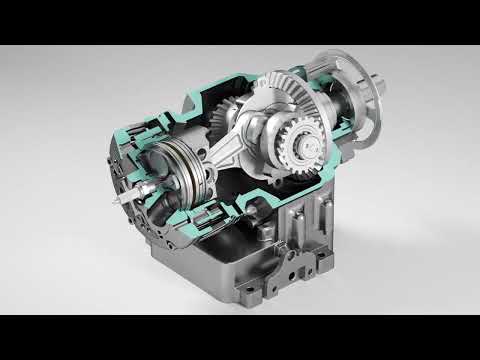
The company’s unique design utilizes a rotating piston with twin connecting rods. The piston rotation is what allows for the elimination of a traditional valvetrain, by making it possible to incorporate intake and exhaust valves at the head of the cylinder. Avadi boasts that,
“According to internal testing our Avadi MA-250 is approximately half of the weight and double the torque & horsepower of the nearest competing engine, all while burning approximately 30% less fuel.”
While Avadi indicates that its first model, the MA-250, boasts 15hp and 22lb-ft while tipping the scales at only 26lb, it can also be scaled up and down for differing applications.
This ability to scale up and down is important as the ICE is used in more than just ground transportation. In fact, one of the reasons that ICE will remain prevalent for years to come, is their widespread use in scores of applications. Whether it be a garden tractor, ATV, wood chipper, or some other piece of machinery, ICE can be found everywhere. This is now a realization being tackled by companies like Avadi and its MA-250 prototype.
Final Word
As stated at the beginning of this article – EVs replacing ICE is only a matter of time. That isn’t looking like much of a question anymore at this point. What is interesting though, is the continued ingenuity of engineers that is allowing for ICE to remain a viable power-source for years to come.
While EVs are here now, and approaching parity with ICE vehicles across a variety of metrics, it will be some time before global infrastructure follows suit. With this being the case, there is still a decent amount of time for savvy investors to make lucrative investments in the ICE space. Whether this be through bridging technologies like modern fuels, lubricants, or engine redesigns – the opportunity is there.
Perhaps in a few years, there will be a day when we have self-driving vehicles powered by an Avadi engine, running on eFuel, and boasting exceptional efficiency through use of next-gen lubricants and surface texturing.



