

Energy
White-Hot Storage: The Rise of Graphite Thermal Batteries


The global push for decarbonization has hit a physical bottleneck. While solar and wind power are now the most cost-effective forms of electricity generation, their inherent intermittency creates a reliability gap that lithium-ion batteries cannot economically bridge. Moving forward, the energy sector is shifting its gaze from chemical cells to a far more primal medium: incandescent heat.
Spearheaded by innovators like Fourth Power—a venture-backed firm originating from advanced research—thermal energy storage (TES) is emerging as a critical component of long-duration energy storage (LDES). By storing electricity as white-hot heat in abundant carbon blocks, this technology offers a path to a 24/7 renewable grid at a fraction of the cost of current market leaders. This transition represents a fundamental shift in how we conceive of energy density and grid stability.
Understanding the Technology: From Sun-Like Heat to Electricity
At its core, a thermal battery transforms surplus renewable electricity into heat, which is then preserved in a highly insulated reservoir. While traditional batteries rely on complex, expensive chemistries, the newest architectures utilize two of the most common materials on Earth: graphite and tin. The process avoids the volatile mineral supply chains associated with rare-earth metals.
The system functions through a cycle of extreme thermodynamics. During periods of high solar or wind output, electricity is used to heat massive graphite bricks. These bricks are heated to roughly 2,400°C, a temperature where the graphite is nearly half as hot as the surface of the sun and glows with blinding white light. To extract this energy, liquid tin is circulated through graphite pipes. This choice of materials is critical; unlike traditional metals that corrode or melt, graphite remains structurally sound at these heats, and tin does not react with carbon.
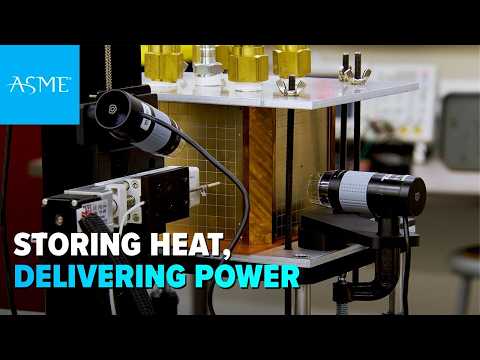
Instead of using steam turbines, which are slow to spin up and mechanically complex, these systems employ thermophotovoltaic (TPV) cells. These are essentially specialized solar cells that harvest the intense light emitted by the white-hot bricks, converting it directly back into electricity with efficiencies now exceeding 40 percent. This solid-state conversion eliminates the maintenance overhead of moving parts like turbines or pistons.
Engineering the Impossible: Pumps and Noble Gas Curtains
Operating a system at nearly half the temperature of the sun presents monumental engineering hurdles. Traditional mechanical pumps would vaporize or seize at 2,400°C. One of the primary breakthroughs enabling this technology is the development of ceramic and graphite-based pumps. By utilizing liquid tin—which remains liquid across a massive temperature range and does not react with carbon—engineers have solved the problem of moving “white-hot” fuel through a closed-loop system.
Furthermore, to prevent the graphite blocks from oxidizing (burning) at these extreme temperatures, the system is encased in a “Noble Gas Curtain.” By flooding the storage chamber with argon or similar inert gases, the graphite remains stable for decades. This allows for a storage life that far outlasts chemical batteries, which suffer from electrolyte breakdown and dendrite growth over thousands of cycles.
Why Thermal Storage is Disrupting the LDES Market
The energy storage market has historically been divided into short-term and long-term needs. Lithium-ion batteries have effectively won the short-term market, but their costs scale linearly; to double the storage, you must double the number of expensive chemical cells. Thermal batteries are disruptive because they decouple power capacity from energy capacity. Power is determined by the size of the TPV conversion system, while energy is determined by the number of graphite blocks.
Because graphite is significantly cheaper than lithium or cobalt, adding 100 hours of storage becomes exponentially more affordable. This modularity allows utilities to customize their installations—adding more bricks as their long-term storage needs grow without the need for additional expensive conversion hardware. Furthermore, the lack of chemical degradation means these systems can last for decades without the capacity loss seen in traditional battery farms.
Comparison: Chemical vs. Thermal Storage
| Feature | Lithium-Ion (Chemical) | Thermal Battery (TES) |
|---|---|---|
| Main Material | Lithium, Nickel, Cobalt | Graphite (Carbon), Tin |
| Cost at 10+ Hours | High (Prohibitive) | Low (Competitive with Natural Gas) |
| Sustainability | High mining impact | Abundant materials |
| Footprint | High land requirement | Ultra-dense (100 MW per acre) |
| Operational Life | 10-15 years | 30+ years |
Sensible Heat vs. Phase Change: Different Paths to Density
While the graphite approach (known as “sensible heat” storage) is highly effective, it is not the only way to store energy thermally. Another major branch of the field utilizes Phase Change Materials (PCM). These systems store energy by melting materials like silicon or aluminum. When the material transitions from solid to liquid, it absorbs a massive amount of “latent heat.”
For example, companies utilizing molten silicon can store energy at roughly 75% of the cost of lithium-ion systems. Silicon has a melting point of approximately 1,414°C and offers incredible energy density. However, the graphite-and-tin method pushes temperatures even higher, allowing for the use of light-harvesting TPVs rather than traditional heat exchangers, which can lead to higher overall system efficiency and faster response times for grid balancing.
Addressing the AI Energy Crisis
One of the most significant connections in the modern energy landscape is the synergy between thermal storage and Artificial Intelligence. Data centers are no longer just consumers of power; they are the primary drivers of grid strain. A single hyperscale data center can consume as much electricity as a mid-sized city, and unlike most industrial loads, they require an uninterrupted, 24/7 supply. Thermal batteries offer a baseload renewable solution by capturing the massive amount of energy currently wasted when renewables overproduce.
These thermal systems can provide the steady-state power required for AI model training. This technology transforms data centers from grid liabilities into assets that can absorb excess energy and release it during peak demand. This aligns with the broader goal of making high-compute infrastructure carbon-neutral while maintaining the reliability required for global digital services.
The Broader Ecosystem: Antora, Rondo, and Beyond
While various startups lead with liquid tin and TPVs, the thermal storage field is diverse, with several innovative approaches reaching commercial maturity:
- Antora Energy: Utilizing carbon blocks and TPVs, Antora focuses on the double win of providing both industrial heat and electricity to heavy industry.
- Rondo Energy: Specializing in heat-as-a-service, Rondo uses electric-powered refractory bricks to store heat at 1,500°C to replace gas-fired boilers.
- Malta Inc.: This approach uses a pumped heat mechanism, storing energy as a temperature differential between molten salt and a chilled liquid.
The strategic importance of these technologies extends to decarbonizing industrial heat. Roughly 20 percent of global emissions come from industrial process heat. Steel, cement, and glass manufacturing require temperatures that traditional electric heaters struggle to reach efficiently. By storing energy at 2,400°C, these systems can provide the high-grade heat necessary for heavy industry, effectively electrifying the most carbon-intensive parts of our global economy.
Conclusion: A Scalable Path Forward
By shifting the focus from rare chemical elements to abundant materials like carbon and tin, thermal batteries offer a path to a stabilized grid that is both environmentally and economically sustainable. As integrated demonstration units begin operating at megawatt-hour scales, the energy sector is moving beyond the pilot phase into commercial deployment. The ability to provide 100 hours of storage at a cost-point below fossil fuels is no longer a theoretical goal; it is an engineering reality that will define the next decade of the energy transition.
Investing in Thermal Energy Innovation
As thermal energy storage companies move from demonstration units to utility-scale installations, the demand for the core storage medium—industrial-grade graphite—is projected to surge. While many direct technology developers remain private, investors can gain exposure through the companies that supply the critical carbon infrastructure for this revolution.
GrafTech International Ltd. (EAF +2.39%)
GrafTech International is a global leader in the production of high-quality graphite electrodes and petroleum needle coke. Traditionally focused on the electric arc furnace steel industry, GrafTech is uniquely positioned to benefit from the rise of thermal storage. The massive carbon blocks required for thermal batteries share the same raw material base as GrafTech’s premium electrodes.
GrafTech International Ltd. (EAF +2.39%)
As the long-duration storage market expands, it creates a massive new vertical for its industrial carbon products. Investors should monitor how GrafTech leverages its vertical integration and carbon expertise to supply the burgeoning thermal battery market as a primary pick-and-shovel play.
Latest EAF Stock News & Updates
GrafTech Announces Graphite Electrode Price Increase
businesswire.com
•
March 26, 2026
GrafTech Announces Filing of Trade Petition with the Government of Brazil Regarding Unfairly Priced Graphite Electrode Imports
businesswire.com
•
March 13, 2026
EAF Investors Have Opportunity to Join GrafTech International Ltd. Fraud Investigation with the Schall Law Firm
businesswire.com
•
March 8, 2026



