
Computing
Fungal Computers: How Mushrooms Power Neuromorphic Chips

Securities.io maintains rigorous editorial standards and may receive compensation from reviewed links. We are not a registered investment adviser and this is not investment advice. Please view our affiliate disclosure.

A New Type Of Biological Computer
Computing was initially developed with analog technology, which differs from digital technology in that it uses more complex (and messy) signals instead of clearly distinct 1 & 0.

Source: Unison Audio
In general, a digital signal is easier to analyze, replicate, and transmit. But an analog signal is better at handling the complexity of a real-world situation, with all its nuances.
This is why scientists have been looking back at analog types of computing for new developments in AI, sensing, and other applications. This includes many different designs of so-called neuromorphic chips, which mimic how the brain processes data.
A new development toward using brain-like ability to perform computing is the appearance of actual biological computers, using organic tissues to perform tasks normally given to silicon chips. One example is organoids, lab-grown tissues produced from human neurons, able to perform computing tasks. Combined with new techniques for 3D printing functional brain tissues, this could open the way to a whole new, strange kind of computing capabilities.
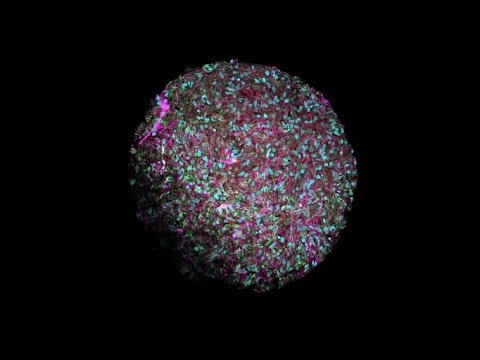
Another type of electronic component leveraging biological components should be added to the list, with scientists at the Ohio State University having created neuromorphic organic memristors, a type of data processor that can remember past electrical states. Except they created it not from neurons, but from mushrooms.
They published their discovery in the scientific review PLOS One, under the title “Sustainable memristors from shiitake mycelium for high-frequency bioelectronics.”
Why Use Neuromorphic Computing?
Rise of the NPUs
Neural Processing Units (NPUs), also called neuromorphic chips, are a type of AI hardware that present a few advantages compared to more traditional chips like CPUs and GPUs:
- More flexible design, allowing for the chip architecture to adapt to training data.
- Much lower energy consumption, sometimes as little as 1/100thof a comparable GPU.
- Less heat production helps deal with the growing issue of cooling plaguing advanced AI data centers.
(You can read more about AI-specialized hardware, including NPUs, in our dedicated report.)
“Being able to develop microchips that mimic actual neural activity means you don’t need a lot of power for standby or when the machine isn’t being used.
That’s something that can be a huge potential computational and economic advantage.”
John LaRocco – research scientist in psychiatry at Ohio State’s College of Medicine.
Many methods are currently being explored for creating neuromorphic chips:
- Leverage incipient ferroelectricity, a still poorly understood phenomenon.
- Active substrate using vanadium or titanium.
- Using memristors, a new type of electronic component, which can perform AI tasks at 1/800thof the normal power consumption.
How Memristors Mimic Synapses
Memristors are electronic components that mimic neuron-connecting synapses by remembering which electric state they were toggled to after their power is turned off.
This can greatly reduce the energy and time lost from shuttling data back and forth between processors and memory.
One of the key strengths of memristors is their capacity for efficient and self-adaptive in situ learning, which is critical for applications in robotics and autonomous vehicles.
Moreover, the low power consumption of memristors is particularly beneficial in robotics and autonomous vehicles, where energy efficiency is paramount. Hybrid analog–digital memristor systems can minimize power usage during processing without sacrificing responsiveness.
The problem so far is that creating electronic memristors has relied on emerging technologies with low production yields and unreliable electronic performance, due to how recent this technology is.
Using actual neurons, like with organoids, is also an option, but neurons are actually very difficult cells to work with, being relatively fragile and hard to grow.
But neurons are not the only biological tissues capable of processing and responding to electrical signals.
One potential alternative is mycelium, the tissue constituting ordinary mushrooms, a type of organism known for its remarkable sturdiness. They can be grown with simpler bioreactors and nutrient cultures than those required for conventional neurons and neural organoids.
Building Mushroom Computers?
Fungal materials display conductive pathways that can form dynamically under the influence of electrical stimuli, similar to the conductive filaments formed in conventional memristors.
This adaptability can lead to enhanced performance in neuromorphic applications through the facilitation of variable resistance states that mimic synaptic behaviors more closely than traditional memristive materials.
Organic materials also have the advantage of operating effectively at lower voltages while maintaining the stable switching characteristics important for memristors, even lower than for electronics memristors, themselves much less energy-consuming than traditional computing components.
This could be important for energy-efficient devices for portable electronics and Internet of Things applications that might rely on a very low energy supply.
Swipe to scroll →
| Property | Conventional Memristor | Mushroom-Based Memristor |
|---|---|---|
| Material Base | Metal Oxide / Silicon | Shiitake Mycelium (Organic) |
| Switching Speed | ~1 kHz | 5.85 kHz |
| Power Consumption | Moderate | Very Low |
| Radiation Resistance | Low | High |
| Biodegradability | None | Fully Biodegradable |
Why Edible Mushrooms Work for Computing
The researchers used common button mushrooms, as well as edible and medicinal Shiitake mushrooms for their experiments, both species whose cultivation is well understood and cheap.
Shiitake mushrooms have previously been shown to possess a porous carbon structure when activated. This porous structure can enhance the electrochemical performance of devices, making them suitable candidates for use in energy storage systems, including supercapacitors and, potentially, memristors.
They are also very radiation-resistant, which could help for applications like aerospace, where electronic chips can be damaged by ionizing radiation like UV and solar winds.
Fungal Electrical Response
The scientists connected the test fungal mass after it was dehydrated.

Source: PLOS One
They were then tested across a range of voltages, waveforms, and frequencies for their potential memristor capabilities.
The responding analog signal was displaying strong memristive characteristics, mimicking in analog the digital signal.

Source: PLOS One
Overall, the observed rapid switching speed of 5,850 Hz, an accuracy of 90% (± 1%), relatively low energy consumption, light weight, and radiation resistance all appear to make fungal memristors attractive for edge computing, aerospace, and embedded firmware applications.
However, accuracy decreased as the frequency increased, so not all types of signals could likely be processed/computed with that method.
It should also be noted that the method creates only biodegradable materials (food-grade shiitake is grown on wood chips) and requires no rare earth or toxic materials, contrary to conventional electronic chips.
Future Potential
The study here was a first trial, and was limited in two ways:
- The tests were relatively short, running over only 2 months. So the long-term capacity of the fungal memristors still needs to be investigated.
- The method used a bulk production, while actual applications would need a microculture of the mycelium grown in a dedicated environment, providing much smaller and much more controlled results.
So this is really just a proof of concept, a demonstration that something as exotic as fungal computing is even possible and reliable.
Any future design would likely see the use of more consistent cultivation techniques using 3D-printed templates and structures that shape the shiitake mushroom into the desired geometry.
Programming could also be facilitated by adding electrical contacts to a 3D-printed cultivation structure.
Finally, long-term use would necessitate preservation, which could involve a variety of techniques, including dehydration, desiccation, freeze-drying, certain hydrogels, and special coatings.
Still, the idea of developing memristors with exclusively organic materials, and resistant, cheap, and biodegradable mushroom material at that, is intriguing.
Investing in Bioprinting
BICO Group AB (BICO.ST)
As organic-based computing progresses, 3D printing of living tissues will likely become an increasingly used tool. First in research, and then for the actual production of devices leveraging this technology.
One leader in the field has been Cellink, whose machines are used for bioprinting by researchers all over the world.

Source: Cellink
In 2021, Cellink was renamed as the BICO Group, following its acquisition of Cytena in 2019 and Scienion in 2020.
Cellink is still the brand name for the bioprinting part of the business. This could also be used for creating on-demand 3D tissues or organs. (You can read a discussion on this topic in “3D Printing Human Organs – How Realistic Is It?”).
Bioprinting represents around 1/5th of the business, with the bioscience automation segment, including imaging of biological samples, making more than 3/5th of revenues.

Source: BICO Group AB
In the long run, bioprinting companies are likely to evolve from providing tools to researchers to becoming suppliers of pharmaceutical companies’ bioprinting therapies for patients.
This will, in turn, completely change the number of bioprinters in use and, more importantly, the volume of consumables sold every month.
This is the same process that occurred for other biolab equipment manufacturers, including genome sequencing machines from PacBio (PACB) and Illumina (ILMN), which end up making 80% of their revenues from recurring sales of consumables.
As the BICO Group is not solely dependent on this field, it can keep improving the technology until it reaches a critical mass of users, while also making money and building its sales network with bioresearchers from its other, more mature products in bioscience automation.
- Materials: The rise of organic, biodegradable substrates like shiitake mycelium could open a new niche for low-power AI hardware and aerospace electronics.
- Hardware Innovation: Memristor and neuromorphic chip makers stand to benefit from breakthroughs in sustainable analog computing.
- Bioprinting & Automation: Companies such as BICO Group AB (BICO.ST) are positioned to supply the tools and bioprinting systems that enable precise mycelium-based device manufacturing.
- Long-Term Potential: As proof-of-concept designs evolve, early exposure to firms in bioelectronics, lab automation, and AI edge computing may prove strategically valuable.
- Risks: Device stability, yield scalability, and commercialization timelines remain uncertain, making this a speculative but high-upside frontier.



