
Commodities
SQM (SQM): The Chilean Lithium & Salt Mining Giant

 Add Securities.io to your preferred sources on Google

For most of human history, lithium was a relatively irrelevant metallic compound with little practical applications. This started to change with the invention by John Goodenough and others of the lithium-ion battery, a work rewarded by the Nobel Prize in Chemistry in 2019, which we detailed in a dedicated report.
The technology allowed for the explosion in small portable electronics, from the initial Walkman to today’s omnipresent smartphones, laptops, and tablets.
But it is with the emergence of EVs that lithium-ion batteries moved from an important technology to a world-changing technology. Only lithium-ion batteries had the energy density required to give a commercially viable range to EVs.

Source: Statista
Because an EV consumes as many batteries as hundreds or thousands of electronic devices, the electrification of transportation has made all the battery production before the EV revolution took off in the mid-2010s look like a footnote of history in comparison.
While some new chemistries try to bypass lithium, most new battery technologies are still highly reliant on this metal: ultra-durable solid-state lithium metal batteries, laser-printed lithium-sulfur batteries, lithium-CO₂ batteries, lithium-indium batteries, cold-resistant lithium-ion batteries, graphene lithium-ion batteries, etc.

Source: Flash Battery
As a result, demand for lithium is only expected to keep growing quickly in the upcoming years. Only if the demand stays close to the base case will the upcoming supply be enough, even with supply in 2029 alone expected to grow to more than all the lithium mined from 2015 to 2022 combined.
But as an historical energy crisis is unfolding due to the war with Iran, demand for EVs and other alternatives to fossil fuel, and therefore demand for batteries, is likely to surprise on the upside.

Source: Lithium Harvest
Around 1/3rd of the global lithium supply comes from brines, mineral-rich waters generally found underground. The largest producers of this type of lithium are the so-called “Lithium Triangle”: Bolivia, Argentina, and Chile.
This is also the region with the largest lithium reserve on Earth. Together, these three countries represent almost 50% of the world’s lithium reserves.

Source: UFine Battery
(You can read more about lithium and batteries in our articles “Is Lithium Demand Set to Plummet with New Sodium-Ion Batteries?”, “Does Arkansas Hold the Answer to Our Lithium Needs?” and “Investing in Nobel Prize Achievements: Lithium-Ion Batteries To Power The World”.)
The lithium triangle production is controlled by a few major companies like Albemarle (ALB ) (follow the link for our report on this company) and SQM: Sociedad Química y Minera de Chile S.A (SQM ).
SQM Price Chart
SQM Overview
SQM History & Development
SQM began in 1968 as a Sociedad Minera Mixta, a company owned by private investors and the State of Chile (Compañía Salitrera Anglo-Lautaro 62.5% and CORFO 37.5%).
SQM was given a monopoly in the exploitation and commercialization of nitrate, and the company was nationalized in 1971.
It was then privatized again in the 1980s during the military dictatorship, transferring the Chilean state company to the then son-in-law of Augusto Pinochet. He still held a significant portion of the company, from 25-30%, until he officially transferred his massive patrimonial stake and control of the enterprise to his daughter in 2018,m after a series of scandals (see below).
In 1995, SQM was listed on the NYSE. It started production of potassium chloride from the Salar de Atacama in the same year, and production of lithium carbonate from the Salar del Carmen started in 1997.

The company steadily expanded in the lithium business through acquisitions and growth of its flat salt assets in Chile. It also expanded its other business with branches and acquisitions in India, China, France, Dubai, etc.
- In 2005, production of lithium hydroxide began.
- In 2016, it expanded its lithium business in Argentina.
- In 2017, SQM acquired rights to a lithium project in Australia.
- One of the latest transactions was the acquisition of a 30% stake in Australia’s Pirra Lithiumin 2023.
SQM By The Numbers
SQM is the second-largest lithium mining company in the world, employing 8,300+ people, with its assets in Chile and lithium representing the bulk of the company’s business.
It made $4.5B in revenues in 2025 and $588M in net income.
SQM is selling 63-66 thousand tons of lithium every quarter. Sales volume for 2026 is expected to be 15% higher than in 2025. It has recently benefited from a steep rise in lithium prices, from <$9/kg to $17.8/kg in Q1 2026.

Source: SQM
It puts it just behind Albemarle by 10-20,000 tons of lithium per year, and at almost double #3 (Ganfeng Lithium Group – 130,000 tons) and way ahead of other lithium producers like Tianqi #4 Lithium Corporation (75,000 tons) or #5 Pilbara Minerals (40,000 tons).
It is also the market leader in producing potassium nitrate of natural origin (“plant nutrition”, aka fertilizers) and sells specialty chemicals like iodine, potassium chloride, boric acid, and magnesium chlorides.

Source: SQM
While lithium is mostly produced in Chile and partially refined there, the company also has refining plants in China and Australia. It will expand its Chilean refineries by 2026-2028, and is also conducting exploration projects for new lithium resources in Canada, Australia, and Namibia.

Source: SQM
SQM By Products
Lithium
The company’s prime lithium asset is the Salar de Atacama, located in the high-altitude Chilean desert, in the “lithium triangle”, as well as the nearby Salar de Carmen. This is a deposit of high-concentration lithium that can be extracted in the form of “brines”. These salty waters contain a large amount of lithium, and the water is then evaporated in large ponds under the desert’s sun.

Source: SQM
Lithium sales are for the immense majority directed toward Asia, especially China, reflecting the region’s domination in battery manufacturing and EVs. This is in part why SQM is refining most of its lithium in China, close to its consumers, although countries like Japan are also looking for alternative refining sources like Chile and Australia.

Source: SQM
As lithium prices are rebounding after a long period of low prices, this segment will likely go back to being the major revenue and profit driver for the company, dwarfing the rest of the activity. Besides batteries, lithium is used in smaller amounts in many other applications, notably ceramics manufacturing, lubricating greases, glass, and cement.

Source: SQM
Iodine
Iodine is another product found in the Chilean dry landscape and the second largest source of revenues for SQM.
Its demand is primarily driven by the x-ray contrast media application, but is also used in human and animal pharmaceuticals and nutrition (added to salt), in LED and other niche chemical applications (paints and wood treatments, herbicides, etc.)
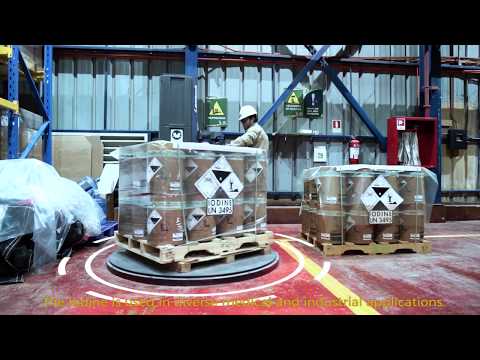
Nearly 60% of global iodine production comes from northern Chile, home to 2/3rd of the world’s iodine reserves. SQM operates the world’s largest iodine plant, Nueva Victoria, in this region.
The caliche mineral (nitrate and iodine deposits) is found under a layer of infertile overburden, with thicknesses ranging from twenty centimeters to five meters.
The 15,000 tons of iodine produced by SQM yearly have a purity of 99.8%, thanks to its unique production process, which recycles water many times. A 900 l/s seawater pipeline is currently under commissioning to further reduce the consumption of fresh water in this dry area.
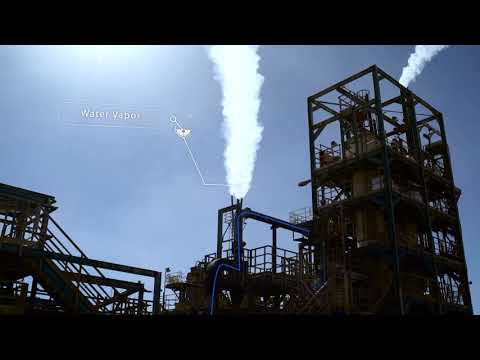
Asia (46%) and Europe (39%) are the main markets for this segment, with North America accounting for only 13% of sales. Sales are mostly stable year-to-year.
Potassium
Potassium is a key element for the production of fertilizers. SQM produces all three possible forms of potassium: potassium chloride (KCl), potassium sulfate (K2SO4), and potassium nitrate (KNO3), and is the only company in the world to do so. This lets the company vary between which source it favors, depending on global prices for each commodity.
Currently, the loss of a major segment of the production of nitrogen-based fertilizers and sulfur from the war with Iran could benefit SQM with a focus on potassium sulfate (K2SO4) and potassium nitrate (KNO3).
Potassium is a smaller business for SQM, with a customer mix balanced between North America (29%), Asia (25%), and local demand in Chile (13%) and the LATAM + Caribbean region (21%).

Source: SQM
Plants Nutrition
This segment produces not just the raw commodity but fertilizer ready to use by farmers and the associated whole distribution network and sales points. The largest markets for this segment are North America (38%), Europe & Asia, and then national & regional customers.

Source: SQM
This line of product offers highly specialized or even custom-made fertilizer mixes, adapted to specific soils, crops, or local nutrient deficiencies to optimize agricultural yields. Besides macro nutrients (nitrogen-phosphate-potassium), the fertilizer can also contain iodine, calcium, magnesium, iron, etc, as well as a regulator of acidity to increase the availability of nutrients in the soil. Some of the products even prevent the formation of precipitates and clogging of drip pipes.
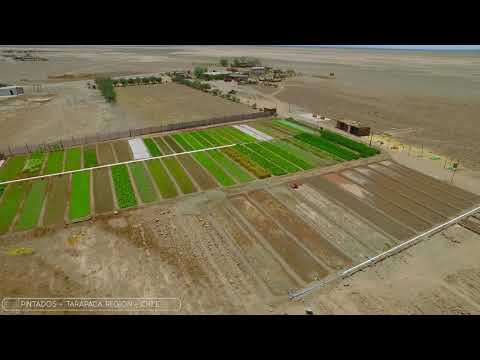
Industrial Chemicals
More of a side business, recycling byproducts or minerals produced in mass for other uses, this segment sells nitrates, potassium chloride, boric acid, and magnesium chlorides.
The main markets are North America (59%) and Europe (23%).

Source: SQM
For example, SQM can provide services to industrial projects or processing plants:
- Thermo-solar salts, a mixture of 60% sodium nitrate (NaNO3) and 40% potassium nitrate (KNO3).
- Sylvinite, a mixed salt containing NaCl and KCl that is used increasingly in the food industry as a low-sodium salt.
- Bischofite, or magnesium chloride hexahydrate, is used as a stabilizer, dust control, and de-icing agent on roads.
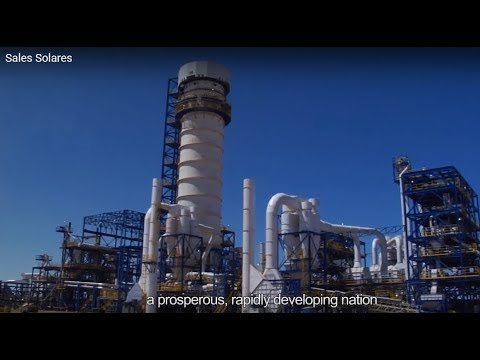
Troubled Governance – Past & Future
Past Troubles
While SQM is a remarkable company in terms of geology and importance to the global supply of key minerals like lithium and iodine, its governance and location in Chile have at times caused headaches for shareholders.
From its inception, then nationalization, then “privatization” under the military dictatorship, the early fate of the company reflects the troubled politics of Chile.
Today, the descendant of Pinochet still owns 25% of the company through the Pampa Group. In 2015-2018, a scandal dubbed “The SQM Affair”, where SQM was accused of tax evasion, bribery through illegal political financing, and insider trading linked to Pampa Group.
Other major shareholders include the Chinese lithium company Tianqi (bought from fertilizer company Nutrien) and the Japanese Kowa Group. Other major shareholders are Chilean pension funds (13%) and retails and institutional investors through ADRs at the New York stock exchange.
In itself, this ownership structure can raise a few eyebrows regarding governance issues and geopolitical risks.
For example, a decision in 2018 by the FNE ( Chilean Antitrust Regulator -, Fiscalía Nacional Económica) warned of several risks to free competition for the then intended Tianqi acquisition of a part of SQM. In a time of renewed nationalism and geopolitical tensions with China, such a discussion could potentially be back in the news.
Chilean National Policy
To add to these ownership structure risks, SQM has been at the center of political turmoil in Chile itself.
The country is looking to more directly control lithium production and the profit that comes from it, with a semi-official goal of becoming a sort of “Saudi Arabia of lithium”.
For that purpose, after contentious negotiations between SQM and the Chilean state, SQM’s lithium mining activities were transferred to the newly established Nova Andino Litio, a public–private joint venture with state-owned company Codelco, merging SQM’s lithium with Codelco’s lithium from Minera Tarar.
Past the initial shock, further details on the plan clarified that the country still intended to attract private foreign investment. The pre-existing contract for the Salar will nevertheless be respected and run until 2030.
Then, on January 1, 2031, control shifts via a “golden share” provision, putting Codelco in full command of the operations. The joint venture secures lithium extraction rights in the Atacama salt flat until 2060.
This is not just negative news for shareholders, as this also led Chile to grant SQM an additional production quota of 300,000 metric tonnes of Lithium Carbonate Equivalent (LCE), taking total allowed extraction to 1.65 million tonnes. So the pie might go in part to the state, but it is also growing bigger.
Still, this means that between 2025 and 2030, the State captures 70% of the operating margins via taxes and development agency (Corfo) lease payments. Starting in 2031, the State’s take climbs to 85% of total operating margins.
The threat of nationalization was followed by a durable decline in international lithium prices, which has caused a decline in the company’s stock price, down from its peak at the end of 2022. In early 2026, the uncertainty was solved, combined with a rebound in global lithium prices, which helped the stock recover significantly.
So any modeling of the company’s financial future and stock value needs to take into account not only production volumes and lithium prices, but also this massive state presence.
However, SQM’s lithium subsidiary with Coldeco still holds one of the world record lows in production costs for lithium, ~$3,500 to $4,000 per metric ton cash costs, 1/3rd of spodumene (rock) sourced-lithium. It is to be compared to a sale price of $17,800 to $18,000 per metric ton. So these low costs should help significantly keep SQM’s profits acceptable.
SQM’s Future
SQM used to be viewed solely as a lithium mining Chilean company. But with new projects overseas and a strong presence in lithium processing, the company is quickly diversifying, helped as well by its other line of business in iodine, potassium, custom fertilizers, and other salts and minerals sales.
This diversification also helps it become less tied to lithium prices, and can provide it with the cash flow needed to make acquisitions at a good price or keep development going during low price years.
Chile is a major mining jurisdiction, and the deal agreed regarding the lithium resource is therefore expected to hold, to not damage further the reputation of the country as a prime mining jurisdiction, not just for lithium, but also copper (#1 globally), silver, iron, rhenium (#1 globally), molybdenum (#3 globally), etc.
Overall, this makes SQM an interesting investment for shareholders with the stomach for a period of doubt and eventual governance uncertainty, in order to get exposure at a discount to premium, low-production-cost mining assets.
Latest SQM (SQM) Stock News and Developments



