
Energy
Smart Grid Cybersecurity Is Becoming an Investment Theme

 Add Securities.io to your preferred sources on Google

For decades, electricity and the power grid have been a fundamental requirement to modern life and industrial civilization. As the years progress, this is becoming even more true: electrification is now pushing fossil fuels away from transportation, heating, and heavy industries. And an ever larger part of the economy is dependent on 24/7 ultra-reliable IT services and increasingly large, complex, and power-hungry AI data centers.
In parallel, the power supply is increasingly coming from renewable energy, which, while it is low-carbon, is also intermittent, requiring much greater effort to coordinate unstable production to fluctuating demand. Even efforts to store electricity in battery parks do not change the need for extremely precise monitoring of the power demand and supply.
This can pose a problem, as the more modern smart grids require precise instantaneous data, the more they are vulnerable to cyber attacks.
New platforms to coordinate power grids like blockchain-based trading platforms are emerging, but they are also vulnerable to hostile actions. As a result, cyberattacks on the grid are no longer just an issue for grid operators, but a society-wide risk that can have widespread economic ramifications.

A recent publication by researchers at the Amrita School of Engineering (India), the National University of Science and Technology POLITEHNICA Bucharest (Romania), and Manisa Celal Bayar University (Turkey) analyzed these risks. They published their findings in Engineering Science and Technology, an International Journal1, under the title “Cybersecurity and data science for electricity markets: A review of digital grid management, trading, energy policy and regulatory frameworks”.
Smart Grids Explained
The concept of a smart grid is a power grid concept that can adapt to distributed energy resources (DERs: rooftop solar panels, battery energy storage systems, electric vehicles), as well as advanced metering infrastructure (AMI), Internet of Things (IoT) devices, and artificial intelligence (AI) technologies in energy management systems.
This is a radical departure from the previous model where a few centralized power plants were sending power to millions of passive users, with consumption estimated from average metrics at the grid level instead of on a per-meter basis.
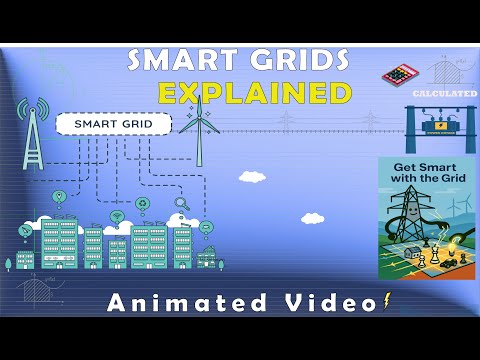
Most smart grids integrate this decentralized nature of modern grids with peer-to-peer (P2P) energy trading platforms, blockchain technologies, and data-driven market frameworks.
This is just the beginning of this trend, as the decreasing cost of renewables and batteries will only accelerate the decentralization of the power grids, while EVs and AI make it even more important than before when fossil-fuel-powered systems could take over in case of a grid failure.

Source: Wikipedia
AI And Grids’ Cyber Vulnerability
Assembling And Connecting The Right Data
The rise of AI is not affecting the grid only due to increased energy consumption. Energy trading systems have increasingly been operated with machine learning (ML) and artificial intelligence (AI) algorithms, which have been found to be vulnerable to adversarial attacks.
Still, until this study, the intersection of cybersecurity, data-driven analytics, and energy trading has remained underexplored. More precisely, they found:
- The lack of a cyber–physical-economic system framework.
- The scarcity of cross-layer modeling of cascading risks.
- The absence of explicit relationships between technical attack vectors and electricity market operation
- The incomplete integration of AI-related adversarial risks into market-clearing models.
- The lack of transparency with regard to the methodology applied to the literature screening process.
To fill that gap, the researchers analyzed 249 publications (standards, industry reports, and government advisories) from January 2014 to June 2026.
Many Types Of Threats
Physical Threats
Power grids are exposed to many threats, and the researchers classified them into four categories. The first one is physical threats, where metering hardware is compromised.
“Smart meters and AMI systems constitute one of the most important physical attack surfaces in modern power distribution because large-scale deployment creates millions of potentially exposed endpoints.”
An extra problem is that many physical devices still use outdated firmware that predates contemporary threat models. The problem is further compounded by insecure or weakly protected wireless communications using protocols such as Zigbee, Wi-Fi, and cellular links, which can enable eavesdropping, replay, and man-in-the-middle attacks.

Cyber attacks on communication and application infrastructure
While physical threat attacks the source of data, this category attacks the IT or communication network layer.
For example, it can compromise market-facing systems (trading platforms, settlement portals, and bid-submission interfaces) to disrupt price formation. Or it can use denial-of-service, DNS manipulation, and route hijacking to degrade visibility and control by preventing command delivery or forcing operators to rely on stale telemetry.

Cyber–physical attacks
These attacks aim for physical operational consequences or to manipulate physical measurement data.
The idea is to simultaneously distort operator perception, market clearing, and price formation, generally for financial gains.
False data injection against valid estimation is one of the best-studied attack classes of this category.

This risk is compounded by the diversity and growing presence of distributed power production.
“The rise of DER-connected assets has widened this class of risk: solar inverters, battery systems, and EV-charging infrastructure depend on networked controllers that can be manipulated to disconnect distributed generation, destabilize voltage or frequency, accelerate storage degradation, or contribute to thermal and safety failures”
Market-level and data-driven system threats
This type of attack targets the economic and informational mechanisms of electricity markets directly. This is by far the type of attack done the most for direct financial gains, usually through market manipulation.
“Unlike physical, cyber, and cyber–physical attacks, their primary intended consequence is financial or informational, although cyber–physical mechanisms such as FDI frequently serve as the enabler”
In particular, privileged access to price or market-clearing information can enable profitable manipulation. Although it can be fought with significantly higher sensor densities, measurement redundancy, bad-data detection schemes, state-estimation cross-validation, and sophisticated market surveillance mechanisms.

Fixing Smart Grids’ Vulnerabilities
Future Threats
Fixing smart grid cyber vulnerabilities is not just a matter of making them resistant to current threats, but also to predictable future threats. This includes:
- Adversarial robustness of machine learning models.
- Quantum-resistant cryptography.
- IT-OTsecurity integration.
- Privacy-preserving trading mechanisms.
- Secure edge intelligence, adaptive regulatory frameworks.
- Security investment economics and supply chain risk management.
Fixing Every Vulnerability Level
To fix grid exposure to cyberthreats, integrating the best practices of cybersecurity into grid architectures is required. In general, international and local standards for cybersecurity provide solid guidance for grid operators on what changes they need to implement.
“Energy Management Information Systems (EMIS) guidelines have established standards for securing energy data [221], and the General Data Protection Regulation (GDPR) in the EU has significantly impacted data protection in various domains of energy management. Internationally accepted standards such as ISO/IEC 27001 and NIST Cybersecurity Framework have been developed for cybersecurity and can be applied in the energy domain.”
In the case of physical threats, secure telemetry is the way to solve the danger of erroneous data being injected into the network. In most cases, this needs to involve a serious update of the physical hardware, especially electricity meters, so that they use only secured software and encrypted communications.
Digital twins, virtual models of physical systems, can also help create a compelling platform for incident simulation.
For grid software, a zero-trust architecture needs to be adopted, where data validity and participant authorizations are verified at every step. Machine Learning (ML) and Artificial Intelligence (AI) can also be used for creating anomaly-based detectors, moving beyond classical signature-based threat detection.
Market-linked risks need to be addressed by making forensic analysis of any potential manipulation possible, including for peer-to-peer markets (P2P). In that respect, more than cybersecurity alone, properly auditable market infrastructures are key to solving this vulnerability.
Regarding risks to cryptography by progress in quantum computing, one of the four Post-Quantum Cryptography (PQC) standards adopted by the U.S. National Institute of Standards and Technology in 2024 will need to be adopted quickly by grid operators and participants in electricity markets.

Investing In Smart Grids
GE Vernova
GEV Price Chart
GE Vernova (GEV ) is the part of the giant conglomerate General Electric (GE.TO ) that was recently split into three, with Vernova taking over all energy-related activities from GE, from building power plants and grids to related software and services.

Source: GE Vernova
GE Vernova is at the forefront of meeting the world’s growing power needs, with all its production capacity for turbines fully booked until 2030. It is also deploying large-scale battery parks and industrial electrification solutions, as well as nuclear SMRs, carbon sequestration, HVDC cables, hydrogen gas turbines, etc.
GE Vernova is also a key supplier of smart grid equipment like flexible AC transmission systems, and software like GridOS. GridOS uses a built-in Zero Trust security architecture, directly aligning with this study’s recommendations around secure grid orchestration, continuous authentication, and protection against internal and external threats.

Source: GE Vernova
(You can read more about GE Vernova in our dedicated divestment report on the company)
Latest GE Vernova (GEV) Stock News and Developments
Study Referenced
1. Dharmaraj Kanakadhurga et al. Cybersecurity and data science for electricity markets: A review of digital grid management, trading, energy policy and regulatory frameworks. Engineering Science and Technology, an International Journal. Volume 81, September 2026, 102464. https://doi.org/10.1016/j.jestch.2026.102464



