
Aerospace
NASA SR-1 Freedom: Building The First Nuclear Spacecraft


Moving an object in space is very energy-consuming, even once a spacecraft has escaped the gravity well of a planet. This is in part because the distance between celestial objects is so vast.
For example, if the distance from the Moon to Earth were just 0.25 meters, the distance between Mars and Earth would be 500 meters, and to Neptune 30,000 meters.
So the heavier the spacecraft, the more energy is needed to move that mass at a speed that is sufficient to cross this massive distance. And then the same energy is required again for decelerating.
Another limitation of deep space exploration and interplanetary flight is that to create propulsion, some mass needs to be ejected. But the more fuel, the more dead weight, which requires further energy for propulsion. So, for a strong acceleration, the fuel ejected needs to be pushed away at a very high speed, creating a greater momentum, and the energy source needs to be as dense as possible.
For all these reasons, the idea of using nuclear energy for space travel is one as old as the beginning of nuclear power generation, as uranium is one of the densest “fuel” imaginable, with one kilo of uranium generating potentially as much as 23 million kWh, compared to 13 kWh for 1 kg of oil and 7kWh for 1 kg of coal.

Source: Visual Capitalist
However, none of the designs imagined for space travel propulsion have been used so far. The only relatively common use of nuclear power is radiothermal generators, which use the passive decay of radioactive elements with a relatively short half-life to power rovers and probes in deep space for years or even decades.
This might change very soon, with a space reactor called the SR-1 Freedom, with SR standing for “Space Reactor”.
This nuclear electric propulsion system could be deployed as soon as 2028. It will be used to deliver to Mars the Skyfall payload of three Ingenuity-class helicopters. It will be mostly used to demonstrate the technology, but at the planned size, it will not be significantly faster than a regular probe.
“The Skyfall helicopters will carry cameras and ground-penetrating radar to scout a future landing site to understand the slopes and hazards for human-scale landers. They will also map and characterize the subsurface water ice to find out where the water ice deposits are, along with the size, depth, and other important characteristics.”
Steve Sinacore, fission surface power program executive at NASA
This is part of a larger reset of NASA programs, which include the likely complete canceling of the Lunar Gateway space station, the reorganization of the Artemis mission, and a more ambitious build-up for the future Moon base, just on the tail of the successful launch of Artemis II, which will for the first time in 50+ years bring astronauts into the Moon’s orbit.
The Many Types of Nuclear Space Propulsion
Nuclear Electric Propulsion
The SR-1 Freedom’s nuclear propulsion system is nuclear electric, so it first uses a nuclear reactor to produce electricity, and this power is then used to generate thrust by the spacecraft engines.
To convert electricity into thrust, and therefore useful movement, the most commonly used method, and the one used by SR-1 Freedom, is ion thrusters. In the case of SR-1 Hall-effect thrusters.
These propellers ionized a gas with electricity, essentially “loading” in energy the gas used as fuel, usually xenon or krypton. These reactors have a very high efficiency of 45-60% and high specific impulse, which means that less fuel mass is needed for the same propulsion effect.
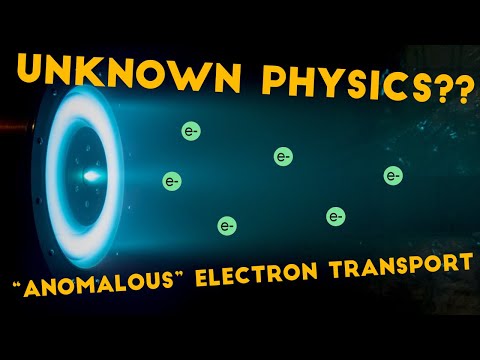
However, ion thrusters are relatively weak individually, so they are best suited for long-distance travel, where a slow and steady acceleration can pile up into high speed.
So far, ion thrusters have been used, but are limited by the energy provided by the probe’s solar panels. With a nuclear power source, much more thrust and acceleration can be generated.
By far, this is the most mature version of nuclear propulsion, as both nuclear power generation and ion thrusters are well-mastered technologies. So it is only a matter of design and engineering to make them work together, hence the short deadline for SR-1 deployment.
Nuclear Thermal Propulsion
Nuclear reactors generate power by converting radioactivity into heat and then turning that heat into electricity.
So this method of propulsion cut out the intermediary and directly used the heat itself. The idea is to use nuclear energy to superheat a fuel, usually liquid hydrogen, and propel the hot gas to generate movement.
This idea could, in theory, generate massive propulsion capacity. In practice, it requires a lot of nuclear energy at once and a lot of fuel, meaning this is mostly applicable to massive spacecraft, much larger than the usual interstellar probes or even a super-heavy rocket like Starship.
Other Nuclear Propulsion System
The energy density of nuclear energy has created even wilder potential concepts.
For example, Project Orion, seriously discussed in the 1950s and 1960s, was at the heart of the Cold War. It envisioned a series of nuclear explosions as the main means of propulsion, with the spacecraft protected from the radiation and damage by a massive shield, a concept known as nuclear pulse propulsion.
Other ideas, like fission fragment rockets or gas core reactor rockets, consider expelling the nuclear fuel itself as a propellant material.
However, these ideas are more theoretical than practical in most cases, in large part because the scale of spaceships it would require is simply not in reach in the foreseeable future.
Why Has Nuclear Propulsion Not Happened Yet?
Geopolitics
In part, the reason why nuclear propulsion never happened is that it was simply not needed. After the multiple landings on the Moon, the space race between the USSR and the USA cooled down.
And with the collapse of the USSR, the ambition for ever larger spacecraft or future off-world bases fizzled away for several decades.
For exploration far from the Sun, radiothermal generators were enough. So nuclear propulsion is simply not required for manned flight, no further than the ISS, and sending small probes to Mars or deeper in space.
However, the rise of China as a very serious space power has now triggered a new space race to the Moon and Mars. So this might explain the rebirth of American nuclear propulsion projects, as nuclear propulsion will likely be required for any serious manned flight to Mars or beyond.
Politics And Nuclear Image
The image of nuclear energy has also been damaged by accidents like Chornobyl and Fukushima, leading to the idea of sending a nuclear reactor into space, of any size, being unpopular. Without a strong political support behind them, these programs did not have the momentum to make it from prototypes and tests to real-life spacecraft.
In addition, the 1967 Outer Space Treaty and the 1963 Partial Test Ban Treaty killed nuclear propulsion concepts like Project Orion.
Lastly, launching material into space is always a risky project, with rockets at risk of failing and exploding on their way to orbit.
In such a case, radioactive material could be dispersed over a wide area, and even if the real quantity is minimal, the associated POR disaster made NASA reluctant to take the risk without a strong push from the US political leadership.
Technical Issues
Nuclear reactors, especially in the 1950s-1990s, used to be massive pieces of equipment. This sort of nuclear reactor is rather difficult, or even impossible, to use in space, where every gram of mass counts. The additional weight of shielding against the reactor’s radiation adds further mass.
This is not so true in the era of SMRs (Small Modular Reactors) and microreactors, but these technologies are a relatively new development.
Embrittlement from neutrons hitting the surrounding materials can cause cracks or other damage in aerospace materials. So this too needed to be better understood and mitigated.
Nuclear thermal rockets are also vulnerable to hydrogen corrosion, as hydrogen becomes extremely aggressive, eating away the reactor and propulsion components at the envisioned temperatures of 2,200°C (4,000°F)
SR-1 Freedom Design
A Power Reactor And Many Firsts
SR-1 Freedom will be based on a 20-40 kWe closed Brayton cycle fission reactor, a design that combines a nuclear heat source with a gas-turbine power conversion system in a sealed loop. Waste heat is then evacuated into space through large radiators made of titanium.

Source: CNET
The reactor is to be fueled by high-assay low-enriched uranium (HALEU), using uranium dioxide fuel, which is safer to handle than weapons-grade fuel.
To protect the electronic (and future astronauts) from the radiation of the reactor, it is encased in a boron carbide radiation shield directing radiation away from the spacecraft.
SR-1 is by far not the first prototype or concept of nuclear propulsion, but it will be the first one leaving the lab and reaching space, built on decades of experience and investment in the field.
“For six decades, the United States invested more than $20 billion across dozens of space nuclear programs and flew exactly one reactor — SNAP-10A, in 1965. It never left orbit. Billions spent, decades lost. SR-1 ends that pattern. A Mars launch window in December 2028 forces decisions that decades of study never did.”
Reusing Lunar Gateway Modules
Another element explaining how the ultra-fast deployment of SR-1 is possible is that the ion thruster part of the spacecraft is ready.
The propulsion system used will be the nearly built, NASA-developed spacecraft bus, the Power and Propulsion Element (PPE), initially developed for Lunar Gateway.
As the lunar space station is apparently being scrapped, its elements, mostly built by NASA’s partners in Europe, Japan, South Korea, Canada, and others, will be repurposed in projects like SR-1, better matching the new space ambitions of NASA and the USA.
“Every asset, every kilogram, all the lunar exploration resources that we have are going to be focused on one thing, and that is to build the moon base,”
Carlos Garcia-Galan – deputy manager for the Gateway Program
PPE is equipped with four 6-kilowatt (kW) Hall-effect thrusters built by Busek and three 12 kW Advanced Electric Propulsion System Hall-effect thrusters developed by NASA and Aerojet Rocketdyne, a subsidiary of L3Harris (LHX ).
The PPE’s high-performance solar arrays will be kept as well, in case the experimental nuclear reactor needs maintenance or has a problem.
Beyond SR-1
Toward More Nuclear Energy In Space
The goal of SR-1 is to give a real-life test of the nuclear reactor design, both for propulsion and other uses.
So this will likely be used one day for a manned flight to Mars, but will also have more immediate applications.
For example, the data collected from the SR-1 Freedom flight to Mars will be important for the development of Lunar Reactor-1 (LR-1).
“In the 2030s, we will scale up and move into production” of further reactors. We’re talking hundreds of kilowatts to megawatt-class reactors for all nuclear applications. Higher-powered missions to the moon, human missions to Mars, with commercial participation and repeatable production.”
Steve Sinacore, fission surface power program executive at NASA
This fission reactor will be designed to provide continuous energy for a lunar base during periods without sunlight, and will also use a closed Brayton cycle power conversion unit.
“The fission surface power program is scheduled to deliver something on phase three for more capacity, and maybe more than one thing, for the capacity that we expect we’ll need for the moon base. Anything we can do to not rely necessarily on solar power and allow the assets to get heating and maybe some power is going to be golden for our ability to take that forward.”
Carlos Garcia-Galan – deputy manager for the Gateway Program
Still, in the long run, the most important legacy of SR-1 will likely be the possibility of manned nuclear flight to Mars, taking 4 months or even less, compared to the 9 months or more possible with chemical rockets.
Future Nuclear Propulsion Systems
Initially planned for 2027, DRACO (Demonstration Rocket for Agile Cislunar Operations), a thermal rocket engine, was canceled in 2025, as it was considered that rockets like SpaceX’s Starship are good enough for orbital and cis-lunar travel.
Still, this technology could potentially cut travel time to Mars in half, similar to the potential legacy of SR-1.
In the long run, if electrical nuclear propulsion becomes normalized, other forms of nuclear propulsion might become viable as well.
Another possibility is for SR-1 type of propulsion systems to be fitted on a cargo ship, able to cycle back and forth to the Moon or Mars and accelerate other spacecraft, only needing the occasional refueling of gas propellant or radioactive fuel. This way, the same system could deliver propulsion for dozens of deep space missions.
In that concept, electric or thermal nuclear propulsion could achieve for deep space exploration what SpaceX did for orbital launches: creating a reusable, long-lasting vessels that both cut costs and make space travel a lot more efficient, allowing for much larger masses of payload to be moved around.
Investing In SR-12 Freedom
L3Harris
(LHX )
L3Harris is a major aerospace provider and defense company, the result of the merger of L3 Technologies and Harris Corporation in 2019.
The company is not only providing the Hall-effect thrusters for SR-1, but is also directly involved in the development of the fission surface power program, which will deliver nuclear energy to the future American Moon base.
“Nuclear propulsion can power exploration to the farthest reaches of the solar system and beyond, enhance national security, and enable groundbreaking discoveries. In-space maneuverability has long been a limiting factor for the most ambitious robotic exploration and other unique government applications, and L3Harris is committed to removing that constraint.”
Kristin Houston, President, Space Propulsion and Power Systems, Aerojet Rocketdyne, L3Harris.
Its electric propulsion system was also used by NASA’s Dawn mission to the main-belt asteroids Ceres and Vesta.
The company is also exploring Nuclear Thermal Propulsion (NTP), building on its new experience with electric nuclear propulsion and its much more established experience with radioisotope thermoelectric generators, as it provided the power source for both the Mars Curiosity Rover and the Mars Perseverance Rover.
However, space is just one segment of the company’s activity.
Its core business is in providing the US military and its allies with secure communication (half of the global market of tactical radio), command center, radar & communication plans, electronic warfare, satellites for missile launch detection, etc.
Aerodyne, the company providing SR-1 with its propulsion systems, is also a major producer of missiles, including ammunition for missile defense systems, whose inventory has been put under great strain by the Ukraine and Iran wars.
In general, the planned growth of the US military budget from $1T to $1.5T is likely to lift all boats for investors in the defense sector, especially as the war in Ukraine has depleted inventory and the war with Iran has revealed a need for more ammunition and missile defense.
It is this last revelation of the evolution in military strategy that could benefit L3Harris the most. If Ukraine revealed the importance of drones and electronic warfare, the conflict with Iran highlighted the importance of missile defenses. And more than anything, the importance of a deep inventory of interceptors missiles, as each incoming missile consumes 2-3 interceptors.
In addition, the renewed ambition of NASA should also benefit the company as a prime provider of ion thrusters and space nuclear power.
(You can read more about L3Harris aerospace and defense activities in our investment report dedicated to the company.)
Latest L3Harris (LHX) Stock News and Developments



