

Energy
New Understanding of Evaporation May See Photons Improve Desalination Processes Through ‘Photomolecular Effect’


Until recently, there were a few agreed-upon variables that could result in/affect the evaporation of water – the process by which water transitions from a liquid to a gas. However, new research coming out of the Massachusetts Institute of Technology (MIT) is set to upend this, pointing to a new understanding of how simple photons (light) can play an outsized role in the process. With that in mind, researchers have found that photons can evaporate water both alongside and in the absence of heat.
Pre-Existing Variables
Before diving into why this discovery matters, take a moment to refresh on the previous list of variables that play a role in evaporation.
- Heat: The primary cause of evaporation is heat. Water molecules are always moving, and as they gain heat energy, their movement increases. When the energy is sufficient to overcome the intermolecular forces holding the molecules together in the liquid, they can escape into the air as vapor.
- Surface Area: The rate of evaporation is also dependent on the surface area of the water. A larger surface area allows more molecules to be exposed to the air, where they can evaporate.
- Humidity: The amount of water vapor already in the air affects evaporation. If the air is already saturated with water vapor, evaporation will be slower. This is because the higher the humidity, the lower the rate of evaporation due to the decreased capacity of the air to receive more water molecules.
- Air Movement: Wind or air movement can carry away water vapor as it forms, reducing the humidity right above the water and allowing more water to evaporate.
- Pressure: Atmospheric pressure also affects evaporation. When the atmospheric pressure is lower, water boils at a lower temperature and evaporates faster. High atmospheric pressure can inhibit evaporation.
- Temperature of the Water: Aside from external heat sources, the temperature of the water itself is a factor. Warmer water evaporates faster because its molecules have more energy on average.
Essentially, water evaporates when its molecules have enough energy to break free from the liquid phase and become water vapor. This process is influenced by temperature, humidity, pressure, wind, and the physical characteristics of the water body itself. Now, we can put exposure to photons on the list.
Not to Be Confused
It is also important to understand the distinction between evaporation and the following processes.
Vaporization: A general term that includes evaporation but also encompasses boiling, where the liquid turns into vapor at its boiling point throughout the entire volume of the liquid.
Condensation: The reverse process of evaporation involving the cooling of a gas, which results in its transition to a liquid phase.
Evaporation, on the other hand, is a type of vaporization that occurs at the surface of a liquid below its boiling point.
How Was It Achieved?
So how did MIT Researchers discover that photons can be added to the list of variables associated with evaporations? The team’s findings were achieved through a series of experiments and simulations focused on the evaporation behavior of water when contained within a hydrogel. This work was first undertaken as the team looked to understand and reaffirm past experiments that yielded results in which water evaporation rates surpassed the expected thermal limit – the maximum amount of evaporation possible when a given amount of heat is applied.
To recreate these results, the researchers utilized a ‘solar simulator’. Here, saturated hydrogels were subjected to various wavelengths of light in the absence of heat. Interestingly, results showed that despite no influence by heat, a measurable loss in mass occurred over time, with the most pronounced differences being found when green light was used. With the response being independent of thermal effects, it affirmed that light, not heat, was the cause of evaporation.
In the end, the researchers discovered that, against conventional expectations, a combination of water and hydrogel enabled the energy from photons to be harnessed to drive evaporation beyond known thermal limits. The process is now being called the ‘photomolecular effect’.
Why Does It Matter?
This discovery of the photomolecular effect could revolutionize several industries and environmental sciences. They may extend to include renewable energy storage and recovery systems, where controlled evaporation rates are critical. For instance, this could lead to the development of new materials or surfaces designed to maximize water evaporation for energy storage in dry climates.
In agriculture, this principle might be used to develop more efficient irrigation systems that minimize water loss by restricting exposure to certain wavelengths, thereby conserving water while sustaining plant growth.
In the field of meteorology, understanding the photomolecular effect could improve weather prediction models by providing a more accurate representation of water cycle dynamics.
Additionally, the pharmaceutical and food industries, which often rely on precise drying processes, could see improvements in the efficiency and control of moisture removal from products.
Lastly, in urban planning and the development of sustainable architecture, this discovery might inspire innovative cooling systems that use solar energy more efficiently, reducing reliance on traditional air conditioning and contributing to energy-saving building designs.
First to Benefit from Photons
While there is a large variety of industries that may see process efficiencies improved through this new understanding of evaporation, the researchers behind its discovery believe that the most obvious example would be those involved with the solar desalination of salt water.
Desalination is simply the process by which salt and minerals are removed from water, making it suitable for both consumption and irrigation. With the rise of renewables, this process is increasingly powered through solar energy. The following are each companies involved with solar desalination, which could soon benefit from the findings discussed above.
Consolidated Water (NASDAQ: CWCO): Based out of the Cayman Islands, Consolisated Water has grown since its founding in 1973 to become a multinational company specializing in seawater desalination plants.

At time of writing, Consolidated Water boasted the following metrics.
Market Cap:$465,675,764
Forward P/E 1 Yr.: 20.06
Earnings Per Share (EPS): N/A
Solar Water Plc: This UK-based company has developed a solar dome technology intended to desalinate seawater, particularly targeting regions with high solar irradiance and scarce freshwater resources.
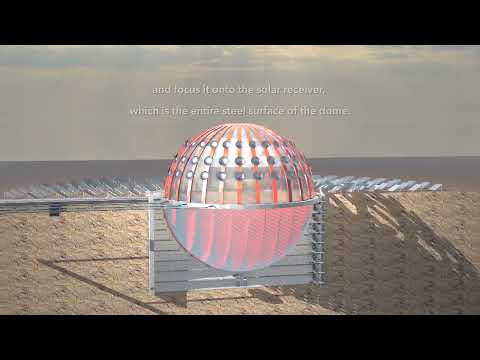
Abengoa: A Spanish multinational corporation that has been involved in the development of large-scale solar-powered desalination plants, particularly in areas like the Middle East and North Africa.
Despite the scope of its operations, Abengoa has been on the verge of bankruptcy for multiple years. New processes that have the potential to raise operational efficiencies greatly may be key to surviving.
These companies are active in various parts of the world, addressing the freshwater needs of arid regions and areas with limited access to clean water – a need that will only continue to grow in time.
Final Thoughts
While such a discovery may seem mundane at first glance, it is anything but. Not only does it show how limited our understanding is of concepts and processes that have long been thought to be mastered, but it also holds the potential for widespread applications.
Innovative and forward-thinking companies are reliant on scientific advancements such as this to build out and offer solutions leveraging new capabilities and efficiencies. Now, companies like Consolidated Water, Veolia, and Solar Water PLC need to adapt and run with it.



