
Aerospace
X-59 QueSST: The Silent Return of Supersonic Travel

 Add Securities.io to your preferred sources on Google

Since the Wright brothers’ first flight in 1903, aeroplanes have become an important transportation method for both people and goods.
However, it could be said that in terms of speed, the field has mostly stagnated since the 1970s, at least in the civilian jet domain. In large part, this is due to attempts to move into supersonic speed having proven to be commercially unsuccessful.
The last commercial supersonic flight was done by the French Concorde more than twenty years ago, in 2003, a program initiated in the 1960s, after years of financial losses, and a dramatic crash destroyed the program.
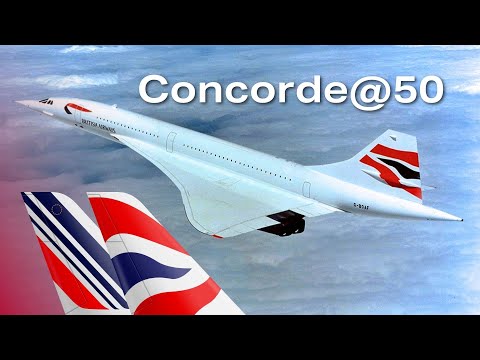
A key problem for supersonic commercial jets is that when a plane flies above the sound barrier (1,235 km/h – 767 mph), moving quicker than sound itself, the compression of the air by the plane causes a so-called sonic boom. Besides being a nuisance for people living under the plane trajectory, repeated sonic booms can cause both health issues and structural damage.
As a result, the Concorde was banned from flying supersonic overland in the USA, and was confined exclusively to trans-Atlantic flight paths, directly hurting the project’s profitability.

Source: Biodeluna
It also means that little has been done to create new supersonic planes for decades. Instead, more attention has been given to so-called hypersonic flight, essentially suborbital rockets leaving the atmosphere to go even faster than supersonic flight, or using novel Ram-Rotor Detonation Engines (RRDEs).
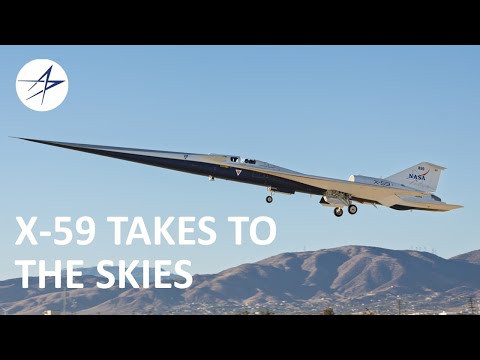
But this might be changing soon, as NASA and Lockheed unveiled progress on the X-59, a new design of supersonic planes that might not create a sonic boom at all.
Making Supersonic Flight Viable
Supersonic Booms’ Problems
When planes fly so fast that they compress air, causing a supersonic boom, the resulting sound is around 105-110 dB. This is the same level as a snowblower, a loud rock concert, a chainsaw, or a balloon popping.
The first problem is caused by disturbance, as it can startle or distress humans and animals. And if airplanes flying supersonic became commonplace, people in busy air corridors could be exposed to such loud noise daily, maybe up to 20-30 times/day. This could lead to a serious increase in sleep disturbances, hearing damage, and cardiovascular problems.
Another concern is structural damage, as intense supersonic boom can shatter glass, rattle windows, and dislodge masonry mortar or plaster in weakened buildings.

Source: CNN
All of these effects were proven as early as the 1960s, when supersonic fighter jets were repeatedly flown over Oklahoma City to test the impact of sonic booms on the public. It ended with up to 20% of people objecting to the booms and 4% filing complaints and damage claims.
All these problems led the USA and many other nations to ban overland supersonic flight, making such planes permanently unprofitable.
Boomless Supersonic Flight
One company has already been developing a method to avoid supersonic booms, the well-named Boom Technology. The idea is that by exploiting the way sound travels in the atmosphere, they could manage to get the supersonic boom bounce back upward before it reaches the ground.
This is a promising idea, but the company seems, for now, to have pivoted to the closer prospect of making money from selling gas turbines to power the data center construction boom. To know more about this method of “boomless” flight, you can read our article “Pre-Orders Growing for the XB-1 as it Breaches Sound Barrier in Latest Test”.
Another method, used by the experimental X-59, is to simply not have a problematic supersonic boom to deal with in the first place.
NASA and Lockheed Martin (LMT ) claim that their new design creates attenuated supersonic booms, only as loud as 75 decibels, or the same as a car door closing.
“What that means is that this aircraft may sound like distant thunder on the horizon, or like someone shutting a car door around the corner. It may even be that people don’t hear the boom at all, and if they do they will certainly not be startled, because it will be low and spread out, and not that loud at all.”
If this is true, this could open an entire new era of supersonic flight, with the “boom” not much louder than conventional planes and acceptable by both communities living under air corridors and the regulators.
X-59 Explained
X-59 Program Overview
This program was initiated by NASA, and in February 2016, Lockheed Martin was awarded a preliminary design contract. The initial plan was for the Low-Boom X-plane to have its first flight tests in 2021, but repeated delays pushed them to October 2025.
“In just a few short years we’ve gone from an ambitious concept to reality. NASA’s X-59 will help change the way we travel, bringing us closer together in much less time.”
The final X-59 design is still an experimental airplane and smaller than the airliners that could be derived from this prototype.
It is almost 100 feet long, weighs 14,990 lbs empty, and carries 8,700 lbs of fuel and a payload of 600 lbs, for a total weight of 25,000 lbs.
X-59 can fly at speeds as high as Mach 1.4 (1.4x the speed of sound, or 1,070 mph – 1730 km/h), powered by a F414-GE-100 produced by GE Aerospace (GE ). It has a cruising altitude of 55,000 feet.

Source: Lockheed Martin
How Does It Reduce Supersonic Boom?
A key part of the design was to give the airplane a very long, needle-like “nose” almost one-third of the aircraft’s total length, to spread out the air pressure waves. This is not entirely unlike the Concorde, which also had a remarkably long nose for its time, which was changing geometry mid-flight.
This unique shape should allow the X-59 to avoid the root cause of supersonic booms, which is that shockwaves are coalescing together. Strategically placed aerodynamic surfaces further help break apart into smaller sound waves what otherwise would be one massive accumulation, leading to the classic supersonic boom.
“It will be significantly quieter than Concorde or any other supersonic aircraft that exist today. It’s extremely long and thin: It’s almost 100 feet long (30.5 meters), but has a wingspan of only about 29 feet. The nose is a distinguishing feature on this aircraft: it’s about a third of the length.”
Another factor that helps the design to become more silent is the top-mounted single engine, which directs the sound upward instead of downward. This also creates a smoother design in terms of aerodynamics, reducing noise generation.
Additional design details of the wings also direct sound upward, and the small back tail reduce shockwaves as well.

Source: Aerospace America
Unique Design Requirements
Because the nose of the plane is so long, a classical cockpit is not usable to pilot the plane and land it while looking at the airstrip. Instead, the eXternal Vision System (XVS) developed by NASA, a 4K monitor displaying a real-time, high-definition view from forward-facing cameras, is used to direct the airplane.
Another issue was that the atypical design forced engineers to re-imagine how to fit into the plane the fuel, avionics, and other equipment an airplane requires.
“It’s a long, skinny airplane, and so we don’t have a lot of normal fuselage cross section to put all the systems in,” says Brandon. “So it’s a real packing and integration challenge to get everything in that we need to fly a supersonic piloted airplane.”
However, the prototype is also using relatively conventional components as well, which will in the future help turn it into a commercial plane mode, not requiring exotic materials.
“On X-59, we’re actually using very, very conventional materials — ones that are very similar to those used on other airplanes, even subsonic airplanes.
Similarly, many components are directly recycled from other planes, both to cut costs and to use tried-and-tested parts instead of adding further technical risks to the demonstrator:
- the landing gear and hydraulics systems from a F-16
- the cockpit canopy from a T-38
- the control stick from a F-117.
- Environmental controls from a T-50 supersonic trainer
Of course, even if this approach avoided the need for a lot of new development, it also represented a massive effort to make work together this Frankenstein-like assembly of different airplane parts.
X-59 Potential Future Issues
Even after the successful test flight, the X-59 concept might still face some issues.
One set of issues is technical problems. The existing prototype might not scale up as expected when brought to the size of an actual airliner. Little has also been said about the noise inside the plane, an important consideration for transporting passengers.
Similarly, it is not yet known if a larger plane will stay in the predicted 75 dB noise range.
Another set of issues is related to the reception of supersonic flight by the public and regulators. In theory, the 75 dB level should be enough to get the ban on overland supersonic flights abandoned or at least amended. But regulations can, in practice, be very slow to evolve, even when supported by lobbyists from companies like GE Aerospace or Lockheed Martin.
And it is not yet clear how the public will feel about the thunder-like low rumbling planes. Only after consultations with the public by NASA’s teams will the whole picture become available.
Lastly, supersonic flights are, in any case, going to consume a lot more fuel. This will make it more expensive and emit a lot more carbon. The associated public image problems and tight economics might still hurt a commercial model of this model.
Investing In X-59 & Boomless Flight
Lockheed Martin
LMT Price Chart
Lockheed Martin is one of the world’s largest aerospace & defense companies, which we covered in detail in November 2025 in “Lockheed Martin (LMT) Spotlight: A Leader In Defense and Aerospace”. Weapons are, however, not all that the company does.
Lockheed is a major innovator in aeronautics and aerospace. Besides the X-59, it is also the lead contractor for the design, development, testing, and production of the Orion spacecraft, essential to the Artemis missions returning the US to the Moon.
As the program should be scaled up thanks to cheaper and more frequent launches of first the SLS, then Starship, this could boost the production of Orion as well.
Also related to Artemis, Lockheed has announced it has completed critical tests of a lunar solar array prototype that can function in the Moon’s South Pole.
The company is active in other space programs, like the GOES-R weather satellites, the collection of asteroid samples by OSIRIS-REx, the Jupiter probe JUNO, and a wearable radiation-shielding vest, AstroRad.
In short, this is a company deeply embedded in NASA experimental programs.
Beyond space activities, Lockheed is behind aircraft like the Black Hawk helicopters or the F-16, as well as advanced equipment like the F-35, flying radar planes, or logistical aircraft like the C-5 Galaxy & C-130J Super Hercules.

Source: Lockheed Martin
It is also the producer of some of the US military’s most important missile systems, like the JAASM, Javelin, ATACMS, and HIMARS, in extremely high demand following the depletion of stockpiles by the conflict in Ukraine.
It is also an important provider of anti-missile defense systems like the naval AEGIS and the THAAD (Terminal High Altitude Area Defense) against ballistic missiles.

Source: Lockheed Martin
As military activity and inventory of missiles are depleting quicker than planned, Lockheed is likely one of the beneficiaries of conflicts in Ukraine and Iran, in addition to the growing demand for the F-35 and other aircraft.
From space to defense, Lockheed Martin is at the forefront of American innovation and seems to have kept its edge a lot sharper than many of its large defense contractor competitors.
(You can also read more about Lockheed Martin in our investment report dedicated to the company.)
Latest Lockheed Martin (LMT) Stock News and Developments



