

Material Science
How Pressure Quenching Broke the Superconductor Record

Securities.io maintains rigorous editorial standards and may receive compensation from reviewed links. We are not a registered investment adviser and this is not investment advice. Please view our affiliate disclosure.

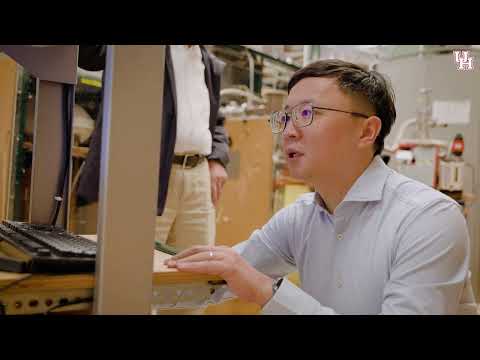
In a notable and positive development1 for material science, researchers at the University of Houston (UoH) have shattered a long-standing record in the field of superconductivity. On March 19, 2026, the team led by physicists Ching-Wu Chu and Liangzi Deng announced2 they had achieved superconductivity at a record temperature of 151 K (-122°C) under ambient pressure. This achievement is not merely a numerical milestone; it represents a fundamental shift in how scientists approach the “Holy Grail” of physics: the pursuit of zero electrical resistance at room temperature and normal atmospheric conditions.
By utilizing a sophisticated technique known as pressure quenching—a process similar to that used in the creation of artificial diamonds—the team has managed to “lock in” high-pressure electronic states that typically disappear the moment pressure is released. This breakthrough brings us significantly closer to the progress in superconductivity required to ignite a new technological revolution, potentially transforming everything from global power grids to the efficiency of modern data centers.
Definition: Pressure Quenching
Pressure quenching is a stabilization technique where a material is subjected to extreme pressure to enhance its properties and then rapidly cooled before the pressure is removed. This “freezes” the material’s atoms in a high-performance arrangement, allowing it to retain superior characteristics—like superconductivity—even after it returns to normal room pressure.
To understand why this matters, look toward the historical context of the material used: a mercury-based cuprate known as Hg1223. Since 1993, this material has held the ambient-pressure record of 133 K (-140°C). The Houston team’s ability to raise this ceiling by 18 Kelvin demonstrates that the limits of known materials have not yet been reached. This unconventional approach mirrors other recent discoveries, such as the MIT magic angle graphene research, which similarly manipulates atomic structures to induce zero-resistance states where they previously seemed impossible.
The Mechanics of Zero Resistance and Ambient Pressure
Superconductivity relies on the formation of fragile electron pairs that can move through a lattice without bumping into atoms, which creates heat and energy loss. Usually, heat or “vibrations” break these pairs apart. While applying massive pressure can squeeze atoms closer together to strengthen these pairs, the state is almost always lost the moment the pressure is removed. The UoH’s success in maintaining these properties at ambient pressure removes one of the greatest barriers to commercialization: the need for massive, expensive diamond-anvil cells to keep the material functional.
This development comes at a time when the scientific community is exploring a vast array of “unconventional” superconductors. While the world was briefly captivated by the LK-99 superconductor claims, the current research into Hg1223 provides a repeatable, peer-reviewed path forward. Furthermore, the discovery of new mechanisms, such as superconductivity in twisted bilayer WSe2, suggests that we are entering an era where materials can be precisely engineered for specific electronic environments.
The Shift Toward Practical Systems
The transition to ambient-pressure operation is a game-changer for industrial R&D. When a material is stable under normal conditions, it can be studied and manufactured using standard laboratory tools rather than specialized high-pressure equipment. This acceleration of the feedback loop between discovery and application is essential for creating the next generation of energy-efficient hardware. We are seeing a parallel trend in the search for copper-free high-temperature superconductors, where the goal is to find more abundant and easier-to-process materials that don’t require extreme environments.
Chronicle of a Superconducting Milestone: Recent Timeline
Early 2026
The UoH team begins experimenting with Hg1223, focusing on the hypothesis that pressure-induced electronic structures can be “quenched” into a meta-stable state at room pressure.
February 2026
Initial tests using liquid nitrogen cooling combined with pressure quenching show promising results, indicating that the transition temperature (Tc) remains elevated even after decompression.
March 12, 2026
Researchers confirm a record-breaking transition temperature of 151 K (-122°C) at ambient pressure. This effectively closes the gap toward room temperature by another 18 degrees, leaving a remaining target of approximately 140°C for true room-temperature operation.
March 19, 2026
The findings are published, detailing the pressure quenching sequence as a viable path for stabilizing high-Tc phases in cuprates and other complex oxides.
Impact on Quantum Computing and Energy
The implications for the technology sector are potentially profound. In the world of quantum computing, the search for stable qubits often leads to exotic materials like the triplet superconductor Nbre, which can handle magnetic fields more robustly. As superconductivity moves toward higher temperatures and lower pressures, the cooling systems required for quantum processors—currently massive, multi-million dollar “dilution refrigerators”—could be drastically simplified.
Beyond computing, the energy sector stands to gain the most. Approximately 5% to 10% of all electricity generated is lost as heat during transmission through copper wires. Superconducting cables operating at -122°C, while still needing cooling, are far more efficient and easier to maintain than those requiring temperatures near absolute zero. This breakthrough provides a roadmap for “super-grids” capable of transporting massive amounts of renewable energy across continents with virtually zero loss.
Superconductivity Performance Comparison
| Material/Method | Transition Temp (Tc) | Pressure Requirement |
|---|---|---|
| Traditional Hg1223 (1993) | 133 K (-140°C) | Ambient Pressure |
| Houston Hg1223 (2026) | 151 K (-122°C) | Ambient Pressure |
| Pressure-Dependent Hydrides | ~250 K (-23°C) | Extreme (>1.5M Atmospheres) |
| Room Temp Goal | ~293 K (+20°C) | Ambient Pressure |
The Investing Potential of Superconductivity
For investors, the superconductivity market represents a classic “frontier” opportunity. While we are still 140 degrees away from a world of room-temperature electronics, the move to ambient pressure is the definitive signal that the technology is moving out of pure theory and into applied engineering. Companies involved in advanced cooling, specialized ceramics, and magnetic resonance imaging (MRI) are the first-order beneficiaries of these record-high temperatures.
The real value, however, lies in the companies that can successfully patent and scale stabilization techniques like pressure quenching. As these materials become more robust, we expect to see a surge in “Superconductor-as-a-Service” for AI data centers, which are currently struggling with massive heat output and power consumption. Strategy-focused investors are increasingly looking at the material science sector as the next major bottleneck for the AI revolution. If a computer can run with zero resistance, the energy-per-calculation drops by orders of magnitude, making current hardware look like steam engines in comparison.
Ultimately, UoH’s work proves that we don’t necessarily need “new” miracle materials to make progress; we can often unlock the hidden potential of existing ones through clever engineering. As the gap to room temperature continues to shrink, the line between “science fiction” and “industrial reality” is becoming increasingly blurred.
Spotlight: American Superconductor (AMSC)
AMSC has moved beyond the “R&D” phase and is currently deploying its proprietary Amperium wire—a second-generation HTS material—into real-world grid and maritime applications. Its work is particularly relevant to the data center surge, as AI workloads demand unprecedented power density, and traditional copper-based infrastructure is hitting a physical limit. AMSC’s superconducting cables can carry up to 10 times the power of conventional cables in the same physical footprint, offering a solution to the “power bottleneck” currently facing the tech sector.
American Superconductor Corporation (AMSC +4.58%)
Furthermore, the company has secured significant contracts with the U.S. Navy for ship protection systems and is a key player in grid resiliency projects. For investors, AMSC represents a “pure-play” on the transition from lab-grown milestones to industrial-scale deployment. As breakthroughs like the pressure quenching technique move toward the assembly line, companies like AMSC are the most likely candidates to integrate these stabilized, high-temperature phases into the next generation of carbon-neutral power grids and hyper-efficient military hardware.
Latest American Superconductor (AMSC) Stock News
Critical Analysis: Yaskawa Electric (OTCMKTS:YASKY) & American Superconductor (NASDAQ:AMSC)
defenseworld.net
•
March 21, 2026
Algert Global LLC Increases Holdings in American Superconductor Corporation $AMSC
defenseworld.net
•
March 15, 2026
How Low Can American Superconductor Stock Go?
forbes.com
•
March 9, 2026
Should You Chase The Momentum In AMSC Stock?
forbes.com
•
February 19, 2026
Merit Financial Group LLC Has $1.89 Million Holdings in American Superconductor Corporation $AMSC
defenseworld.net
•
February 18, 2026
Principal Financial Group Inc. Invests $2.34 Million in American Superconductor Corporation $AMSC
defenseworld.net
•
February 17, 2026
Reference:
1. Chu, C. W., & Deng, L. (2026). Achievement of record high-temperature superconductivity in HgBa2Ca2Cu3O8+δ under ambient pressure via pressure quenching. Proceedings of the National Academy of Sciences (PNAS). https://www.pnas.org/doi/10.1073/pnas.2536178123
2. University of Houston. (2026, March 10). Physicists achieve record high-temperature superconductivity at ambient pressure. Retrieved from https://www.uh.edu/news-events/stories/2026/march/03102026-ambient-pressure-superconductivity-record.php



