

Aerospace
Top 5 Ways Drones Are Disrupting the Global Workforce


The popularity of drones is rapidly increasing across sectors, driven by their cost-effectiveness, versatility, and ability to perform tasks that are challenging for us humans.
This surge in popularity is happening in both commercial and consumer markets. In light of that, the size of the global drone market is expected to reach $163.60 billion by the end of this decade, growing at a CAGR of over 14% from 2025 to 2030, which is driven by advancements in drone technology, enhanced imaging sensors, improvements in battery efficiency, and AI-powered autonomous systems.
According to Statista data, the global drone market revenue amounts to $4.37 billion and is projected to grow at an annual rate of 3.62% over the next five years. The average volume per person in the market, meanwhile, is expected to be 0.001 pieces in 2025, while the market volume is forecasted to reach 10.51 million pieces by 2030.
The numbers indicate that drones are indeed becoming increasingly commonplace. They are already being used extensively in the military, where they are being used for intelligence, surveillance, and reconnaissance (ISR), targeted strikes, and logistical support.
Their development for military missions actually began in the twentieth century, and now they are essential assets to most militaries worldwide.
It was due to their high costs and technical sophistication that limited the use of drones to the military. However, over the years, advancements in technology have made them more affordable, expanding their applications across various industries, where they are now transforming the workforce.
Their non-military applications include aerial photography, area coverage, precision agriculture, environmental monitoring, weather observation, forest fire monitoring, policing and surveillance, infrastructure inspections, product deliveries, entertainment, and much more.
Industries Drones are Transforming
A drone, also called an unmanned aerial vehicle (UAV) or unmanned aircraft system (UAS), is an aircraft that doesn’t have a human pilot. It is actually controlled either autonomously or remotely.
They are equipped with sensors, high-resolution cameras, and LiDAR (Light Detection and Ranging) for navigation and data collection, as well as communication systems for remote operation, flight controllers for stable flight, and various payloads for specific applications.
While UAVs offer benefits such as increased efficiency, precision, flexibility, and safety, they also face challenges including vulnerability to weather conditions, limited battery life, and cybersecurity risks.
Despite these challenges, drones present a valuable tool. Over the years, these small, flying robots have grown past their origins as military weapons and recreational gadgets to become powerful tools transforming workplace operations across numerous industries.
So, let’s check out how drones are being used to disrupt industries.
| Industry | Primary Drone Use | Jobs Replaced | New Roles Created |
|---|---|---|---|
| Agriculture | Crop monitoring, seeding, spraying | Field scouts, sprayers | Drone operators, agritech analysts |
| Environmental Monitoring | Wildlife surveys, pollution tracking | Field ecologists | Remote sensing specialists |
| Disaster Response | Fire mapping, damage assessment | First responder scouts | Disaster drone technicians |
| Infrastructure | Bridge/solar inspections | Rope-access technicians | Drone inspectors, GIS engineers |
| Logistics | Last-mile delivery | Bike couriers, van drivers | Drone logistics managers |
1. Precision Agriculture & Crop Management
With the world population rapidly increasing, our farmers need all our support and more to feed 8.2 billion people, which isn’t projected to peak until around 10.3 billion in the mid-2080s.
Over the last few centuries, farming has evolved significantly. It started with searching and gathering, and then shifted to planting and growing crops with mechanization, hybridization, pesticides, and many other innovations helping with productivity.
Now, it’s time for precision agriculture. Under this concept, technology like drones is utilized to optimize resource usage and improve crop production. By gathering and analyzing data about soil, plants, and other factors, farmers are able to make informed decisions and tailor their practices to the specific needs of different areas.
Here, drones are equipped with multispectral sensors and AI to analyze crop health and map fields without requiring manual support. A detailed aerial imagery of their fields enables farmers to identify stress areas and then take appropriate actions.
These flying robots also broadcast seeds, detect disease and pests early, apply targeted spraying, and optimize irrigation. Through precise application of fertilisers and pesticides, drones help minimize waste and environmental impact. So, with the help of drones, farmers can gain better control over various agricultural processes and improve the quality of their crops.
While the initial cost of implementing the technology may be expensive, over time, the targeted approach of drones provides much higher savings, which, combined with increased crop yields, result in more profitable and sustainable farming operations.
All of this reduces the need for farmworkers to physically inspect crops; instead, the demand has shifted to tech-driven roles such as drone pilots and data analysts. As this trend continues, demand for seasonal agricultural labor is expected to decline, while skilled job opportunities are on the rise.
In precision agriculture, AeroVironment (AVAV -2.9%) is the leading name, offering both hardware and analytics platforms. Its drone solutions integrate flight control, imaging, and agronomic software to give farmers real-time, actionable data. By offering a full stack of aircraft, sensors, and AI, AeroVironment is effectively bridging the gap between agriculture and autonomy.
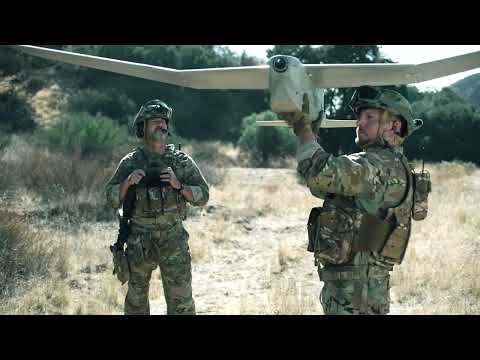
With a market cap of $13.66 bln, AVAV shares are currently trading at $281, up over 78% this year, so far. It has an EPS (TTM) of 1.55 and a P/E (TTM) of 177.34.
AeroVironment, Inc. (AVAV -2.9%)
For the fiscal year ended April 30, 2025, the company reported revenue of $820.6, up 14% YoY. Net income for the period was $43.6 million, non-GAAP adjusted EBITDA was $146.4 million, and record fiscal year bookings came in at $1.2 billion.
2. Environmental Monitoring & Biodiversity Mapping
Assessing environmental conditions and trends is crucial for safeguarding public health, preserving ecosystems, and informing policy development. Organizations tasked with environmental responsibilities or sustainability initiatives are increasingly turning to drones.
UAVs here provide efficient, cost-effective, and high-resolution data collection capabilities. Not only do drones make surveying of large and remote areas easier, but they are also safer, offering better accuracy and allowing for more timely interventions.
So, drones are being utilized to collect samples from remote oceans and forests, where it is either very challenging or not at all possible for humans to venture. This way, the technology is allowing for the detection of rare or endangered species in inaccessible areas without physically hurting or capturing them.
Equipped with high-res cameras and specialized sensors, drones are also being used to document wildlife presence, track vegetation health and growth, monitor water quality in treatment areas, track air pollution levels in urban and industrial areas, and detect gas leaks or emissions from industrial facilities.
Much like in all the other sectors, the use of drones reduces the need for people in environmental monitoring, but of course, there’s still a need for human workers for the purpose of analysing the data captured by drones. This means a need for new skills. Instead of ecologists with field-based skills, the sector will need those familiar with remote sensing, GIS, and drone operation.
Data collected by drones actually provides more detailed and accurate documentation of environmental conditions and changes over time. It also helps organizations comply with regulatory requirements and sustainability goals.
Now, Ondas Holdings (ONDS -9.09%) is a provider of autonomous drones and wireless technology. Its commercially available platforms include a fully autonomous counter-drone system called the Iron Drone Raider and the Optimus System, which is deployed for emissions monitoring and structural integrity inspections. Last month, the company secured a $14.3 million purchase order from a major defense customer for multiple units of this system.
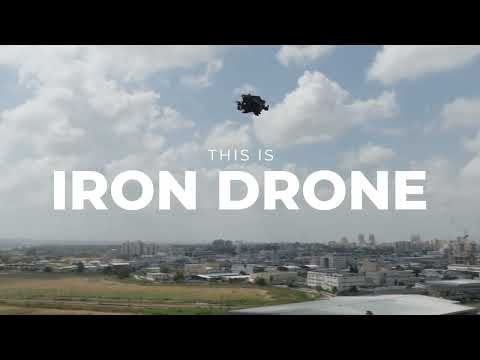
With a market cap of $400.4 mln, ONDS shares are currently trading at $2.28, down 12.89% YTD. It has an EPS (TTM) of -0.58 and a P/E (TTM) of -3.82.
Ondas Holdings Inc. (ONDS -9.09%)
For 1Q25, Ondas reported $4.2 million in revenue with new orders secured across Europe, the Middle East, and the US, positioning it for global expansion. It ended the quarter with over $25 million of cash to support its growth plan.
3. Disaster Prediction & Wildfire Management
One of the most valuable uses of drones is boosting safety across sectors. More importantly, these unmanned aircraft can help in disaster prediction and early wildfire detection.
Instead of putting humans at risk, drones can be used for surveying disaster sites, creating detailed maps, and detecting any potential hazards that are outside the reach of ground teams. When it comes to wildfires specifically, which are unpredictable in nature, making their early detection and containment difficult, AI-powered drones can help firefighters with scouting, mapping the perimeter, monitoring the progress, assessing damage, and supplying water or fire retardant.
Additionally, by providing real-time data, drones help first responders assess the situation and make informed decisions quickly and in a timely manner while mitigating risks to human life. This also means a reduced need for constant patrolling.
Drones can further be used to transport essential supplies like food and medical aid quickly and efficiently. Not only does this expedite relief efforts, but compared to conventional methods, drone-based disaster relief efforts also require fewer resources.
To map disaster areas and determine the extent of damage, drones are flown over the affected areas where they use advanced imaging and data collection technologies to capture high-resolution images and videos for analysis, which is also crucial in post-incident recovery as well as insurance verifications.
Drones are a significantly more efficient and safer method than traditional ones in hazardous environments. In the future, drones are expected to augment special emergency response teams with personnel operating from command centers, rather than being deployed on the front lines.
In this space, the aerial firefighting company Bridger Aerospace Group Holdings (BAER -5.68%) is recognized for providing its wildfire management services to state and federal government agencies. BAER’s UAVs support emergency response with thermal mapping and situational awareness.
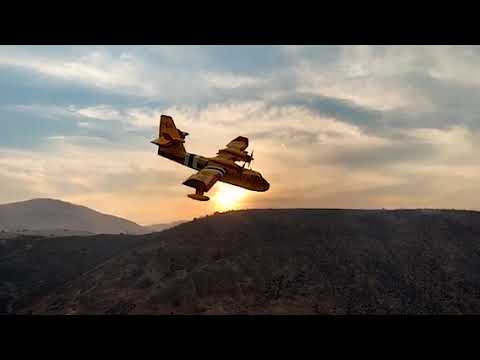
With a market cap of $101.7 mln, BAER shares are currently trading at $1.86, down 12.68% YTD. It has an EPS (TTM) of -0.80 and a P/E (TTM) of -2.33.
Bridger Aerospace Group Holdings, Inc. Common Stock (BAER -5.68%)
For the first quarter of 2025, the company reported a record revenue of $15.6 million, resulting in an improved net loss of $15.5 million. It also secured a new five-year $20.1 million contract with the U.S. Department of the Interior. The period further marked the earliest deployment of Super Scoopers to California, followed by Oklahoma and North Carolina, in addition to MMA aircraft, “reinforcing the trend of year-round wildfire activity.”
4. Infrastructure & Solar Panel Maintenance
Yet another area that drones are revolutionizing is infrastructure maintenance through faster, safer, and automated inspections.
When it comes to solar panel maintenance in particular, drones can have a significant impact due to the challenges faced by traditional methods. These include accessibility issues with expansive solar farms or panels located on elevated rooftops, high costs of skilled labor, small defects such as cracks or minor dirt accumulation, and safety risks.
Here, maintenance drones use thermal cameras to identify temperature anomalies, which could signal faulty wiring or damaged cells, and high-resolution cameras to capture detailed images for visual inspection of infrastructure for cracks or corrosion. LIDAR tech, meanwhile, helps with site planning, layout optimization, and accurate measurements.
These drones also use AI algorithms, infrared imaging tools, GPS, IoT connectivity, and edge computing to transform traditional maintenance practices into a more efficient, data-driven operation.
Equipped with all this technology, drones can conduct comprehensive inspections of large areas without downtime, identifying damage or deterioration in the process, which saves time and costs. They also leverage real-time data collection and analysis to deliver actionable insights.
By monitoring the condition of the infrastructure over time, drones help achieve effective management. Constantly monitoring also helps deter theft and vandalism.
Rather than exposing humans to high-risk areas, drones are being used to detect faults and analyse the damage on solar farms, power lines, bridges, roads, roofs, and pipelines. Traditional maintenance workers who previously did the high-risk climbing and scaffolding work can now be retrained as drone operators and sensor technicians.
From construction, civil engineering, utilities, transportation, and more, Trimble Inc. (TRMB +0.22%) caters to various industries through its drones, which are integrated with GPS and data analytics for precision inspections. It combines flight planning with geospatial data and asset management tools tailored to renewables and civil infrastructure sectors.

With a market cap of $19.57 bln, TRMB shares are currently trading around $82, up over 16% YTD. It has an EPS (TTM) of 6.13 and a P/E (TTM) of 13.39.
Trimble Inc. (TRMB +0.22%)
For Q1 2025, Trimble reported revenue of $840.6 million and annualized recurring revenue (ARR) of $2.18 billion. GAAP operating income was $97.5 million, while non-GAAP operating income stood at $198.2 million. GAAP net income was $66.7 million, and non-GAAP net income was $151.4 million. Diluted earnings per share (EPS) were $0.27 on a GAAP basis and $0.61 on a non-GAAP basis. During this period, the company used $627.4 million for share repurchases.
5. Last-Mile Delivery & Logistics
In the world of shipping services, the likes of UPS (UPS +1.08%), USPS, and FedEx (FDX +0.19%) still continue to rule the markets, but that may not be so in the not-so-distant future as drones start to make their presence, showcasing the potential to completely change the delivery industry.
The integration of automation, smart navigation, and real-time obstacle detection is paving the way for a more reliable delivery network.
Drones promise quick deliveries, drastically reducing transit times to just minutes, which is of great significance when it comes to perishable goods or urgent medical supplies. This is because they don’t have to navigate through all the ground traffic as humans do, which also reduces their fuel consumption and carbon emissions. Moreover, drones can access hard-to-reach locations like rural or disaster-hit areas.
While the final, last-mile delivery is the most expensive step in the logistics process, using drones for this purpose can reduce operational costs. Drones, after all, need not just less fuel but also less maintenance. So, compared to delivery trucks, flying, unmanned robots can be rather cheap.
The advanced navigation systems of these drones, meanwhile, can enable quicker and more accurate delivery of the packages, which reduces mistakes and increases customer satisfaction.
Already, automation is being rapidly integrated into warehouses, with robots taking over package handling, sorting, and inventory management. Drones are building on this trend, extending the automation beyond the walls of warehouses. By autonomously transporting small packages and goods, drones can significantly accelerate logistics in urban, suburban, and remote settings.
This space is currently being dominated by e-commerce giant Amazon (AMZN +1.66%), which is actively rolling out drone delivery via Prime Air in select U.S. cities. The company first began working on drones more than a decade ago when its founder, Jeff Bezos, announced that Amazon was preparing for a drone delivery trial.
Today, homeowners can sign up for drone delivery in select locations, which involves a visit from a surveyor who marks a landing spot. Eligible apartment buildings can also reserve a drone delivery area. Amazon has also successfully tested drone delivery in Italy as part of the company’s European expansion plans.
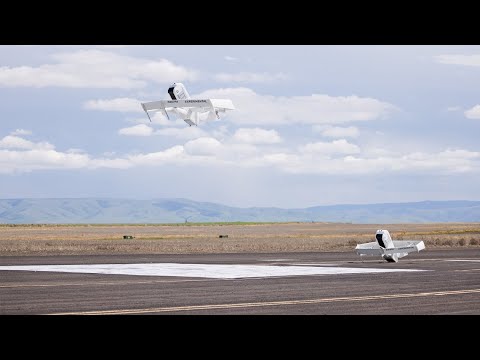
With a market cap of $2.4 trillion, AMZN shares are currently trading around $226.70, up over 3% YTD. It has an EPS (TTM) of 6.13 and a P/E (TTM) of 36.88.
Amazon.com, Inc. (AMZN +1.66%)
As for financials, Amazon reported a 9% increase in its net sales to $155.7 billion in the first quarter ended March 31, 2025. Its operating income was $18.4 billion, and net income was $17.1 billion or $1.59 per diluted share. Operating cash flow was $113.9 billion for the trailing twelve months, while free cash flow was $25.9 billion.
Conclusion: Preparing for the Drone-Powered Future
So, these are some of the industries where drones are becoming an indispensable tool, boosting efficiency, reducing operational costs, and redefining workforce requirements. However, while some traditional manual roles are being replaced by these unmanned aerial vehicles, new opportunities are emerging, demanding a tech-savvy workforce.
It’s clear that the change is coming, which means it’s time for both workers and industries to position themselves for this revolution. Those who adapt will be the ones to survive and thrive.



