Digital Assets
Can AI Evaluate Crypto Whitepapers? A Study Tests It

 Add Securities.io to your preferred sources on Google

From the original Bitcoin (BTC ) whitepaper published in 2008, a massive number of new cryptocurrencies have flourished, with some like Ethereum (ETH ) getting popular enough to become a serious rival to the original. But this also means that due diligence for investors in crypto has become increasingly complex.
This is of course not a unique problem to crypto investments, but the nature of cryptocurrencies makes it harder for most investors. Interested retail investors in particular, but even many institutional investors do not have the mathematical and technical knowledge to fully understand the cryptographic sciences and algorithms underlying most crypto projects.
In addition, digital assets lack a unified reporting format compared to the standardized filings (e.g., prospectuses, 10-K reports) of traditional securities.
So they face a dangerous mix of information overload, unstructured disclosures, and limited regulatory safeguards all at once.
“The numerous collapses of the first wave of Initial Coin Offerings (ICOs) and ensuing losses for investors that were not able to assess the viability of investments based on whitepapers illustrate the need to strengthen due diligence and investor protection tools in innovative finance.”
Information overload and the need to analyze risks objectively sounds like a perfect use case for AI, as new AI systems are specifically designed to handle this kind of complex task.
A group of researchers from the Swiss Financial Market Supervisory Authority FINMA and the University of Liechtenstein has released a new study examining how LLMs could evaluate new crypto projects, especially their technical white papers.
They published their findings in Knowledge and Information Systems1, under the title “LLM application in digital asset assessments: mixed methods research”.
Using LLMs On Crypto White Papers
At their core, “cryptos” are not just speculative investing opportunities, but “digital assets based on protocols embedded in decentralized storage of information, distributed consensus mechanisms and smart contracts”.
And the real risks and potential use cases of new cryptos will depend on these technical characteristics. This is why modern AIs like LLMs (Large Language Models) can help with automated text analysis, knowledge extraction, and comparative assessment of projects.
The question of the reliability of LLMs is, however, an issue. Their usefulness is constrained by limited context windows, difficulties in handling large corpora of documents, and risks of hallucination.
So investors need a proper evaluation of how reliable such tools truly are in the context of evaluating crypto projects.
To assess LLMs’ abilities in this task, the researchers created a framework where they start with data preprocessing, where whitepapers are structured and summarized for analysis, design specific AI prompts, compare the results to human assessments, and ultimately develop a protocol to use LLMs for judging crypto projects’ potential.

Building The Right Tools
Gathering The Right Data
The researchers used the Token Offerings Research Database (TORD) as their primary data source, providing hand-collected information on Initial Coin Offerings (ICOs), Security Token Offerings (STOs), and Initial Exchange Offerings (IEOs).
This includes official project websites, whitepapers, archived web resources, secondary databases, and exchange disclosures and regulatory filings.
This data were used to create a sample including 29 unique token projects for which whitepapers remained accessible, 27 of which carry an aggregated expert rating in TORD.
The main OpenAI GPT−3.5-turbo configuration was selected, as well as two compact open-source models, Qwen2.5-0.5B and Qwen2.5-1.5B. In total, they generated 1,008 complete expert–LLM ratings.
Testing Different Approaches
The researchers used different methods to see how LLMs could be optimally used to study crypto projects.
- Approach 1: partial document rating, involving inputting as much of the whitepaper content as possible into the LLM, truncated at 4000 tokens (approximately 3000 words) to accommodate model limitations.
- Approach 2: summary-based rating, addressing token constraints by adopting a two-step process in which the whitepaper was first summarized and then rated.
- Approach 3: aspect-focused summary rating, further refining summarization by extracting targeted information relevant to investment decision-making−specifically management personality and experience, product characteristics, and market conditions.
- It also spotted potential red flags such as insufficient experience, lack of financial participation, or ill-conceived project structures.
A 120-word limit for the final assessment conclusion produced by the LLMs was determined as optimal to avoid errors and give an easy-to-understand conclusion to a potential user.
Four different prompting strategies were employed to channel the LLM’s reasoning into giving the best possible results:
- Zero-Shot (ZS): providing structured instructions without project-level demonstrations
- Few-Shot (FS): enhanced ZS with explicit evaluation dimensions and specific assessment criteria.
- Chain-of-Thought (CoT): using a stepwise, factor-level rationale.
- Chain-of-Thought with Context and Rubric (CoT-CR): incorporating domain-specific considerations such as token-locking mechanisms and project originality.

LLMs Results
Except for the aspect-focused summary rating, the AI models generally gave the crypto project a higher rating than the human assessments.
“Approaches 1 and 2 often condense narrative content without reliably surfacing red flags or governance signals, which induces optimism bias and systematic overestimation relative to human ratings”
CoT prompts generated the lowest rating overall, notably CoT + aspect-focused summary rating being the only approach resulting in a lower evaluation than human-based ones.
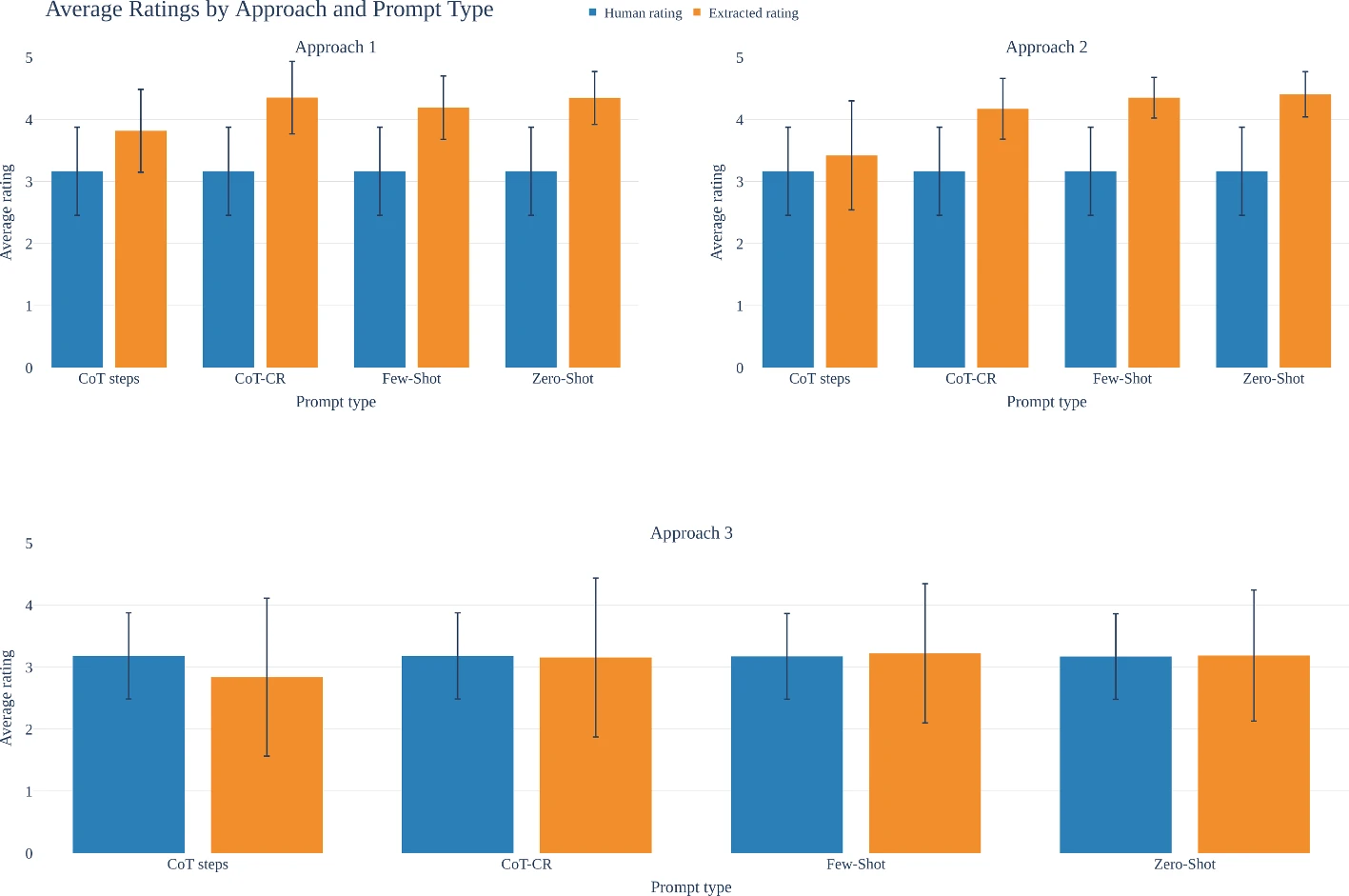
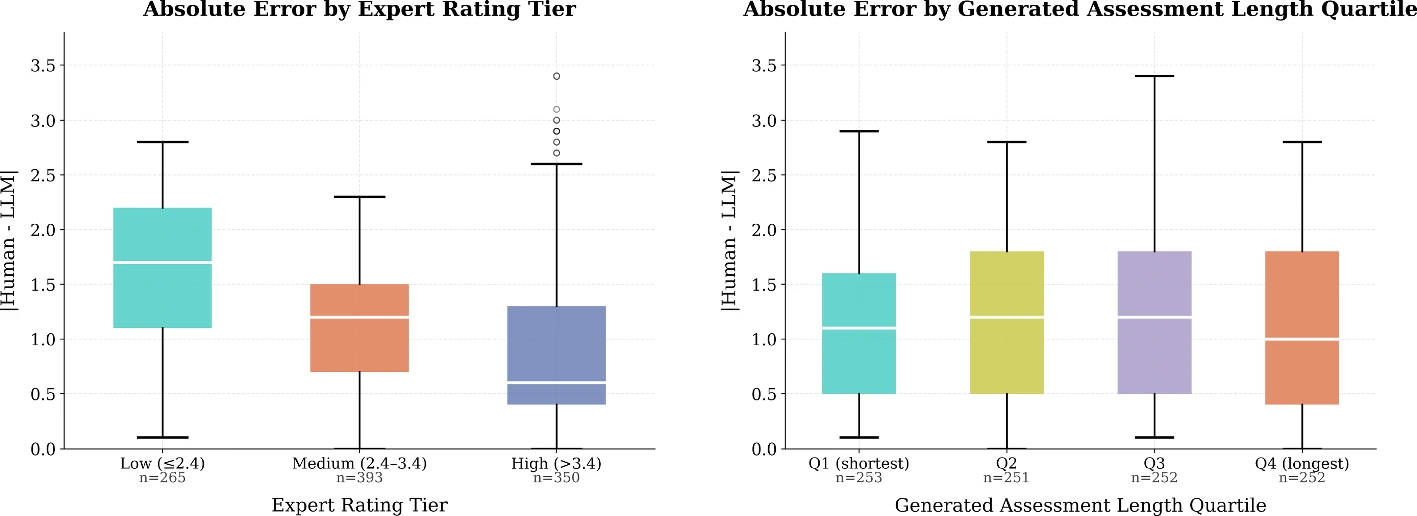
Despite this tendency of overrating, an opposite mild tendency toward underestimation of the strongest projects was also observed.
It should also be noted that when using the Qwen2.5-0.5B and Qwen2.5-1.5B AI models, similar results were obtained to those from GPT−3.5-turbo.
Explaining LLMs Bias
The reason why LLMs tend to overestimate crypto projects with most prompting strategies is that generic and lightly structured summaries tend to preserve the promotional tone of white papers.
In contrast, aspect-focused extraction mostly avoids this issue, but has other limitations. It can move ratings closer to human caution when it captures governance, management, or token-design weaknesses, but it can also over-penalize projects when evidence is incomplete or when isolated negative cues dominate the rating rationale.
This led the researchers to judge LLMs as able to support human research, but not to replace it entirely.
“These mechanisms suggest that the primary design challenge is not only prompt choice, but the construction of reliable intermediate evidence before rating. Consequently, the artifact should be used to flag cases requiring expert attention rather than to produce final investment scores.”
Overall, there is no single “best approach” that can be adopted, at least according to this study.
The lowest error in the current design matrix is obtained by the Structured Summary combined with Chain-of-Thought prompting (Approach 2+ CoT).
But the aspect-focused approach exposes candidate red flags, and its average rating level is closer to the human mean.
Building An AI Crypto Analytical Tool
This led the researcher to give their proposals for the optimal method for using AI in analyzing crypto projects:
- Evidence structuring should precede model rationale generation, to limit error as much as possible.
- Calibration and output-level inspectability should be designed and evaluated separately. Aspect-focused extraction should be used to improve structural auditability and red-flag visibility.
- Model triangulation: observed error patterns should not be attributed to one model family without comparative testing, as it can be a result of the fundamental working of LLMs in general.
“Together, these principles extend the contribution from an application of LLMs to a set of design recommendations for configuring auditable decision-support artifacts in weakly standardized financial disclosure settings.”
Investors Takeaways
This study provides interesting information for investors in both AI and crypto.
On the crypto side, it is clear that LLMs are not (yet?) a solution to replace human-led due diligence. For example, AI models can be fooled by an excessive level of enthusiasm or promotional tone in crypto white papers, leading to a serious risk of overestimating these projects’ potential.
However, using AI to detect red flags, if using the right prompt methodology, can be very useful.
For AI investors, this study illustrates that currently, LLMs are not yet fully able to replace human labor. They are, however, a valuable tool, especially when it comes to sorting out a large volume of technical data.
It also illustrates that learning the right prompting method, as well as designing the right analytical methodology, is crucial for optimal use of AI. From an investing in AI technology point of view, this likely illustrates that most productivity gains from AI will come progressively and not just from models improving. Instead, it will be essential that users get more familiar with AI tools and learn to optimize the quality of the outcome through improved analysis design and prompts.
Investing In Crypto Markets
Coinbase
COIN Price Chart
As cryptocurrencies become more mainstream, more investors are gaining exposure to them or increasing their presence in cryptocurrency markets. The same is true as crypto projects multiply.
This is beneficial to companies like Coinbase, which are closely connected to cryptocurrency trading, asset prices, custody, and institutional participation.
Therefore, investing in crypto exchanges and technology platforms like Coinbase can be a way for investors to get exposure to the crypto market regime, without requiring an arbitrary selection of specific tokens.
However, this does not mean that Coinbase will provide investors in its publicly traded stock the same kind of potential returns (and risks) that direct crypto investment can provide. Instead, it is an investment in crypto-market infrastructure, with Coinbase reporting $246 billion in assets on its platform as of June 30, 2026.
Today, besides Coinbase’s main app and crypto exchange, the company has a series of complementary offerings:
- Coinbase One, a premium membership service offering zero trading fees, boosted staking rewards, and deals with partners like a crypto tax calculator, crypto research, etc.
- Coinbase Advanced, for professional crypto traders.
- Coinbase Wallet, for self-custody of cryptocurrencies outside of exchanges, as well as NFTs.
- Coinbase Earn, a staking service where cryptocurrency owners can lock their crypto in order to earn interest from the network, with $230M earned by Coinbase’s customers in 2023.
- Coinbase Card, a Visa debit card to make purchases using cryptocurrencies, with 1% back in Bitcoin when paying with USD, and 1.5% in USDC when paying with ETH. The card is accepted everywhere Visa debit cards are accepted.
- USD Coin(USDC), a digital stablecoin with a value equal to the US dollar, is looking to create a “digital dollar”.
As more and more advanced tools, including AI, get developed, they will complement existing crypto infrastructure. Now a more mature and dominant platform, Coinbase is well-positioned to capitalize on crypto becoming increasingly mainstream through the growing trends of Bitcoin ETFs, stablecoins, and stock tokenization.
(You can read more about Coinbase’s history, offerings, and investment potential in our dedicated report on the company)
Latest Coinbase (COIN) Stock News and Developments
Study Referenced
1. Yann Thorens, et al. LLM application in digital asset assessments: mixed methods research.Knowledge and Information Systems. 17 October 2026. https://doi.org/10.1007/s10115-026-02910-2