
Υπολογιστική
Είναι ο Εγκέφαλος Κβαντικός Υπολογιστής; Νέες Αντιλήψεις Υποστηρίζουν Ότι Θα Μπορεί

 Προσθέστε το Securities.io στις προτιμώμενες πηγές σας στο Google

Ο Εγκέφαλος Ως Ρολόι Ή Υπολογιστής;
Consciousness, higher levels of thought, and how the brain works are still a mystery today. Over history, the functioning of the human mind has been seen through various analogies, usually using the most advanced technology of the time.
Οι αρχαίοι Έλληνες το έβλεπαν ως υδρόρρολο. Μετέπειτα, στοχαστές πίστευαν ότι λειτουργούσε με την κίνηση των σωματικών υγρών, μετά ως μηχανικό ρολόι, και τέλος ως ηλεκτρικό κύκλωμα. Σήμερα, το θεωρούμε ως έναν πολύ ισχυρό υπολογιστή που τροφοδοτείται από ηλεκτρικά σήματα, με κάθε νευρώνα να λειτουργεί ως ένα είδος βιολογικού τρανζίστορ.
Στην πράξη, καμία από αυτές τις εξηγήσεις, συμπεριλαμβανομένου του «βιολογικού υπολογιστή», δεν εξηγεί πλήρως πώς λειτουργεί ο εγκέφαλος.
Για παράδειγμα, η υπολογιστική ικανότητα του εγκεφάλου λειτουργεί με μόλις 12-25 watt ηλεκτρικής ενέργειας, σχεδόν το πολύ για να τροφοδοτήσει ένα LED φως. Αντίθετα, ένα μόνο τσιπ AI της Nvidia (NVDA ) καταναλώνει 250-700W για πολύ μικρότερη «συνεπής» ικανότητα.
Επίσης δεν είναι σαφές αν η «μεγαλύτερη υπολογιστική ισχύς» είναι πραγματικά η απάντηση για την παραγωγή σύνθετων σκέψεων και αφηρημένης λογικής που να ξεπερνάει την απλή εικασία όπως κάνουν τα τρέχοντα LLM (Μεγάλα Γλωσσικά Μοντέλα).
Γι’ αυτό προτάθηκαν άλλες θεωρίες, κυρίως ότι τα κβαντικά φαινόμενα είναι υπεύθυνα για την εμφάνιση της συνείδησης.
Είναι ο Εγκέφαλος Κβαντικός;
Η Υποστήριξη του Penrose
There is a theory dubbed “quantum consciousness,” which stipulates that brain functions and consciousness are derived from quantum effects like the collapse of the quantum wavefunction.
Αυτό είναι ένα παράξενο κομμάτι της κβαντικής φυσικής, όπου τα σωματίδια περνούν από μια κατάσταση ταυτόχρονων ιδιοτήτων σε μια πιο «κανονική» κατάσταση όπου έχουν ένα καθορισμένο χαρακτηριστικό. Έχει ιδιαίτερα δημοσιευθεί από την έννοια της γάτας του Σκόρντινγκερ.
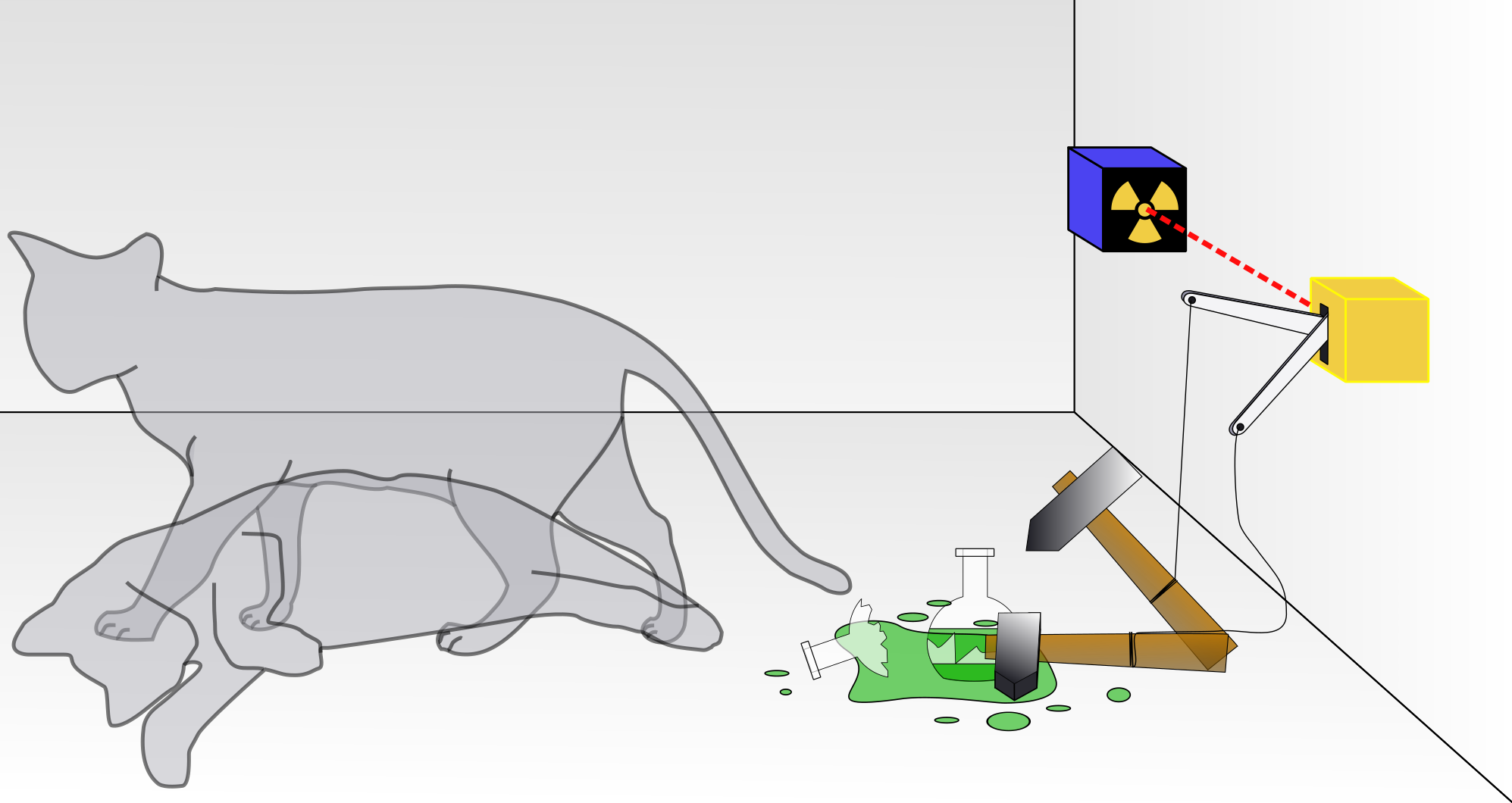
Πηγή: Wikipedia
The quantum consciousness theory has been championed by Sir Roger Penrose, a famous physicist who won the Nobel Prize In Physics in 2020, for his work in astrophysics and the mathematical modeling of black holes.

Πηγή: Nobel Prize
Παρόλο που βρίσκεται εκτός του άμεσου πεδίου του, η φήμη του Πενρόουζ ως παγκόσμιου ιδιοφυούς έδωσε προσοχή σε αυτήν την ιδέα.
Υπολογισμοί Μικροσωληναρίων
Η θεωρία του Πενρόουζ επικεντρώνεται σε δομές στα νευρώνες που ονομάζονται μικροσωληνάρια, τα οποία σχηματίζουν το «σκελετό» των κυττάρων. Αυτές οι δομές είναι απαραίτητες για την εκτέλεση υπολογισμών που τελικά οδηγούν στη συνείδηση. Η ιδέα αυτή δημοσιεύτηκε για πρώτη φορά το 1996.

Αυτή η θεωρία θα μπορούσε επίσης να εξηγήσει πώς λειτουργεί το γενικό αναισθητικό, ένα ερώτημα που παραμένει ανοιχτό παρά τη σχεδόν έναν αιώνα χρήσης. Θα λειτουργούσε εμποδίζοντας το κβαντικό φαινόμενο στα τουβουλίνια, μπλοκάροντας τη συνείδηση αλλά όχι τη μη συνειδητή δραστηριότητα του εγκεφάλου.
Μπορείτε επίσης να δείτε τον Σερ Πενρόουζ να εξηγεί τη θεωρία του σε αυτό το βίντεο 42 λεπτών:

Κριτικές
Η ιδέα ότι η κβαντική υπολογιστική συμβαίνει στον εγκέφαλο έχει αμέσως κριτικαριστεί από μεγάλο μέρος της επιστημονικής κοινότητας. Το κύριο πρόβλημα είναι ότι η κβαντική διεμπλοκή και η κατάρρευση της κβαντικής κυματοσυνάρτησης μπορούν να παρατηρηθούν μόνο σε πολύ ειδικά περιβάλλοντα, γενικά με καθαρά στοιχεία, κενό και/ή πολύ χαμηλή θερμοκρασία, συχνά μόλις λίγα βαθμούς πάνω από το απόλυτο μηδέν.
Αυτές είναι επίσης οι συνθήκες που απαιτούνται σήμερα για τα κβαντικά υπολογιστικά συστήματα, όπως περιγράψαμε στο άρθρο μας για το θέμα: “Η Τρέχουσα Κατάσταση της Κβαντικής Υπολογιστικής”.
Ένας οργανικός εγκέφαλος θα ήταν πολύ ζεστός και πολύ πολύπλοκος μέσος για να διεξάγει οποιονδήποτε κβαντικό υπολογισμό.
Μια Σειρά Κβαντικών Ανακαλύψεων Στον Εγκέφαλο
Η ιδέα ότι κανένα κβαντικό φαινόμενο δεν μπορεί να συμβεί στο ακατάστατο περιβάλλον της οργανικής ύλης αμφισβητείται ολοένα και περισσότερο.
Ήδη υποπτευόμαστε ότι η μαγνητική αίσθηση των πουλιών, που τους επιτρέπει να εντοπίζουν το βορρά και να μεταναστεύουν, συνδέεται με ένα τέτοιο κβαντικό φαινόμενο.
Όταν αυτά τα ριζικά τελικά αντιδράσουν, το αποτέλεσμα θα εξαρτηθεί από τη δύναμη και τον προσανατολισμό του μαγνητικού πεδίου. Η ιδέα είναι ότι το πουλί είναι ευαίσθητο σε αυτό με τρόπο που του επιτρέπει να διακρίνει το βορρά από το νότο. Η διαδικασία είναι εξαιρετικά κβαντική, καθώς τα ηλεκτρόνια του ζεύγους ριζικών είναι διεμπλεγμένα, πράγμα που σημαίνει ότι λειτουργούν ως ένα ενιαίο κβαντικό αντικείμενο, ακόμη και αν βρίσκονται σε απόσταση μεταξύ τους.
Musser, «Θεωρία της ριζικής συνείδησης;»
Πρόσφατες Μετρήσεις
Το 2022, ένα πείραμα φαίνεται να έχει δείξει ότι τα κβαντικά σήματα στον εγκέφαλο συσχετίζονται με τις «ηλεκτρικές δυναμικές που προκαλούνται από τον παλμό της καρδιάς» (HEPs). Αυτό θα μπορούσε να αποδείξει ότι η κβαντική διεμπλοκή είναι δυνατή σε ανθρώπινο σώμα.
(Κβαντική διεμπλοκή είναι όταν 2 σωματίδια συνδέονται μεταξύ τους και μπορούν να «επικοινωνούν» χωρίς σήμα και ταχύτερα από την ταχύτητα του φωτός).
Πιο πρόσφατα, τον Απρίλιο του 2024, μια νέα αντίληψη για τον εγκέφαλο έδειξε ότι τουλάχιστον κάποιο κβαντικό φαινόμενο μπορεί να υπάρχει στα νευρώνια, όπου προηγουμένως θεωρούνταν αδύνατο.
Πιο συγκεκριμένα, πρόκειται για ένα φαινόμενο που ονομάζεται υπερακτινοβολία. Σε μια δημοσίευση με τίτλο «Υπέρ-Ακτινοβολία Υπεριώδους από Μεγάλα Δίκτυα Τρυπτοφάνης σε Βιολογικές Αρχιτεκτονικές», δείχνουν ότι μεγάλες δομές κατασκευασμένες από το αμινοξύ τρυπτοφάνη, όπως το τουβουλίνη των νευρώνων, μπορούν να εμφανίσουν υπερακτινοβολία.

Πηγή: ACS Publication
Μια τέτοια εμφάνιση σταθερών κβαντικών φαινομένων από μικρομετρικές δομές είναι πρωτοφανής, ιδιαίτερα για υλικά τόσο πολύπλοκα και «θορυβώδη» όπως τα βιολογικά μόρια σε ζωντανά κύτταρα.
Πηγαίνοντας ίσως ακόμη πιο μακριά, ορισμένοι επιστήμονες προτείνουν ότι οι μνήμες σε οργανικούς εγκεφάλους δημιουργούνται μέσω ενός ολογραφικού συστήματος που χρησιμοποιεί υπερακτινοβολία.
Λοιπόν, Είναι ο Εγκέφαλος Κβαντικός Υπερυπολογιστής;
Είναι πολύ νωρίς για να το πούμε με βεβαιότητα. Ωστόσο, με την ανακάλυψη της υπερακτινοβολίας στο τουβουλίνη, το κύριο επιχείρημα ότι τα κβαντικά φαινόμενα δεν μπορούν να λειτουργήσουν στις υποδομές των νευρώνων έχει εξαιρετικά εξασθενίσει.
Υπάρχει ακόμη ένα σημαντικό κενό μεταξύ αυτής της παρατήρησης και της απόδειξης ότι η συνείδηση είναι το αποτέλεσμα της «κατάρρευσης της κβαντικής κυματοσυνάρτησης λόγω βαρύτητας», σύμφωνα με τη θεωρία του Πενρόουζ. Παρόλα αυτά, η πρόσφατη ανακάλυψη υποδηλώνει ότι τα νευρώνια θα μπορούσαν να μεταδίδουν πληροφορίες μέσω οπτικών σημάτων, όπως τα οπτικά ίνες.
Αυτό θα αντικαθιστούσε την πιο κοινά κατανοητή ιδέα ότι η νευρωνική σηματοδότηση περιλαμβάνει ιόντα που κινούνται μέσα από τις μεμβράνες από τη μία άκρη του νευρώνα στην άλλη.
Η υπερακτινοβολία είναι ένα εξαιρετικά γρήγορο φαινόμενο που συμβαίνει στο εύρος των πικοδευτοδευτερολέπτων (ένα δισεκατομμυριοστό του χιλιοσκοπίου). Αυτό θα έκανε οποιοδήποτε σήμα που μεταδίδεται μέσω αυτού του φαινομένου εκατοντάδες εκατομμύρια φορές πιο γρήγορο από ό,τι θα επέτρεπαν μόνο οι χημικές διεργασίες.
Εφαρμογές
Νευροεκφυλιστικές Παθήσεις
Παρόλο που είναι συναρπαστικό, μπορεί να μην είναι προφανές ποια είναι η άμεση εφαρμογή μιας τέτοιας ανακάλυψης.
Μία πιθανή εφαρμογή θα μπορούσε να είναι η βοήθεια στην κατανόηση και πρόληψη νευροεκφυλιστικών παθήσεων όπως η νόσος του Αλτσχάιμερ.
Η νόσος του Αλτσχάιμερ έχει συσχετιστεί με υψηλά επίπεδα οξειδωτικού στρες—όταν το σώμα φέρει μεγάλο αριθμό ελεύθερων ριζών, που μπορούν να εκπέμπουν βλαβερά, υψηλής ενέργειας σωματίδια υπεριώδους φωτός.
Η τρυπτοφάνη μπορεί να απορροφήσει αυτό το υπεριώδες φως και να το επαναεκπομπήσει σε χαμηλότερη, ασφαλέστερη ενέργεια. Και, όπως διαπίστωσε αυτή η μελέτη, πολύ μεγάλα δίκτυα τρυπτοφάνης μπορούν να το κάνουν αυτό ακόμη πιο αποδοτικά και ανθεκτικά λόγω των ισχυρών κβαντικών τους επιδράσεων.
Πηγή: The Quantum Insider
Αυτή δεν είναι πραγματικά μια νέα θεωρία, με τα μικροσωληνάρια να υποτίθεται ότι εμπλέκονται στην Αλτσχάιμερ από το 1989. Είναι γνωστό ότι η πρωτεΐνη ταυ αποσυνδέεται από τα μικροσωληνάρια και προσκολλάται σε άλλα μόρια ταυ στην ασθένεια, σχηματίζοντας νήματα που τελικά ενώνονται για να σχηματίσουν σπείρες μέσα στα νευρώνια.
Κβαντική Υπολογιστική
Η απόδειξη ενός κβαντικού φαινομένου που επιβιώνει σε ακατάστατο περιβάλλον αμφισβητεί όλα όσα θεωρούσαμε ότι ξέρουμε για αυτά τα φαινόμενα.
Θα μπορούσε να είναι εξαιρετικά σημαντικό για το αναδυόμενο πεδίο της κβαντικής υπολογιστικής. Το κύριο εμπόδιο στην ανάπτυξη κβαντικών υπολογιστών είναι η διατήρηση του κβαντικού φαινομένου, ώστε να μην καταρρεύσει σε «κανονική» ύλη.
Μέχρι τώρα, η μόνη στρατηγική ήταν η δημιουργία ενός υπερκρύου ειδικού περιβάλλοντος για την αποθήκευση του qubit. Αυτό αποτελεί τόσο τεχνική πρόκληση όσο και πολύ ενεργοβόρο, αυξάνοντας την πολυπλοκότητα και το κόστος αυτού του τύπου υπολογισμού.
Αυτά τα νέα αποτελέσματα θα ενδιαφέρουν την ευρεία κοινότητα των ερευνητών σε ανοιχτά κβαντικά συστήματα και κβαντική υπολογιστική, επειδή οι θεωρητικές μέθοδοι που χρησιμοποιήθηκαν σε αυτή τη μελέτη εφαρμόζονται ευρέως σε αυτά τα πεδία για την κατανόηση σύνθετων κβαντικών δικτύων σε θορυβώδη περιβάλλοντα
Καθ. Νικολό Ντεφού – Ομοσπονδιακό Ινστιτούτο Τεχνολογίας (ETH) Ζυρίχης στην Ελβετία
Αυτό ανοίγει το δρόμο για πιο αποδοτικές και ίσως πιο σταθερές και λιγότερο ενεργοβόρες διαδικασίες για τις μελλοντικές γενιές κβαντικών υπολογιστών.
Μια άλλη επιλογή θα μπορούσε να είναι η αξιοποίηση της υπερακτινοβολίας, η οποία τώρα αποδείχθηκε ως ένα πολύ πιο ανθεκτικό φαινόμενο από ό,τι θεωρούσαμε προηγουμένως.
“Η υπερακτινοβολία ενός μόνο φωτονίου υπόσχεται να προσφέρει νέα εργαλεία για την αποθήκευση κβαντικής πληροφορίας, και αυτή η εργασία παρουσιάζει τις επιδράσεις της σε ένα εντελώς νέο και διαφορετικό πλαίσιο.
Θα εξετάζουμε σίγουρα στενά τις συνέπειες για τα κβαντικά φαινόμενα σε ζωντανά συστήματα για τα επόμενα χρόνια.
Marlan Scully – Πρωτοπόρος του λέιζερ & θεωρητικός φυσικός κβαντικής οπτικής
Έτσι, όχι μόνο η ίδια η υπολογιστική μπορεί κάποια μέρα να βασίζεται σε μικρομετρικά κβαντικά φαινόμενα, αλλά η αποθήκευση μνήμης/πληροφορίας θα μπορούσε επίσης να χρησιμοποιεί την υπερακτινοβολία.
Βιολογικοί Υπολογιστές
Τέλος, εάν τα νευρώνια μπορούν πραγματικά να εκτελούν κάποιο είδος κβαντικής υπολογιστικής με οποιονδήποτε τρόπο, αυτό θα μπορούσε να αλλάξει το δυναμικό των εγκεφαλικών οργανοειδών. Αυτά είναι τεχνητά καλλιεργημένα ιστούς εγκεφάλου που χρησιμοποιούνται σήμερα για έρευνα βιοτεχνολογίας σε νευροεκφυλιστικές παθήσεις και τον εγκέφαλο γενικά.
Τα οργανοειδή θα μπορούσαν να χρησιμοποιηθούν για τη δημιουργία βιολογικών επεξεργαστών τσιπ, οι οποίοι θα ήταν πολύ πιο ενεργειακά αποδοτικοί από τα τσιπ βασισμένα σε πυρίτιο. Με την AI να προβλέπεται ότι θα καταναλώνει αυξανόμενο ποσοστό της παγκόσμιας ενεργειακής μας προσφοράς, αυτό θα μπορούσε να γίνει απαραίτητο νωρίτερα παρά αργότερα.
Εξερευνήσαμε την πρόοδο της τεχνολογίας των εγκεφαλικών οργανοειδών στο άρθρο μας «Σημαντικά Βήματα Προς την Οργανοειδική Νοημοσύνη που Πραγματοποιούνται».
Επένδυση στον Κβαντικό Εγκέφαλο
Ως ιδέα στην άκρη της επιστήμης, δεν υπάρχει επί του παρόντος άμεση εφαρμογή αυτών των ανακαλύψεων. Ωστόσο, εταιρείες που σχετίζονται με την κβαντική υπολογιστική και τα εγκεφαλικά οργανοειδή είναι διαθέσιμες σε επενδυτές.
Μπορείτε να επενδύσετε σε εταιρείες σχετικές με την κβαντική τεχνολογία μέσω πολλών χρηματιστών, και μπορείτε να βρείτε εδώ, στο securities.io, τις προτάσεις μας για τους καλύτερους χρηματιστές στις ΗΠΑ, Καναδά, Αυστραλία, Ηνωμένο Βασίλειο, καθώς και σε πολλές άλλες χώρες.
Αν δεν ενδιαφέρεστε να επιλέξετε συγκεκριμένες εταιρείες κβαντικής υπολογιστικής, μπορείτε επίσης να εξετάσετε τα ETFs κβαντικής υπολογιστικής όπως το Defiance Quantum ETF (QTUM) που θα προσφέρει πιο διαφοροποιημένη έκθεση για να εκμεταλλευτείτε τη βιομηχανία κβαντικής υπολογιστικής. Ή μπορείτε να δείτε το άρθρο μας για τις «5 Καλύτερες Εταιρείες Κβαντικής Υπολογιστικής».
Εταιρείες Κβαντικής & Νευρωνικής Υπολογιστικής
1. Intel
Η Intel (INTC ) είναι ένας μεγάλος κατασκευαστής τσιπ και φαίνεται να στοχεύει να αξιοποιήσει αυτή τη δύναμη στον χώρο της κβαντικής υπολογιστικής.
Πρόσφατα κυκλοφόρησε το «Tunnel Falls», το «πιο προηγμένο σιλικόνη spin qubit τσιπ». Το αξιοσημείωτο είναι ότι δεν είναι ένα πρωτότυπο, αλλά ένα τσιπ κατασκευασμένο σε κλίμακα, με απόδοση 95% σε όλο το wafer και ομοιομορφία τάσης. Αυτό ανοίγει το δρόμο για μαζική παραγωγή κβαντικών τσιπ, κάτι που μέχρι τώρα ήταν ακατόρθωτο σε μια νεοσύστατη και ταχέως μεταβαλλόμενη βιομηχανία.

Πηγή: Intel
Πιστή στην κληρονομιά της, η Intel αναπτύσσει επίσης το λογισμικό για τη χρήση των τσιπ της, με την κυκλοφορία του Intel Quantum SDK. Αυτό παρέχει οδηγίες για προγραμματιστές ώστε να αναπτύξουν λογισμικό κβαντικής υπολογιστικής συμβατό με το σχεδιασμό των κβαντικών τσιπ της Intel, το οποίο ιστορικά αποτελεί ένα πολύ ισχυρό & κερδοφόρο επιχειρηματικό προβάδισμα για την παραδοσιακή επιχείρηση τσιπ της Intel.

Πηγή: Intel
Η άφιξη της κλιμακούμενης παραγωγής κβαντικών τσιπ θα μπορούσε να είναι τόσο επαναστατική για τη βιομηχανία όσο οποιοδήποτε άλλο τεχνικό επιστημονικό επίτευγμα, μειώνοντας το κόστος και θέτοντας κοινά πρότυπα προγραμματισμού και αρχιτεκτονικές τσιπ.
Η Intel είναι μια εταιρεία που γνωρίζει από την εμπειρία της πόσο ισχυρή δύναμη μπορεί να είναι αυτό στη βιομηχανία υπολογιστών. Συνεχίζει να εκμεταλλεύεται τις καινοτομίες και τα πατέντες της από τη δεκαετία του 1960 και μετά.
2. BICO Group AB (BICO.ST)
Ένας τρόπος για τη μελέτη του εγκεφάλου και των νεύρων είναι η χρήση εγκεφαλικών οργανοειδών. Αυτά τα τεχνητά δημιουργημένα μίνι-εγκέφαλα μπορούν να χρησιμοποιηθούν για την αναπαραγωγή σε εργαστήριο της αντίδρασης των νευρώνων σε πιθανές θεραπείες, βοηθώντας τους ερευνητές να βρουν θεραπεία για τον πλήρη πραγματικό εγκέφαλο.
Συζητήσαμε πιο αναλυτικά πώς λειτουργεί και τις τελευταίες εξελίξεις σε αυτόν τον τομέα στο «Σημαντικά Βήματα Προς την Οργανοειδική Νοημοσύνη που Πραγματοποιούνται».
Πρόσφατα, πολύ πιο σύνθετα εγκεφαλικά οργανοειδή έχουν τυπωθεί 3D από ερευνητές του Πανεπιστημίου του Wisconsin–Madison. Το έκαναν με έναν Cellink βιοεκτυπωτή, ανοίγοντας νέες δυνατότητες για αυτή τη μηχανή στην έρευνα νευροεπιστήμης.

Πηγή: Cellink
Το 2021, η Cellink μετονομάστηκε σε BICO Group, μετά την εξαγορά της Cytena το 2019 και της Scienion το 2020.
Η Cellink παραμένει το εμπορικό σήμα για το τμήμα βιοεκτύπωσης της επιχείρησης. Η ιδέα είναι η επαναχρησιμοποίηση μεθόδων 3D εκτύπωσης για τη δημιουργία υφασμάτων ή οργάνων κατ’ απαίτηση. (Μπορείτε να διαβάσετε μια συζήτηση για αυτό το θέμα στο «3D Εκτύπωση Ανθρώπινων Οργάνων – Πόσο Ρεαλιστικό Είναι;»).
Η Βιοεκτύπωση αποτελεί περίπου το 1/5th της επιχείρησης, με το τμήμα αυτοματοποίησης βιοεπιστήμης να δημιουργεί πάνω από 3/5th των εσόδων.

Πηγή: BICO Group AB
Αν και δεν είναι μοναδική στον τομέα, η Cellink είναι σαφώς ένας πολύ προχωρημένος κατασκευαστής εξοπλισμού βιοεκτύπωσης. Η επίτευξη του Pr Zhang με τη χρήση αυτών των μηχανών δείχνει το δυναμικό τους στην έρευνα νευρολογίας, έναν τομέα που αυτή τη στιγμή δεν χρησιμοποιεί πραγματικά τη βιοεκτύπωση.
Σε μακροπρόθεσμη βάση, οι εταιρείες βιοεκτύπωσης πιθανότατα θα εξελιχθούν από την παροχή εργαλείων σε ερευνητές σε προμηθευτές θεραπειών βιοεκτύπωσης για φαρμακευτικές εταιρείες. Αυτό, με τη σειρά του, θα αλλάξει εντελώς τον αριθμό των βιοεκτυπωτών σε χρήση και, πιο σημαντικό, τον όγκο των αναλωσίμων που πωλούνται κάθε μήνα.
Αυτή είναι η ίδια διαδικασία που συνέβη για άλλους κατασκευαστές εξοπλισμού βιολογικών εργαστηρίων, συμπεριλαμβανομένων των μηχανών αλληλούχισης γονιδιώματος από την PacBio (PACB) και την Illumina (ILMN), που καταλήγουν να κερδίζουν το 80% των εσόδων τους από επαναλαμβανόμενες πωλήσεις αναλωσίμων.
Εάν η έρευνα για τα εγκεφαλικά οργανοειδή λάβει έντονη ώθηση λόγω του δυναμικού της στην υπολογιστική και την κβαντική φυσική, θα μπορούσε να είναι πολύ ωφέλιμη για τις εταιρείες που τα παράγουν, όπως η Cellink/BICO.
3. Final Spark
Ιδρύθηκε από τους Martin Kutter και Fred Jordan το 2014 και εδρεύει στην Ελβετία, η Final Spark προωθεί βιολογικούς επεξεργαστές τσιπ που καταναλώνουν πολύ λιγότερη ενέργεια (1 δισεκατομμύριο φορές πιο αποδοτικοί από τα σιλικόνια τσιπ).
Καθώς η startup δηλώνει, έχει ήδη δοκιμάσει 10 εκατομμύρια νευρώνες στην προσπάθειά της να δημιουργήσει μηχανές σκέψης από ζωντανούς ανθρώπινους νευρώνες που προέρχονται από το δέρμα.
Η startup αξιοποιεί εξελιγμένες τεχνικές καλλιέργειας κυττάρων για να δείξει τη δυνατότητα αυτοσυντηρούμενης υπολογιστικής για τη δημιουργία μελλοντικών μοντέλων AI.
Η Final Spark προσφέρει τώρα πρόσβαση στη βιουπολογιστική της ικανότητα μέσω του cloud. Η Neuroplatform της είναι διαθέσιμη σε ερευνητικά ιδρύματα με μηνιαία τιμή $500 ανά χρήστη.



