
Market News
Canada’s $25B Strong Fund: A Reset for Economic Sovereignty

 Add Securities.io to your preferred sources on Google

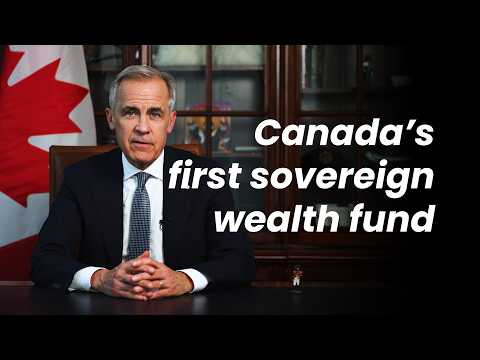
Canada has announced the Canada Strong Fund, a proposed $25 billion national sovereign wealth fund designed to invest alongside private capital in major domestic projects. The fund represents a potentially significant shift in Canadian industrial policy, moving beyond traditional grants and loans toward an equity-based model intended to generate commercial returns while supporting long-term national priorities.
The central idea is straightforward: Canada possesses vast strategic assets, including energy, critical minerals, agriculture, infrastructure, and advanced industrial capacity, but has not always captured the full ownership economics tied to their development. By creating a national investment vehicle, the government is attempting to increase Canadian participation in the assets and supply chains likely to define the next phase of global economic competition.
The Structural Architecture of Sovereign Wealth
The primary challenge for large-scale industrial projects has often been the reliance on foreign capital, fragmented public funding, or debt-heavy financing structures. When external entities provide much of the financing for Canadian resource and infrastructure development, a portion of the long-term economic upside can flow outside the country. This does not mean Canada faces a classic resource curse, but it does reflect a persistent value-capture problem: the country can supply raw materials and strategic assets without always retaining proportional ownership of the wealth they create.
The Canada Strong Fund is intended to address that gap through an initial federal contribution of $25 billion. Unlike conventional program spending, the fund is designed to deploy capital commercially, including through equity investments in Canadian projects and companies. In theory, this allows the public to benefit not only from tax revenue and employment, but also from ownership stakes and investment returns.
This model could be relevant across multiple strategic sectors. A port expansion in British Columbia, a critical minerals project in Ontario, an agricultural infrastructure project in the Prairies, or a trade corridor in Atlantic Canada could all fit within the broader logic of a national investment fund. However, the final scope will depend on the fund’s mandate, governance structure, due diligence standards, and ability to select projects based on commercial merit rather than short-term political pressure.
Strategic Response to Strained Relations
Although the fund is a domestic policy tool, its creation is closely tied to Canada’s changing relationship with the United States. In an environment shaped by trade tensions, tariff threats, and renewed debate over North American economic dependence, the Canada Strong Fund is being positioned as a way to strengthen domestic supply chains and reduce overreliance on any single external market.
By building a larger pool of Canadian-controlled investment capital, the fund could help ensure that major projects in energy, mining, agriculture, and infrastructure are not overly dependent on foreign financing or delayed by political shifts outside Canada. If executed well, it could give Canada more leverage in trade negotiations by strengthening the domestic ownership base behind strategic sectors.
Why This Model Matters for Canadians
For Canadians, the significance of the Canada Strong Fund lies less in the headline size of the initial contribution and more in the investment model. A properly structured sovereign wealth fund can convert national assets into long-term financial participation. The potential advantages include:
- Domestic Ownership: The fund is intended to keep more of the economic upside from Canadian resources and infrastructure within Canada.
- Long-term Capital: A professionally managed fund can support projects with development timelines that exceed normal political cycles.
- Commercial Discipline: Equity-based investment can create stronger incentives for project selection, performance, and accountability than non-repayable subsidies.
- Industrial Growth: Patient capital can help unlock large projects in critical minerals, energy systems, ports, corridors, agriculture, and advanced manufacturing.
The risk, however, is that the fund could become a politically directed financing vehicle rather than a disciplined sovereign investment institution. The difference will depend on how independently it operates, how transparent its reporting becomes, and whether it is allowed to reject projects that serve political narratives but fail commercial due diligence.
Global Benchmarks: Learning from the Best
The concept of a national wealth fund is not new. Several of the world’s most stable and strategically positioned economies have used sovereign wealth funds to manage national surpluses, diversify economic exposure, and build intergenerational wealth. However, Canada’s proposed model is structurally different from many of the best-known examples because it is being launched through a federal contribution rather than from a large fiscal or petroleum surplus.
| Global Fund | Origin of Capital | Investment Philosophy | Long-term Impact |
|---|---|---|---|
| Norway Government Pension Fund Global | Oil and gas revenues | Global diversification and long-term capital preservation | Converts petroleum wealth into intergenerational financial assets |
| Singapore Temasek | Government-owned corporate assets | Active equity ownership and strategic global investing | Helped support Singapore’s development as a global financial and industrial hub |
| Abu Dhabi Investment Authority | Petroleum surplus | Broad multi-asset global allocation | Supports diversification away from long-term oil dependence |
| Canada Strong Fund | Initial federal contribution | Domestic strategic investment alongside private capital | Intended to increase Canadian participation in major national projects |
Norway’s Government Pension Fund Global is perhaps the most prominent example of resource wealth being converted into long-term financial assets. The Norwegian model demonstrates that when a country treats natural resources as a capital base rather than only a source of near-term revenue, it can create durable financial benefits for future generations. Singapore offers a different lesson: strategic public ownership, when paired with professional management and commercial discipline, can help build national champions and strengthen a country’s position in global markets.
Canada should not assume that copying these models will automatically produce the same outcome. Norway built its fund from petroleum revenues and a strong fiscal framework. Singapore developed its model around government-linked companies and strategic ownership. Canada’s challenge is different: it must build credibility from the start while proving that a federally seeded fund can generate commercial returns without becoming politicized.
The Mechanics of Compounding and Independence
The long-term success of sovereign wealth funds typically depends on two related principles: independence and compounding. Independence allows investment decisions to be made according to risk-adjusted return, strategic relevance, and commercial due diligence rather than electoral timelines. Compounding allows successful investments to recycle gains back into the fund, gradually expanding the capital base over time.
The Canada Strong Fund is expected to operate at arm’s length from government, with professional management and independent oversight. That structure is essential. Without it, the fund risks becoming another industrial policy account subject to political allocation. With it, the fund could become a durable national balance-sheet asset capable of supporting projects that are commercially sound but too large, complex, or long-term for conventional financing alone.
The reinvestment model is equally important. If returns are generated and recycled into new investments rather than absorbed into annual operating budgets, the fund could develop a compounding effect. Over time, that could create a permanent source of non-tax revenue and strategic investment capacity. However, that outcome is not guaranteed. It will depend on project quality, governance discipline, market conditions, and the degree to which the fund avoids using public capital to absorb risks that private investors are unwilling to price appropriately.
Public-Market Implications: Where Investors Should Look
As the Canada Strong Fund develops, its secondary effects may be visible across public markets. The fund’s mandate to invest in trade, energy, infrastructure, critical minerals, agriculture, and related sectors could create a long-term signal for investors: these are areas where national policy, capital formation, and commercial opportunity may increasingly overlap.
Potential beneficiaries could include Canadian infrastructure operators, utilities, pipeline companies, engineering and construction firms, rail and logistics providers, critical minerals developers, and companies involved in grid modernization or energy security. The fund itself should not be treated as a direct endorsement of any single stock, but it may help identify sectors where public and private capital are likely to converge.
Enbridge Inc. (ENB ) is one example of the type of established Canadian infrastructure company that could be relevant in this environment. As a major operator of energy transportation and infrastructure assets, Enbridge sits within a category that aligns with the fund’s broader focus on energy security, trade resilience, and long-lived physical assets.
ENB Price Chart
That does not mean Enbridge is a guaranteed beneficiary, nor does it eliminate company-specific risks. Rather, it illustrates how a national investment strategy focused on infrastructure and energy could increase investor attention on large Canadian firms with the operational capacity to build, maintain, or partner on strategic assets.
Democratizing Wealth: The Retail Investment Product
One of the most distinctive elements of the Canada Strong Fund is the government’s stated intention to create a retail investment product that would allow individual Canadians to participate. This would be a notable departure from the traditional sovereign wealth fund model, where citizens generally benefit indirectly through national savings, public finances, or future government capacity rather than through a dedicated investment product.
However, this section of the fund remains especially important to treat carefully. The government has indicated that Canadians should have an opportunity to invest, but the final design of the retail product remains subject to consultation. That means details such as eligibility, account availability, liquidity, fees, risk exposure, tax treatment, minimum investments, and any capital-protection features should not be assumed until formally released.
How Canadians May Gain Access
If implemented as described, the retail product could eventually be made available through familiar financial channels, such as banking or brokerage platforms. The goal would be to give Canadians a direct way to participate in a portfolio tied to national industrial development. Potential benefits could include:
- Direct Participation: Canadians may gain access to an investment vehicle connected to major domestic infrastructure and industrial projects.
- National Wealth Building: The product could create a more direct link between household savings and the growth of Canadian strategic assets.
- Long-term Exposure: Investors may receive exposure to sectors that are difficult to access through standard public-market products alone.
The main caution is risk. Infrastructure, energy, mining, and industrial projects can involve long timelines, permitting challenges, cost overruns, commodity exposure, political risk, and liquidity constraints. Unless the government explicitly provides capital protection or a defined risk-sharing mechanism, investors should assume that participation would involve real investment risk.
Participation Rules for Foreign Investors
The primary mandate of the Canada Strong Fund is to advance Canadian economic interests and increase domestic participation in strategic assets. While the fund may invest alongside international institutions where doing so helps finance large projects, the retail investment product is expected to prioritize Canadians. Final eligibility rules will depend on the design released after consultation.
The Path to Economic Sovereignty
The creation of the Canada Strong Fund marks a notable shift in how Canada is thinking about industrial policy, national savings, and strategic ownership. Instead of relying only on subsidies, grants, or tax incentives, the government is proposing a model in which public capital takes equity-like exposure to projects intended to strengthen the country’s long-term economic position.
The opportunity is significant. If managed well, the fund could help Canada retain more ownership of its resource base, accelerate strategic infrastructure development, attract private-sector co-investment, and give Canadians a clearer stake in national growth. It could also provide a stronger response to a global environment defined by trade fragmentation, energy security concerns, critical mineral competition, and renewed industrial policy among advanced economies.
The risks are equally important. A sovereign wealth fund only works if it is governed professionally, insulated from short-term politics, transparent enough to maintain public trust, and disciplined enough to avoid funding weak projects under the banner of national interest. The Canada Strong Fund is not yet a finished institution. Its eventual value will depend on the details that follow: mandate, governance, reporting, investment criteria, retail-product design, and execution quality.
For now, the fund should be viewed as a major policy framework rather than a completed investment vehicle. It has the potential to become a meaningful engine of Canadian wealth creation, but that potential will only be realized if the structure is built around commercial discipline, public accountability, and long-term national value.



