
Best Of
6 Best Cryptocurrency Tax Tools and Apps (2026)

 Add Securities.io to your preferred sources on Google
Securities.io may receive compensation when you use links to products we review. This does not influence our editorial evaluations. We are not a registered investment adviser; this is not investment advice. Read our affiliate disclosure.

Key PointsCrypto tax tools depend on complete transaction histories and correct country settings…
View more
- Crypto tax tools depend on complete transaction histories and correct country settings to calculate accurately.
- Summ targets DeFi and NFT users with accountant-ready exports and historical tax reports across multiple years.
- TokenTax pairs software with professional preparers for investors who want human help reconciling complex records.
Cryptocurrency has become a mainstream asset class, but when tax season arrives, many investors find themselves overwhelmed by complex reporting rules. Between hundreds of transactions across multiple wallets, DeFi protocols, and centralized exchanges, proper reporting is a serious challenge. The good news? Crypto tax apps can make the process much easier.
Below are six of the best cryptocurrency tax tools, each offering unique strengths. Whether you’re a casual trader or a DeFi power user, these platforms can help organize your records and prepare reports while saving time. Their calculations still depend on complete transaction histories and the correct settings for your country.
Key Considerations When Choosing a Crypto Tax Tool
- Exchange & Wallet Integrations: Make sure the platform supports your specific exchanges, blockchains, and wallets. Check whether it imports automatically or requires CSV files.
- DeFi & NFT Support: Some apps specialize in simple trades, while others track complex DeFi, NFT, and staking transactions. Even supported transactions may need manual review.
- Tax-Loss Harvesting Tools: Advanced features can highlight potential opportunities to reduce taxable gains. Whether a loss is deductible depends on local rules and your circumstances.
- Country & Filing Support: Check whether the tool generates reports suitable for your country’s tax system, including the IRS, CRA, HMRC, or ATO. Country-specific forms, generic calculations, and full tax-return filing are different services.
- Pricing & Plans: Many tools base pricing on transaction volume. Free plans typically cover imports, tracking, or previews, while downloadable tax reports require payment. Check whether you are buying one tax year or an automatically renewing subscription.
- Security & Privacy: Use read-only exchange connections where available. A tax app should not need your wallet’s seed phrase or private keys.
For U.S. investors, Form 1099-DA reporting began with gross proceeds from 2025 transactions, with cost-basis reporting for certain covered transactions beginning in 2026. A broker’s form may still lack information about assets transferred from other wallets, making a complete transaction history especially useful.
Securities.io may earn a commission when you purchase through some of the links below.
1. Summ
Summ, formerly Crypto Tax Calculator, has emerged as a powerful platform for simplifying crypto tax reporting and portfolio tracking. Known for its ability to aggregate transactions across wallets, exchanges, DeFi protocols, and NFTs, Summ helps transform complex on-chain activity into accountant-ready reports. Its dashboard provides portfolio tracking, cost-basis calculations, and tools for reviewing transaction classifications.
The platform offers TurboTax-compatible exports and supports thousands of integrations across exchanges, blockchains, wallets, and protocols. Its QuickBooks Online integration is available through a Summ Business Plan, allowing businesses to export categorized crypto transactions as accounting entries.
Paid personal subscriptions provide access to historical tax reports as well as the current year, subject to plan limits. That makes Summ worth considering if you need to work through several years of activity. Missing purchases and unfamiliar DeFi transactions still need attention before reports are finalized.
Pros and Cons
- Broad support for DeFi, NFTs, and multiple blockchains
- Accountant-ready exports and historical tax reports
- Business accounting integration with QuickBooks Online
- Tax-report access requires a paid plan
- QuickBooks integration requires a Business Plan
- Complex activity can still require manual reconciliation
Why Choose Summ?
Summ’s automation, reporting tools, and support for DeFi and NFT transactions make it an appealing option for investors seeking clarity without managing everything in spreadsheets. Its historical reporting is also useful for investors catching up on previous tax years.
Special Offer
Securities.io readers can access a 20% discount through our partner link. Confirm the eligible plan, discount, and renewal price at checkout.
2. CoinTracker
CoinTracker remains a well-established option for crypto tax reporting and portfolio tracking. With more than 500 exchange, wallet, and blockchain integrations, including Coinbase, Binance, and Kraken, it helps bring scattered transactions into one place. Its web dashboard and mobile apps also make it useful for monitoring a portfolio throughout the year.
Supported integrations include Robinhood and the Sui blockchain, although import methods and the transactions captured vary by integration. Its transaction-freezing feature can preserve the records used for a completed tax year, helping prevent later recalculations from changing that history.
CoinTracker also offers a Full Service plan with a dedicated account manager to help reconcile crypto records. Despite the name, CoinTracker does not prepare or file your tax return. You use its reports with filing software or a tax professional.

Pros and Cons
- 500+ exchange, wallet, and blockchain integrations
- Web and mobile portfolio tracking
- Established Coinbase tax partnership
- Higher transaction volumes and assisted services increase costs
- Free tracking does not include downloadable tax forms
- Full Service covers reconciliation rather than tax-return filing
Why Choose CoinTracker?
CoinTracker’s broad exchange coverage and portfolio tools make it a practical choice for investors using several platforms. Its partnership with Coinbase (COIN ) adds convenience for Coinbase customers who also transact elsewhere.
3. Koinly
Koinly has emerged as a popular choice thanks to its multi-country support and user-friendly interface. With more than 900 exchange and wallet integrations, it is especially useful for investors seeking reports tailored to tax systems such as those in the U.S., U.K., Canada, and Australia.
The platform combines transaction imports, transfer matching, portfolio tracking, and capital-gains previews. Users can review their data before purchasing a report, with paid plans priced by transaction volume for a specific tax year rather than an ongoing subscription.
Koinly also supports futures and perpetuals reporting. Realized profit and loss, funding fees, and futures fees can appear in its “Other gains” calculations. This is a software reporting category, so investors still need to check that the treatment matches their country’s rules and the nature of their activity.

Pros and Cons
- Country-specific reporting for several major tax systems
- 900+ exchange and wallet integrations
- Free portfolio tracking and tax previews before purchasing reports
- Complex DeFi and derivatives activity can require adjustments
- Downloadable tax reports require a paid plan
- Reports for separate tax years require separate purchases
Why Choose Koinly?
Koinly shines for investors who value broad international coverage and an accessible interface. Its dashboards provide year-round portfolio insights, while DeFi and NFT support help bring more complex activity into the same reporting workflow.
4. TokenTax
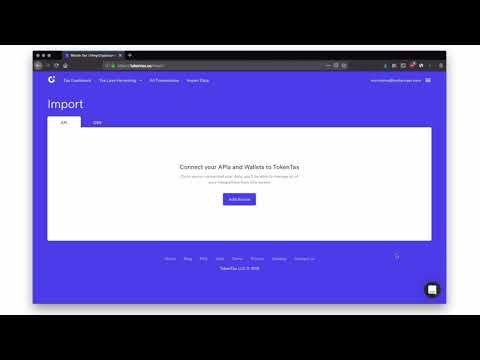
TokenTax differentiates itself by combining crypto tax software with an accounting firm. Users can import transactions and generate reports themselves, or purchase professional services to help reconcile records and prepare their returns. It is a strong choice for investors who prefer a more hands-off approach, especially those who trade heavily in DeFi and NFTs.
Full tax-return preparation and filing are available through a separately purchased filing package. They are not automatically included with every software plan. Before signing up, confirm the jurisdiction covered, the work included, and whether complex transactions will require additional reconciliation fees.
Higher-tier plans provide more assistance with complicated records, including activity spread across centralized exchanges and decentralized applications. This can be particularly useful when automated imports leave gaps that need a person to investigate.
Pros and Cons
- Optional tax preparation and filing by CPAs and enrolled agents
- DeFi and NFT support
- Professional reconciliation services for complex records
- Assisted services carry premium pricing
- Full filing requires an additional package
- Complex cases may require extra fees and more preparation time
Why Choose TokenTax?
TokenTax is worth considering for busy professionals or high-volume traders who want human assistance alongside software. It bridges the gap between importing transactions and resolving the difficult accounting questions that automation alone may leave unanswered.
5. CoinLedger
CoinLedger is designed for speed and simplicity. It focuses on importing transactions, calculating gains and losses, and producing reports for tax preparation. While it supports DeFi and NFTs, its biggest strength is an approachable workflow for investors who want to get their records organized without becoming accounting experts.
Users can import transactions and explore the platform before buying a tax report. Paid plans are based on transaction volume for the selected tax year, with exports for tax professionals and supported filing software, including TurboTax.
TaxAct users should note an important change: according to CoinLedger’s current instructions, TaxAct no longer accepts crypto gain/loss CSV imports for tax year 2025 and later. The supported workflow uses consolidated Form 8949 reports and requires users to enter the relevant totals and attach the forms. Check the current instructions for your filing software before purchasing.

Pros and Cons
- Beginner-friendly setup and reporting workflow
- TurboTax-compatible exports and accountant-ready reports
- Free imports and portfolio tools before purchasing a report
- Tax reports require payment
- TaxAct reporting now involves additional manual steps
- Missing cost basis and unfamiliar transactions still require review
Why Choose CoinLedger?
CoinLedger is a good option for newcomers or anyone seeking a straightforward reporting tool. Trying its imports first is a practical way to check whether it captures your activity before committing to a paid report.
6. Blockpit
Blockpit combines crypto tax reporting with portfolio tracking and optimization tools. The company acquired Accointing in 2023, bringing that business into its platform. Investors can import transactions, review their holdings, and purchase reports for supported tax systems.
Its country coverage needs a closer look than a simple country count suggests. Blockpit offers localized reports and forms for selected jurisdictions, while other countries receive customized calculations or generic reports. Check its country-support guide to see exactly what is available where you file.
Blockpit Plus is an optional annual subscription for features such as automatic syncing, holding-period tracking, and simulations of potential sales. Tax reports are purchased separately for individual tax years. Buying Plus does not include tax-report downloads, and buying a tax report does not require a Plus subscription.

Pros and Cons
- Portfolio tracking alongside tax calculations
- Localized tax reports in supported countries
- Optional tools for reviewing potential sales before trading
- Plus subscriptions and tax reports are separate purchases
- Country-specific forms are not available everywhere
- Optimization results depend on accurate records and local tax rules
Why Choose Blockpit?
Blockpit appeals to investors who want to monitor their portfolio and consider tax consequences throughout the year. Its separate report and subscription options also let users choose between annual reporting and ongoing portfolio tools.
Choosing the Best Crypto Tax Tool
Crypto tax tools can save considerable time, but the best choice depends on your activity and where you file. Compare integrations, country-specific reports, transaction limits, and the level of human assistance included. Also check whether the quoted price covers one tax year, an annual subscription, or a separate filing service.
Before finalizing a report, review missing cost basis, transfers between your own wallets, and transactions the software could not classify. With the right tool and complete records, you can simplify reporting, reduce stress at tax time, and identify potential tax-saving opportunities with greater confidence.



