
Energy
Investing In LNG: The Low-Carbon Transition Fuel

Securities.io maintains rigorous editorial standards and may receive compensation from reviewed links. We are not a registered investment adviser and this is not investment advice. Please view our affiliate disclosure.

Why LNG Is Crucial for the Energy Transition
As the world moves away from fossil fuels, the dream of a fully renewable-powered economy might seem within reach. It is however not so simple.
One reason is that building up renewable power capacity takes time, and even with trillions put into wind farms and solar parks, most of the world’s energy still comes from fossil fuels. Improving the power grid in parallel is also important, or risk mass-scale outages like those recently experienced in Spain and Portugal.
Another reason is that while electricity-powered systems can switch quicker to renewables, transportation, heavy industries, and heating are harder to electrify. So any alternative to oil and coal that is less carbon-intensive is welcome, at the very least as a transitional fuel until the alternatives get more mature, like ammonia or hydrogen.
For example, much of the shipping industry is expected to move from dirty bunker fuel (the most polluting form of oil) to much cleaner LNG, with the move likely taking decades to replace the slowly aging fleet of oil-powered ships.

Source: DNV
Lastly, the fact that energy demand is overall growing is slowing the transition to renewable: while wind and solar capacities are growing quickly, most of this extra production is covering extra demand and consumption of coal for electricity production is expected to stay flat, with gas demand increasing as well.

Source: EIA
Due to this growing demand for gas, some part of the growing demand will be in the form of pipelines from producing countries to consumers or internal to one country. But many countries with growing demand for natural gas are too far from producing countries to be fully supplied with gas pipelines, like China and India, with India expected to triple its already large gas consumption by 2050 as it slowly switches from coal.

Source: EIA
How LNG Works: From Liquefaction to Regasification
The Flexibility of LNG
Natural gas can be transported in two ways: compressed into a pipeline, and carried over land, or liquefied (Liquefied Natural Gas – LNG) to be dense enough so it can be shipped overseas.
As a rule of thumb, pipeline gas is cheaper, even if it requires a massive initial investment in infrastructure to build the pipeline. However, pipeline gas is very inflexible, which creates very different gas markets worldwide, with some areas benefiting from a surplus of gas and others a deficit (more on that below).
Because global shipping can deliver its cargo anywhere, LNG is much more adaptable. LNG cargoes often go where the demand (and prices) are the highest at a given time.
LNG Technology
To be turned into a liquid, natural gas which is predominantly made of methane (CH4) and a bit of ethane (C2H6) needs to be cooled to extremely low temperatures, around −162 °C / −260 °F).
This way, the gas takes only 1/600th of the volume it would take in a gaseous form, making its shipping over the oceans economically viable.
This density is what makes LNG interesting. It is almost as dense as liquid fuels like gasoline and diesel and more energy-dense and lighter in weight than almost all other alternatives, including ethanol, methanol, compressed natural gas (CNG), compressed or liquefied hydrogen, and ammonia.

Source: EIA
Impurities in the gas, like CO2, hydrogen sulfide (H2S), and traces of oil, mud, water, and mercury need to be removed to create a pure load of natural gas.
On arrival, LNG needs to be regasified to be used in power plants and heavy industries like steel mills or chemical plants.
LNG Infrastructure: Storage, Liquefaction & FLNG
Because of the extreme temperatures involved, the liquefaction and regasification of LNG is all but a trivial task.
It requires a complex set of gas tanks, LNG tanks, pipes, pumps, burning flares, compressors, loading ship piers, etc.

Source: Fluxis
As the gas incoming by pipeline is of low density, the industrial facilities to store and liquefy it tend to have a very large footprint.

Source: Deloitte
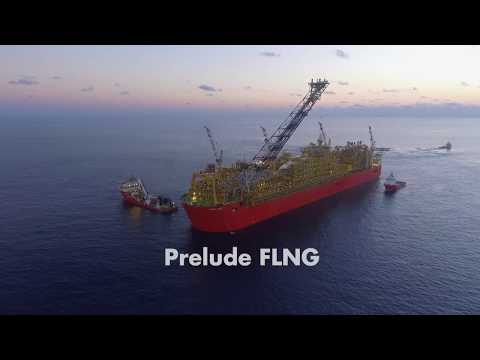
An alternative to land-based large liquefaction facilities is Floating Liquefied Natural Gas (FLNG), which are ships converted into liquefaction facilities. FLNGs are useful for gas production that is too far offshore to be realistically connected via undersea pipelines.
This can also help utilize gas production associated with offshore oil drilling, which is otherwise flared (burned), wasting it, with the extra advantage that FLNGs can be redeployed to new gas/oil fields once exploitation stops.
Regasification requires similar infrastructure to warm the LNG by passing it through heat exchangers that use seawater or other heat sources. Once regasified, the natural gas is then transported through pipelines to consumers
Turning natural gas into LNG is a very energy-intensive activity, with the cooling process consuming part of the energy contained in the initial supply of natural gas. On average, 10-15% of the energy is lost in the liquefaction process, and the entire supply chain (liquefaction, transport, and regasification) consumes 20-25% of the energy initially available, depending on the facility efficiency and the distance between production and delivery.
How LNG Is Transported: Ships & Logistics
Because LNG needs to stay cold to be transported, it requires dedicated ships with insulated walls made of several layers.
The propulsion system of LNG ships is often powered by steam turbines driven by boil-off-gas (BOG) from LNG, allowing what would be otherwise lost due to gas warming to be turned into propulsion power.

Source: Energy Education
LNG fleets are often operated by specialized companies, as well as large oil & gas companies.
The major shipping lanes for LNG include the Gulf of Mexico to East Asia, the Middle East to Europe and Asia (including India), and Australia to East Asia.

Source: Incorrys
LNG Market Overview: Prices, Demand & Production
LNG Prices
Global LNG was a $113B market in 2024 and is expected to grow to a $209B market by 2030, or an 8.3% CAGR.
LNG prices can vary widely over time, with the surplus or deficit of global gas supply, as well as energy demand impacting the market.

Source: EIA
Because natural gas is a very localized market, it is misleading to consider a global price. Instead, LNG profitability can widely vary depending on the destination. For example, natural gas can be extremely cheap in countries with surplus production like Russia or the USA but expensive in Europe and Asia.

Source: Global LNG Hub
Even inside a given region, different demand levels, active pipeline supply, and import facilities can cause widely different national prices between neighboring nations, leading to gas prices x2-x3 cheaper in some cases like, for example, Hungary compared to nearby Czechia.

Source: Eurostat
LNG Demand
LNG uses stem from two main categories of applications:
- Any applications already using natural gas, like power plants, metallurgy, chemical plants, heating, etc.
- In this case, it is either replacing dirtier fuels like oil and coal or providing additional volumes to an insufficient local pipeline natural gas supply.
- Replacing oil in transportation.
- This is especially crucial for shipping, which has no near-term viable alternative to bunker fuel.
- Heavy transports like trucks and buses can also use LNG to reduce air pollution and carbon emissions, especially if the power supply and charging infrastructure are inadequate for electrification.
Global LNG demand was boosted by the war in Ukraine, with many European countries looking in 2022 to switch away from the Russian pipeline gas supply in a hurry. This has turned Europe from a marginal consumer of LNG to a major demand center, more similar to continental South and East Asia. The US was the major source of this additional supply, especially as most of the other LNG producers had their supply locked in long-term contracts with other regions.

Source: Thunder Said Energy
While Japan, China and more recently Europe have been the major drivers of LNG demand, the future demand is expected to be mostly driven by India and even more South-East Asia, as the region industrialized and developed very quickly.

Source: IEA
This pursues a trend where non-China LNG demand has already been the driving force of increasing LNG demand since 2017

Source: IEA
LNG Production
LNG production is mostly dominated by large gas producers, as only massive gas reserves and production surplus make sense to be exported through LNG, while smaller producers can focus on local demand and building localized pipeline networks to their neighbors.

Source: Voronoi
As a result, the 4 major LNG producers are Qatar, Australia, Russia, and the USA.

Source: IEA
The market has evolved quickly in the past decade, with the USA having almost no LNG export in 2015 and becoming the world’s largest exporter by 2025. The change was mostly due to the shale oil revolution, leading to a massive amount of associated natural gas production, as well as direct shale gas production.

Source: LNG Allies
To take advantage of the low price of gas in the US, and the high price of LNG overseas, a massive investment in LNG export facilities has been made since 2016, with most projects taking years to be built and come online.

Source: The Oregon Group
In the very long term, the size of the gas reserves of each country will have a strong impact on their ability to maintain their position as top LNG exporters.
In that respect, the USA is expected to maintain a stable or somewhat growing gas production, even if shale oil production declines, as aging shale oil wells tend to become more “gassy” over time, and some resources like the Appalachian shale gas deposits are mostly constraint by pipeline infrastructure more than reserves or drilling capacities.
Globally, Russia and Iran have by far the largest gas reserves, with together more than 41% of the world’s gas reserves, and more than half of global reserve when adding Qatar.

Source: Media Market
However, investors should be aware that this reflects more the enormous size of Russian and Middle Eastern reserves, as even comparatively “gas-poor” Australia has enough proven reserves to continue current consumption and export levels for 44 years.
The North Field Expansion Project in Qatar, Freeport in the USA, and Arctic LNG 2 (Russia) are among the largest new LNG projects to come online in the past years.
Mozambique LNG should also provide additional supply to the market and represent a major income source for the underdeveloped African country.
Conclusion: LNG’s Role in a Low‑Carbon Future
Even if many would prefer a zero-carbon future immediately, natural gas & LNG are likely going to be an important transition fuel to faster remove coal from global power generation and oil from transportation and industrial activities, as it is both lower in emissions and less polluting.
LNG supply globally is only bound to increase, with the USA consolidating firmly its position as the leading exporter, followed by Qatar and Russia, also both of these competitors might struggle with the consequence of international tensions from the war in Ukraine and the proximity of Iran, respectively.
It means that investors can invest in the sector and diversify their exposure to the energy transition beyond renewables, whether through LNG facilities building or operating or directly through gas production that will benefit from LNG exports.
Investing In LNG: Key Opportunities & Stocks
LNG Export Facilities – Cheniere
(LNG )
Cheniere began operations in 2016 and has been a driving force behind the growth of LNG exports in the USA. It is currently the largest producer of LNG in the United States and the second-largest LNG operator in the world, reaching more than 40 markets in 5 continents.
In total, the company has invested $45B in infrastructure, becoming an expert at bringing new liquefaction units online ahead of schedule.
Its largest assets are at Cheniere’s Sabine Pass LNG facility in Southwest Louisiana and Cheniere’s Corpus Christi LNG facility in South Texas.

Source: RBN Energy
Cheniere is still expanding, with the Corpus Christi Stage 3 project underway, adding a combined capacity of 10+ mtpa, adding 20% to Cheniere’s production, and the final investment decision for expansion of its giant Sabine Pass LNG plant in Louisiana in late 2026 or 2027.

Source: Cheniere
95% of Cheniere’s expected aggregate LNG production capacity, either completed or under construction, is contracted through long-term take-or-pay style agreements, making the company more akin to a stable utility than a more cyclical energy company. Overall, Cheniere was instrumental in creating the massive LNG export capacity of the US today, and will also be a big part of the future expansion of capacity throughout the 2020s.
Gas Producer – Expand Energy
(EXE )
Born from the merger of Chesapeake Energy and Southwestern Energy in 2024, Expand Energy is the largest gas producer in the USA and is the largest supplier of natural gas to Gulf Coast liquefaction facilities. The merger created $400M in synergy so far and is expected to create another $400M-$500M in savings by the end of 2026.
It produces natural gas primarily from the Appalachian Basin and the Haynesville Shale.

Source: Expand Energy
As such, it should be a prime beneficiary of the upcoming expansion of the LNG export capacity in the USA, currently standing at around 14 bcf/d (billion cubic feet per day) and with another 12 bcf/d in capacity to be added by 2026, and another 14 bcf/d in discussion for later expansion.

Source: Expand Energy
The company has a deep inventory of gas deposits available, with more than 20 years’ worth of production already in proven reserves.
This helps it support moderate production expansion into the upcoming years, a very different strategy that the “drilling at any costs” that had bankrupted Chesapeake in 2020, together with many shale oil operators.

Source: Expand Energy
As such, Expand is a way to benefit from a normalization of the very low gas price in the USA compared to the rest of the world, with additional LNG exports creating the demand to absorb the astonishing production of natural gas by shale deposits.
Liquefaction Technology Maker – Linde Energy
(FTI )
As LNG is booming, so is the demand for the specialized machinery and technology required to liquefy and regasify natural gas. A central provider to the industry is Linde, a company specializing in processing industrial gases.

Source: Linde
Linde was notably involved with the world-scale LNG plants at the world’s northernmost natural gas liquefaction plant, Hammerfest in Norway. The company is doing more than just activities in oil & gas or LNG, with chemicals and energy making up just 22% of the company revenues, providing some diversification as well.

Source: Linde
44% of sales are in America, followed by 25% in EMEA (Europe, Middle East, Africa) and 20% in Asia Pacific.
By being a technology and building service provider to the industry, Linde is a way for investors to bet on the sector without having to count on a specific region or country, preferring instead a “pick and shovel” approach.



